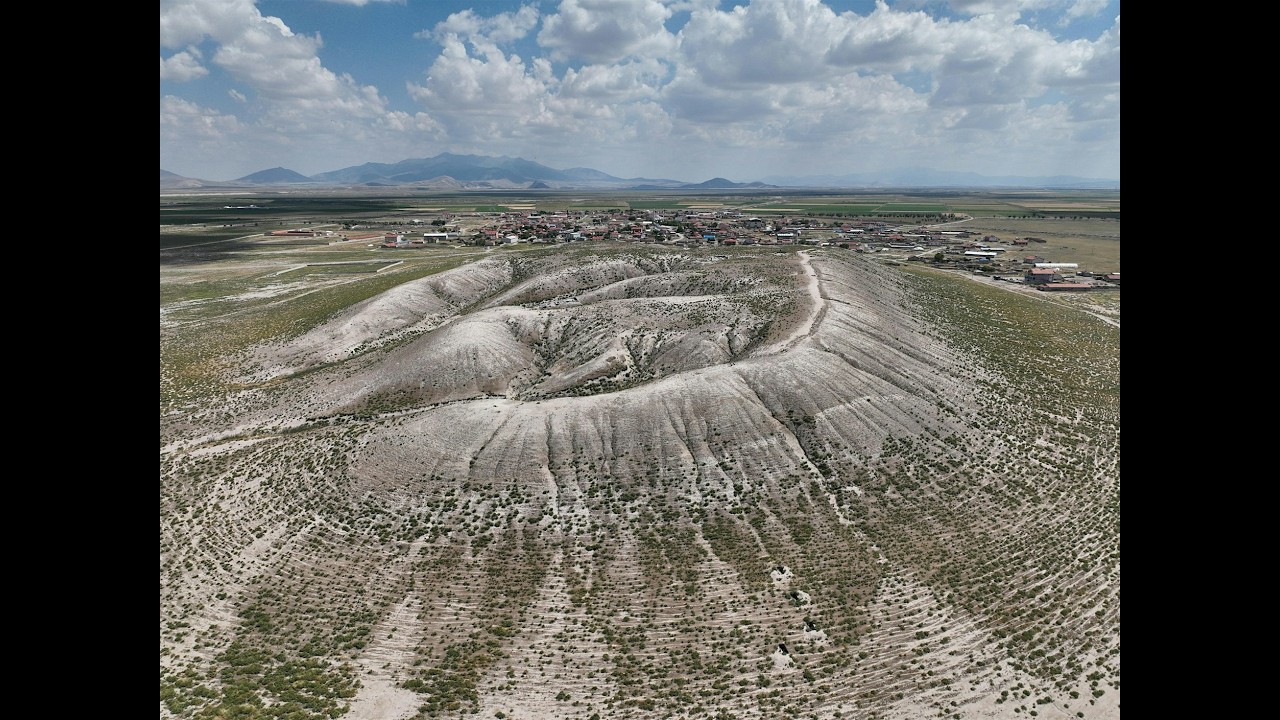
James Osborne | Great King Hartapu and Beyond: Türkmen-Karahöyük and an Iron Age Ruler
Keywords
Summary
192 words
Critical Evaluation
Value of the Information & Strength of the Argument
The value of the information lies in its presentation of freshly excavated data from a previously unexplored major Iron Age capital, directly addressing long-standing questions about Hartapu and the political geography of Anatolia. Osborne argues persuasively that Türkmen-Karahöyük must have been Hartapu’s capital, based on the find context of the inscription and its intervisibility with his earlier monuments. The argumentation is methodical: he reviews prior knowledge, the accidental discovery, subsequent survey, and the implications for understanding Iron Age regional powers. He carefully acknowledges unknowns, such as the dual writing styles on the stone, and frames the project as an ongoing investigation. The lecture’s strength is its integration of textual and archaeological evidence, and its clear communication of scientific process, from RTI imaging to the interpretative challenges of a site without historical texts. No overstatement or speculation without evidence undermines the solidity of the presentation.
Scientific Rigor, Source Quality, Title Accuracy
Rigor is high: Osborne, a specialist in Iron Age Anatolian archaeology, relies on primary evidence—the inscription itself, its photography, and stratigraphic excavations. He cites the ‘Hittite Monuments’ website by Tayfun Bilgin as a key resource, and acknowledges the collaborative nature of the project, involving ISAC and Bilkent University. The title is precise and does not overpromise: the lecture indeed covers Hartapu’s kingdom and its archaeological context, both Bronze and Iron Age. The content is well-structured, and the speaker openly discusses problems, such as the lack of inscriptions from the Konya Plain and the challenges of interpreting a site between cultural spheres. Public engagement is present in the form of a reception and exhibition tour, but these do not detract from the scholarly rigor. No comment analysis is available, but the audience appears engaged based on the recorded Q&A not shown.
299 words
Title / Content Match
The title accurately reflects the content, centering on King Hartapu and the archaeological investigations at Türkmen-Karahöyük.
Quality & Reliability
9/10
Lecture by an associate professor of Anatolian archaeology, presenting ongoing excavations and a newly discovered inscription, with rigorous methodological detail and transparent reasoning.
Key Moments
Markers derived by PSI from the transcript: the creator did not define chapters.
- Introduction and outline of the lecture, including the cultural-historical background and discovery story.
- Description of the Hittite Empire and the Bronze Age collapse around 1200 BCE.
- Discussion of the Iron Age cultural formations: Phrygia, Neo-Hittite states, and the location of Türkmen-Karahöyük.
- Presentation of Hartapu's previously known monuments on Kuzludağ and Karadağ, and the long-standing mystery of his kingdom.
- Recounting the 2019 discovery of the Türkmen-Karahöyük inscription by a farmer and its initial documentation with reflectance transformation imaging.
- Reading and interpretation of the inscription's content, including the conquest of Phrygia and 13 kingdoms, and the identification of Türkmen-Karahöyük as Hartapu's capital.
- Overview of the Türkmen-Karahöyük Archaeological Project, its goals, and findings from the first three seasons, including the cultural connections of the site.
Cited Sources
- Hartapu: The Forgotten King of Anatolia (Exhibition) — Exhibition page associated with the lecture and the discovery.
- Lecture registration (Eventbrite) — Registration link provided in the video description for attending the lecture.
- Hittite Monuments website — Resource created by Tayfun Bilgin, cited by Osborne for maps and photographic documentation of Hittite and Neo-Hittite monuments.
Contribution & Novelties
The lecture provides original insights from the ongoing excavation at Türkmen-Karahöyük, particularly the first three seasons of fieldwork, which are not yet published in peer-reviewed journals. The discovery of the inscription itself is a major contribution, redefining the political map of Iron Age Anatolia. Osborne’s interpretation that the site is Hartapu’s capital is grounded in the intra-visibility of monuments and the context of the inscription, offering a new understanding of regional kingship and cultural interactions.
Pour aller plus loin :
- Luwian language — Essential background on the language of the inscriptions.
- Hittites — Overview of the Late Bronze Age empire that preceded Hartapu.
- Reflectance transformation imaging — Technique used for documenting the inscription.
- Iron Age Anatolia — General context of the period and region.
124 words
Radar Profile
The radar profile shows high scores in information quality and reliability, reflecting the expert presentation and original data. The technical level is moderately high but accessible, and the quantity of information is substantial. Overall, the lecture offers a well-rounded, authoritative overview with strong empirical grounding, while the slight lower score in technical level suggests it is designed for a general educated audience rather than solely specialists.