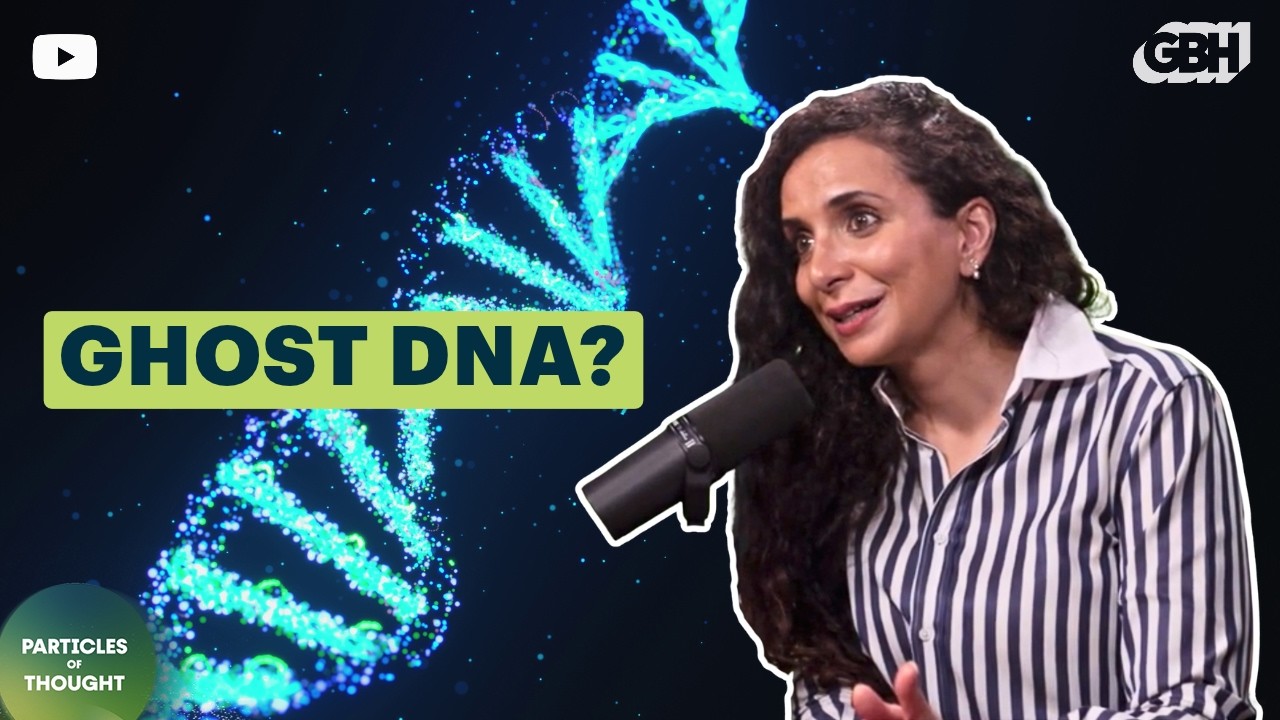
What is Ghost DNA? | Particles of Thought | Ella Al-Shamahi
Title history
- What is Ghost DNA? | Particles of Thought | Ella Al-Shamahi — observed on 20261119-1709 UTC (YouTube)
Keywords
Summary
174 words
Critical Evaluation
Value of the Information & Strength of the Argument
The video provides a valuable overview of recent research on archaic human admixture, presenting complex genetic evidence in an accessible manner. Al-Shamahi’s expertise lends credibility, and she clearly distinguishes between established facts and speculative models. The argumentation is solid, with illustrative examples like the genetic diversity comparison between San people and populations outside Africa. However, the discussion of the 20% ghost DNA claim is brief and lacks detailed evidence, which might leave viewers wanting more depth.
Scientific Rigor, Source Quality, Title Accuracy
The video maintains scientific rigor by referencing the out-of-Africa theory and known Neanderthal introgression, but it does not cite specific studies or provide references. The title is appropriate, though the description mentions a full episode and a podcast series, offering supplementary material. The sponsorship segment is clearly separate and does not interfere with the scientific content. Overall, the video is informative and reliable, but would benefit from more explicit source citations.
162 words
Title / Content Match
The title accurately reflects the content: the video explains the concept of ghost DNA and discusses its implications for human evolution.
Quality & Reliability
8/10
The video is produced by NOVA PBS, a reputable science outlet, and features paleoanthropologist Ella Al-Shamahi, an expert in human evolution. The content is based on current research, though it includes speculative claims (20% ghost DNA) presented as a proposal. The discussion is scientifically accurate in general, but simplifies complex topics for a general audience.
Key Moments
Markers derived by PSI from the transcript: the creator did not define chapters.
- Introduction of the topic and guests
- Discussion on out-of-Africa migration and genetic diversity among populations
- Definition of ghost DNA and presentation of the 20% ghost lineage proposal
- Explanation of the hybrid origin model with populations A and B
- The role of neurogenesis genes from the ghost DNA
- Neanderthal pronunciation and appearance
- Confirmation of interbreeding and concluding thoughts
Cited Sources
- Full episode of Particles of Thought — Linked in the video description as the full episode
- Particles of Thought podcast playlist — Linked in the video description as the podcast series
- NOVA newsletter signup — Linked in the video description for updates
Contribution & Novelties
The video contributes by making the concept of ghost DNA accessible to a broad audience, explaining how it challenges a simple linear view of human evolution. It highlights the idea that we are a hybrid species, which is a significant shift from earlier narratives. The discussion on the potential role of ghost DNA in neurogenesis is particularly thought-provoking, offering a new angle on the development of human cognition.
Pour aller plus loin :
- Archaic human admixture — Overview of interbreeding between modern humans and archaic species.
- Ghost population — Definition and examples of ghost lineages in genetics.
- Out of Africa theory — The migration model discussed in the video.
109 words
Radar Profile
The radar chart would show higher scores in quantitative information and reliability, moderate in qualitative information, and low in technical level, reflecting the video's balance between depth and accessibility.