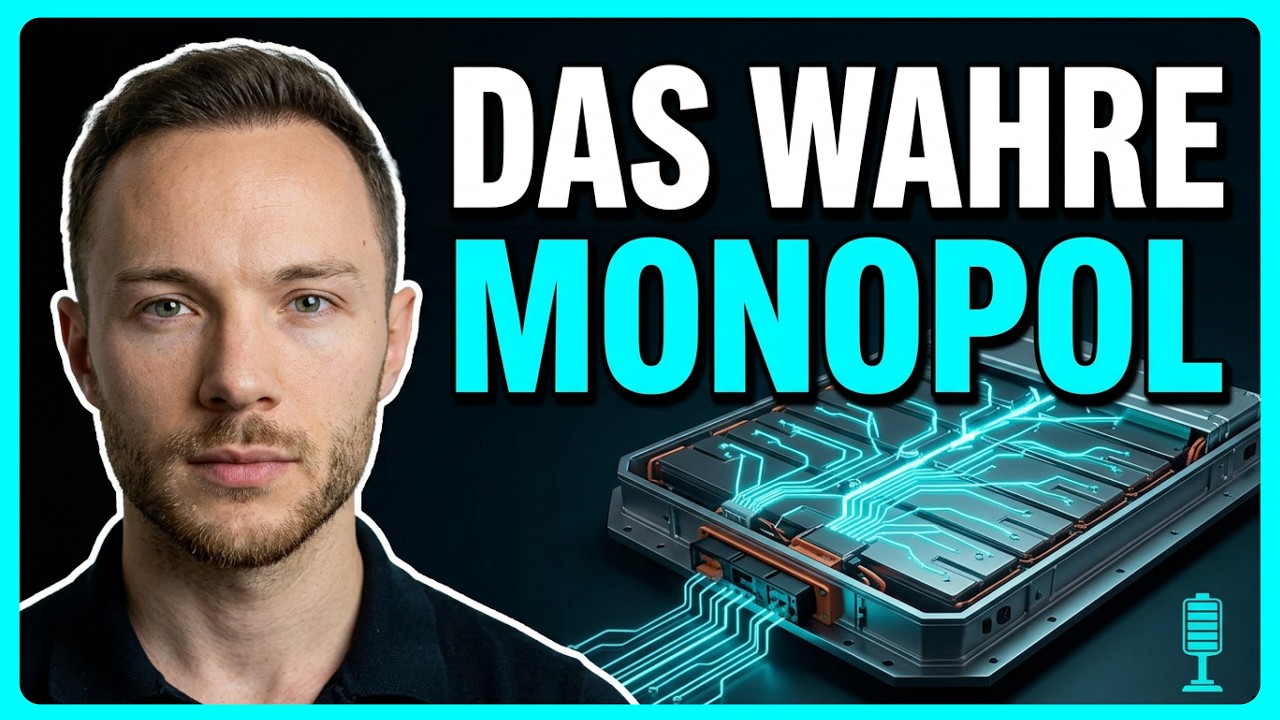
Wer verdient wirklich am E-Auto-Boom – Autobauer oder Batteriehersteller? | Geladen Podcast
Who’s Really Profiting from the EV Boom – Automakers or Battery Manufacturers? | Geladen Podcast
Keywords
Summary
180 words
Critical Evaluation
Value of the Information & Strength of the Argument
The video provides valuable data and analysis on the battery supply chain, highlighting CATL’s dominance with concrete figures (e.g., 50% of European EVs, 80% of global cells from China). The argumentation is solid, backed by a detailed study from a reputable research institute. The hosts ask critical questions about supply chain resilience and the value chain distribution, and the guest responds with nuanced explanations, differentiating between cell-level and system-level value. The discussion is balanced, acknowledging both the risks of over-reliance on Chinese suppliers and the benefits of scale and innovation that these suppliers bring.
Scientific Rigor, Source Quality, Title Accuracy
The scientific rigor is high, as the study is based on official registration data and the guest is an academic researcher. The sources mentioned include the Battery Report from PEM RWTH Aachen, although the specific link to the study is not directly provided in the description (only a related video is linked). The title is accurate and reflects the core theme of the discussion. The inclusion of a sponsored segment is clearly signaled and does not detract from the scientific content.
190 words
Title / Content Match
The title accurately reflects the content: the discussion focuses on profit distribution between carmakers and battery suppliers.
Quality & Reliability
8/10
The video features a researcher from RWTH Aachen presenting a market study based on official registration data. The discussion is well-structured and provides specific figures, though some extrapolations are made. The source is credible but the claims are not independently verified in the video.
Key Moments
Markers derived by PSI from the transcript: the creator did not define chapters.
- Introduction to the topic and guest Merlin Frank
- CATL's market share statistics: 50% of new EVs in Europe use CATL cells
- Discussion on global cell production and 80% share from China
- Analysis of supply chain risks and dependence on Chinese materials
- Value distribution: battery costs and material share
- Discussion on cell formats and why prismatic cells dominate
- Methodology behind the Battery Report and data collection
Cited Sources
- Geladen LinkedIn page — Channel's professional profile
- naturstrom sponsorship link — Sponsored offer with discount code
- Merlin Frank's video on the study — Detailed presentation of the Battery Report data
Concurring Sources
- Merlin Frank's video on the study — Provides deeper dive into the data behind the claims
Contribution & Novelties
56 words
Radar Profile
The profile shows high scores in information quantity and reliability, reflecting the data-rich and well-sourced content. The technical level is moderate, making it accessible to a broad audience while retaining depth. The overall balance indicates a high-quality podcast episode.
💬 Positive. On the 30 comments analysed, the majority express appreciation for the informative content and share personal experiences with EVs, with a few critical points about range and political decisions.