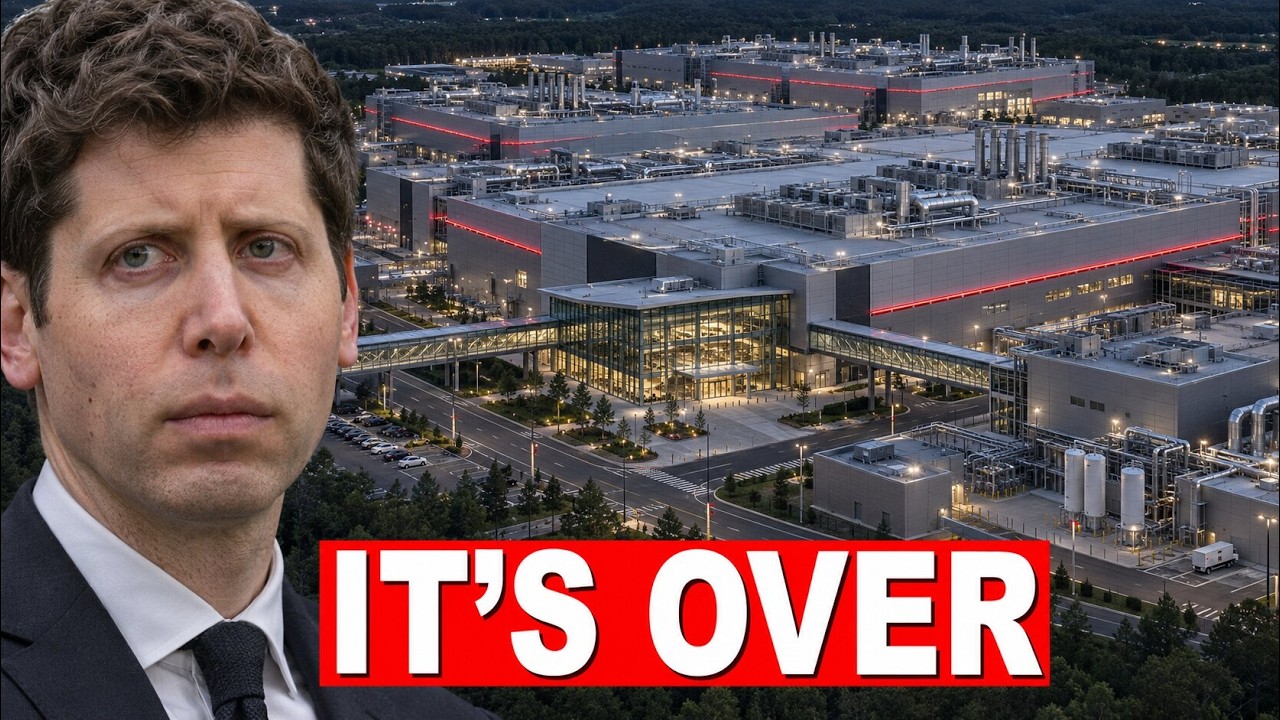
New Chip Factory That Terrifies OpenAI
Keywords
Summary
107 words
Critical Evaluation
Value of the Information & Strength of the Argument
The video provides a compelling argument supported by numerous concrete examples, such as specific quotes from Sam Altman, Sarah Friar, and others, as well as financial figures. It effectively argues that OpenAI’s growth is constrained by the physical supply chain, while Musk is attempting to eliminate that constraint. The argumentation is logically structured, contrasting two business models. However, some claims are speculative, such as Terrafab’s future output, and the video presents future projections as near-certainties.
Scientific Rigor, Source Quality, Title Accuracy
The video cites multiple credible sources including the Wall Street Journal, New York Times, Trendforce, and statements from executives. It does not invent sources, but some details are attributed to unnamed reports. The title is a bit sensational but accurately reflects the content. The content is consistent with the title: it explains why the chip factory could threaten OpenAI. The video lacks formal citations with URLs, but mentions source names. Overall, the sourcing is above average for a YouTube video, but not academic.
173 words
Title / Content Match
The title accurately reflects the content, which explains why a new chip factory backed by Elon Musk poses a threat to OpenAI.
Quality & Reliability
7/10
The video synthesizes multiple recent reports and statements, but is a YouTube commentary without peer review. It mixes verified news with speculative analysis.
Key Moments
Markers derived by PSI from the transcript: the creator did not define chapters.
- Introduction: OpenAI's admission of chip shortage and the story's premise.
- Explanation of memory shortage and its impact on AI companies.
- Musk announces Terrafab and its goals.
- Details on Terrafab's location, scale, and investment.
- Intel partnership and memory fabrication plans.
- Skepticism and challenges from analysts and industry experts.
- Strategic implications and comparison of Altman vs Musk approaches.
Cited Sources
- Semaphor interview with Sam Altman — Altman's quote about laminate and supply constraints.
- Wall Street Journal report — Altman's attempt to raise $5-7 trillion for chip factories.
- New York Times report — TSMC's reaction to Altman's pitch.
- Trendforce data — Memory price increases in Q1 2026.
- EE Times Europe — Terrafab plans with Intel and RibbonFET technology.
- Reuters report — OpenAI delayed a product launch due to compute shortage.
Concurring Sources
- Semaphor interview with Sam Altman — Supports the claim of supply constraints.
- Trendforce data — Confirms memory shortages and price increases.
- Reuters report — Provides evidence of OpenAI's compute limitations.
Dissenting Sources
- Jensen Huang's warning — Stated that building advanced chip manufacturing is extremely hard.
- Bernstein analysis — Calculated that Terrafab's terawatt goal could require up to 358 fabs costing $5 trillion.
- Morgan Stanley — Described building a chip fab from scratch as herculean.
Contribution & Novelties
The video synthesizes recent developments into a clear strategic comparison, highlighting the significance of vertical integration in AI compute. It provides a unique angle by analyzing the memory shortage and Terrafab’s potential to control scarce resources.
Pour aller plus loin :
- Semiconductor device fabrication — Background on chip manufacturing processes.
- High Bandwidth Memory — Explains the specialized memory critical to AI.
- TSMC — The dominant chip manufacturer, central to the supply chain.
72 words
Radar Profile
The radar profile shows high scores in information quantity and quality, with moderate technical depth and reliability. This suggests the video is informative and well-researched, though not highly technical nor fully reliable due to its speculative elements.