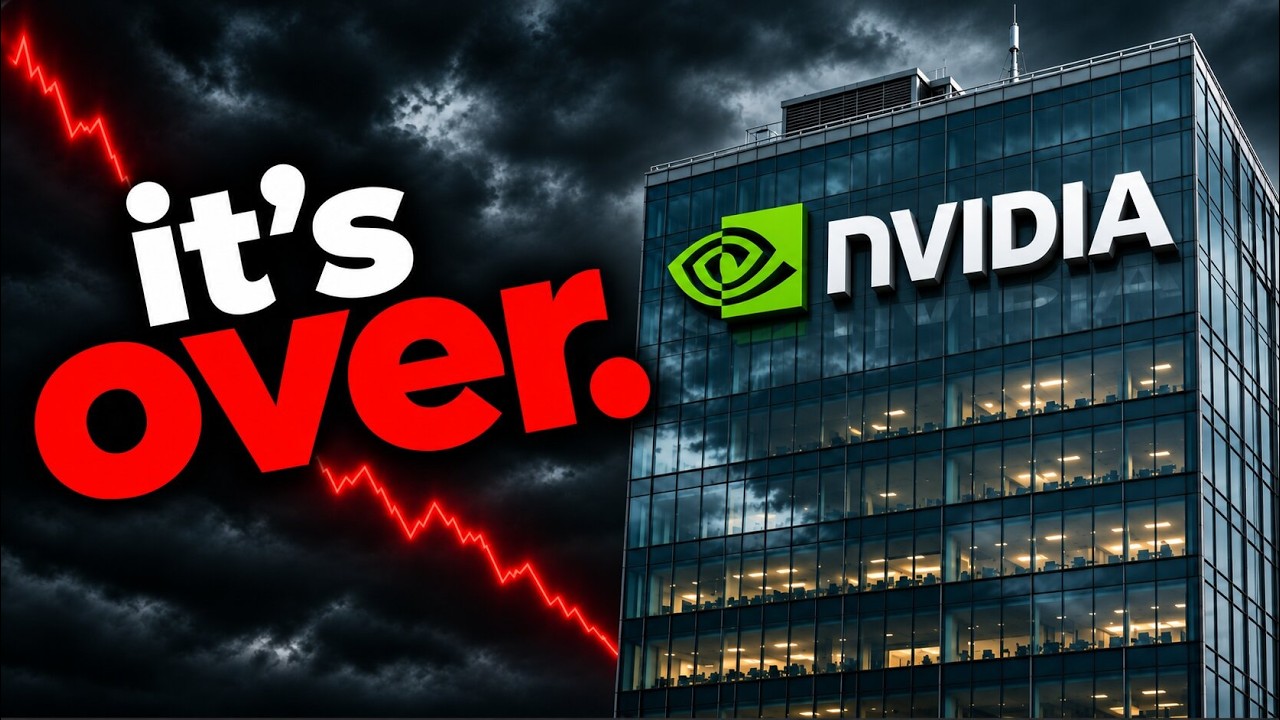
Jensen Huang Just Killed Nvidia
Keywords
Summary
212 words
Critical Evaluation
Value of the Information & Strength of the Argument
The video offers a compelling narrative that combines factual reporting with market analysis. It provides substantial quantitative data, such as revenue figures, stock prices, and market capitalization changes, to support its arguments. The argumentation is well-structured, presenting both the bull case for Nvidia’s resilience and the bear case highlighting the importance of leadership. However, the video tends to speculate about future outcomes and relies on anonymous sources and media reports, which introduces uncertainty. The emotional framing of the title may bias the viewer, but the content itself strives for balance.
Scientific Rigor, Source Quality, Title Accuracy
The video cites several reputable news outlets, including the New York Times, Wall Street Journal, Reuters, Fortune, and Bloomberg Intelligence. It references specific reports and quotes, which adds credibility. However, it does not provide direct links or citations, and some claims are unattributed. The title ‘Jensen Huang Just Killed Nvidia’ is sensationalized and does not accurately reflect the nuanced conclusion that the company itself is not dead, but the ‘single-person’ structure has been dismantled. This mismatch could mislead viewers.
184 words
Title / Content Match
The title is hyperbolic and suggests that Huang actively destroyed Nvidia, while the content argues that his departure removed a key intangible asset. The title is somewhat misleading but captures the drama.
Quality & Reliability
7/10
The video provides a detailed account of recent events surrounding Jensen Huang's resignation, citing reputable news sources like the New York Times, Wall Street Journal, and Reuters. However, it is a commentary that may contain biases and speculative analysis, and the sensationalized title suggests emotional framing. The information appears accurate based on the cited reports, but the video does not provide primary sources or direct quotes from official documents.
Key Moments
Markers derived by PSI from the transcript: the creator did not define chapters.
Cited Sources
- New York Times — Reported on alleged intelligence concerns and Huang's personal life.
- Wall Street Journal — Reported on the board's plan to remove Huang.
- Reuters — Reported on a third relationship and other details.
- Fortune — Noted Harvey Jones's oversight record.
- Bloomberg Intelligence — Estimated potential Google TPU sales.
- Financial Times — Reported on the approach to Renee Hoss.
Concurring Sources
- New York Times — Reports align with the video's claims about the investigation.
- Wall Street Journal — Reports corroborate the board's actions.
Contribution & Novelties
The video’s original contribution is its synthesis of many disparate reports into a coherent narrative about the risks of key-person dependence in a tech giant. It highlights how investor sentiment can turn despite strong fundamentals when leadership credibility is questioned. The video also raises the broader issue of corporate governance in founder-led companies.
Pour aller plus loin :
- Nvidia — Overview of the company.
- Jensen Huang — Biography of the founder.
- Corporate governance — Concepts of board oversight and CEO succession.
81 words
Radar Profile
The radar shows high scores in information quantity and moderate reliability, with lower technical level. This suggests a news commentary that is rich in data but not deeply technical, relying on external sources for credibility.