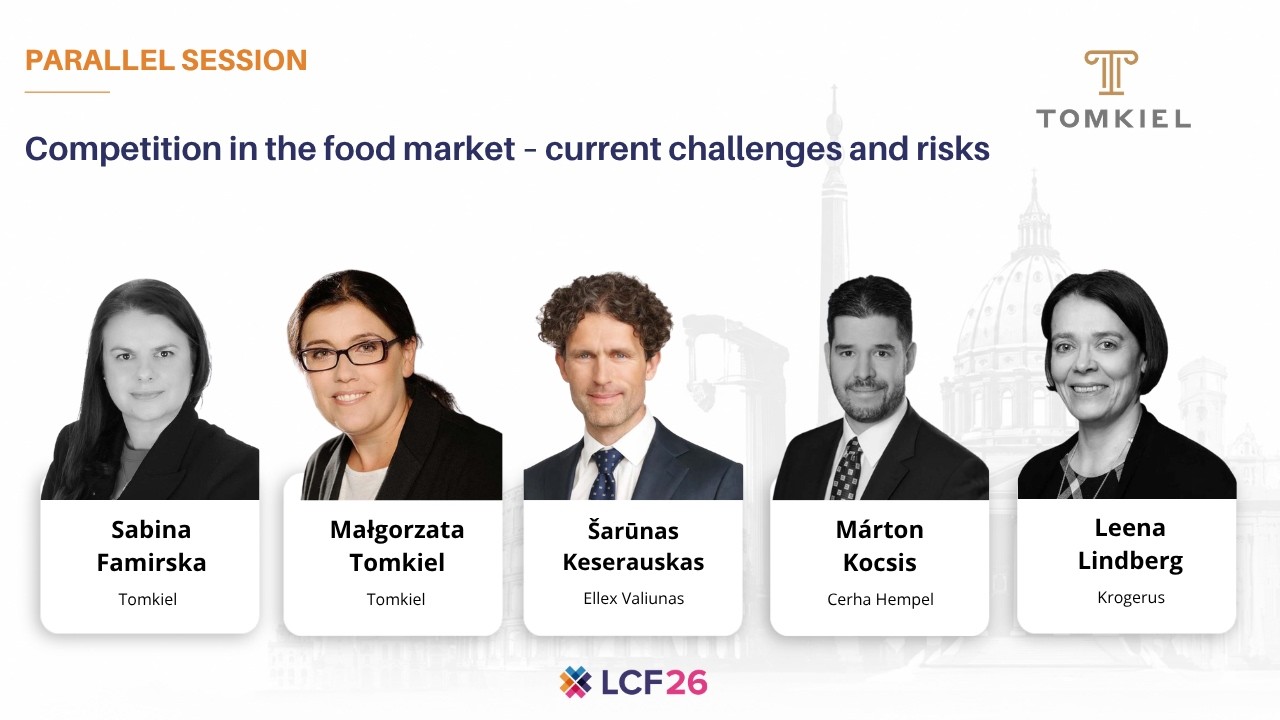
LCF26 | Competition in the food market – current challenges and risks
Keywords
Summary
194 words
Critical Evaluation
Value of the Information & Strength of the Argument
The panel provides valuable insights into the practical application of competition law in the food sector across multiple EU jurisdictions. The arguments are grounded in specific cases, such as the Polish Biedronka fine, the Lithuanian egg merger prohibition, and the Finnish dairy profitability study. The speakers demonstrate a strong understanding of legal frameworks and enforcement practices. They critically assess the effectiveness of tools like the UTP Directive, noting variations in national implementation and fines. The discussion of the Hungarian warning letters and the watermelon case illustrates the interplay between political pressure and legal proceedings, adding depth to the debate on the independence of competition authorities. The argumentation is balanced, acknowledging both the need for intervention and the potential for overreach or deterrence issues.
Scientific Rigor, Source Quality, Title Accuracy
The panel is composed of lawyers with prior experience in competition authorities, lending credibility to their statements. They refer to concrete decisions, fines, and legislative developments, though no specific external sources like articles or reports are cited. The title precisely matches the content, which focuses on competition issues in the food market. The discussion is structured and consistent, with each expert contributing jurisdictional insights. While some claims are anecdotal or based on personal experience, the overall rigor is adequate for an expert panel discussion. The absence of cited sources beyond the speakers’ professional knowledge limits its scientific provenance, but the information appears reliable given the expertise involved.
245 words
Title / Content Match
The title accurately reflects the content, focusing on competition in the food market, current challenges, and risks as discussed by experts.
Quality & Reliability
7/10
Panel of experienced competition lawyers from four EU jurisdictions discussing actual cases and regulatory frameworks, with references to specific directives and decisions. However, it is an expert discussion without peer-reviewed sources.
Key Moments
Markers derived by PSI from the transcript: the creator did not define chapters.
- Introduction of panelists and general framing of food market competition issues.
- Sabina discusses UTP directive and Polish record fine on Biedronka.
- Sarunas explains Lithuanian approach to UTP and typical products like eggs and dairy.
- Elena presents Finnish sector inquiry on dairy profitability and retail margins.
- Martin describes Hungarian warning letters to producer organizations during high inflation.
- Discussion on low purchase prices: Polish cartel in fruit sector and Finnish wild berries case.
- Martin recounts Hungarian watermelon case and political intervention.
Contribution & Novelties
The panel offers a comparative analysis of competition enforcement in the food market across four EU states, highlighting diverse approaches and real-world challenges. It provides original insights into the practical effects of the UTP Directive and the role of sector inquiries. The discussion reveals how authorities sometimes use informal tools like warning letters, and how political pressure can influence outcomes, as seen in the Hungarian watermelon case. This comprehensive overview is valuable for practitioners and policymakers.
Pour aller plus loin :
- UTP Directive (EU) 2019/633 — Key legal framework for unfair trading practices in the food supply chain.
- European Commission - Competition Sector Inquiries — Official resource on sector inquiries conducted by the EC.
- OECD Competition Committee — Reports and analysis on competition policy, including food markets.
- Finnish Competition and Consumer Authority (FCCA) Publications — Source for Finnish sector studies and cases.
142 words
Radar Profile
The profile shows strong performance in technical content and quantity of information, with slightly lower scores in reliability due to reliance on expert opinion rather than formal studies. The scores reflect a balanced panel discussion with depth and practical relevance.