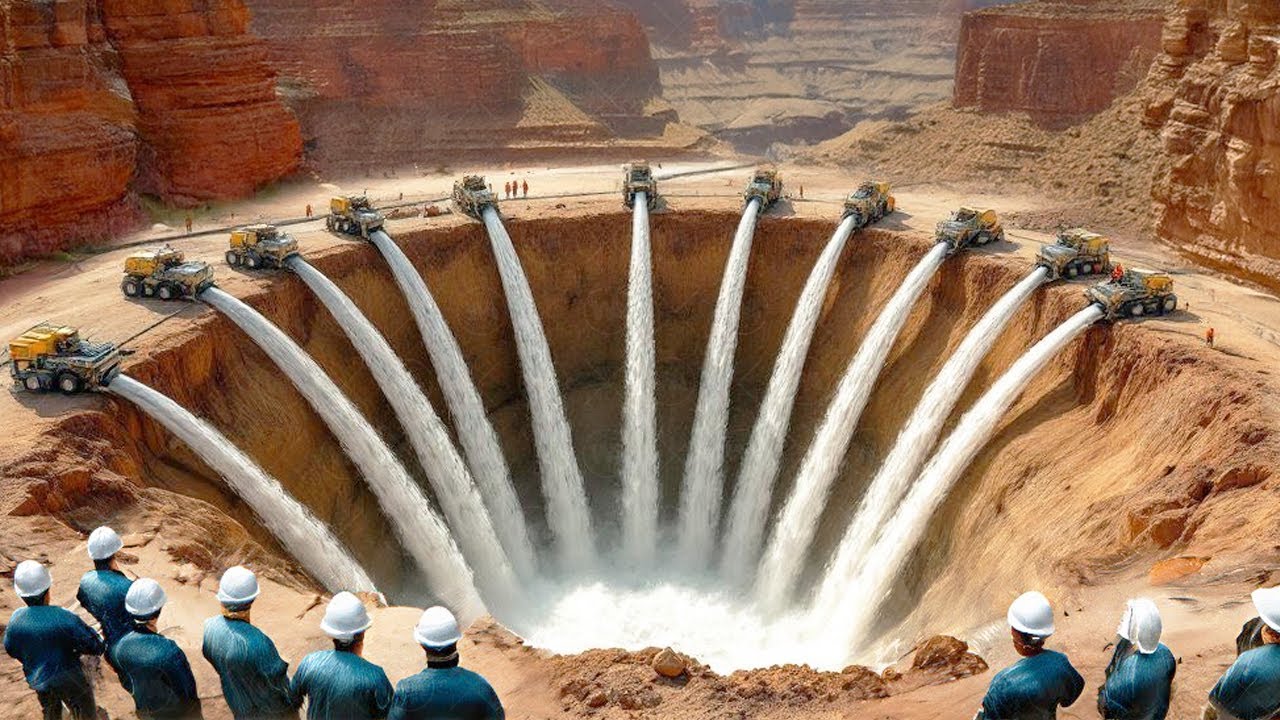
They Flooded a Place That Had Been Dry for Millions of Years, And It Changed Everything
Title history
- They Flooded a Place That Had Been Dry for Millions of Years, And It Changed Everything — observed on 20261101-0158 UTC (YouTube)
Keywords
Summary
154 words
Critical Evaluation
Value of the Information & Strength of the Argument
The video provides valuable insights into a complex environmental management issue, clearly explaining the rationale behind high-flow experiments and their scientific basis. It presents a balanced view, acknowledging both the benefits and limitations of the interventions. The argumentation is solid, built on real events, specific numbers, and references to agencies like the Bureau of Reclamation. The narrator maintains objectivity, presenting the conflict between ecological health and economic interests without overt bias. The inclusion of historical context and future projections strengthens the analysis, making it both educational and thought-provoking.
Scientific Rigor, Source Quality, Title Accuracy
The scientific rigor is generally high for a popular documentary, with accurate descriptions of dam operations and ecological processes. However, sources are not explicitly cited on screen, relying instead on institutional names like the National Park Service and American Rivers. The title is moderately aligned with the content; it is catchy but slightly exaggerated, as the riverbed was not dry for millions of years continuously—it became dry after damming. The comments reflect an engaged audience: many appreciate the educational value, while some raise valid concerns about water usage and dam management. Overall, the video is a credible introduction to the topic, though it would benefit from citing primary research for deeper credibility.
215 words
Title / Content Match
The title is somewhat sensational but accurately reflects the video's focus on the intentional flooding of the Grand Canyon's riverbed and its ecological consequences. It may overstate the 'dry for millions of years' aspect, as the area was not typically dry until the dam was built.
Quality & Reliability
7/10
The video presents a well-researched narrative on the Colorado River and the Glen Canyon Dam's high-flow experiments, citing specific events and scientific studies. However, as a documentary for a general audience, it simplifies technical aspects and lacks direct citations to academic sources.
Key Moments
Markers derived by PSI from the transcript: the creator did not define chapters.
- Opening of the dam tubes and the initial flood release into the Grand Canyon.
- Explanation of the ecological problems caused by the dam, such as disappearing sandbars and invasive plants.
- First controlled high-flow experiment in 1996, including its setup and observed outcomes.
- The accidental 1983 flood due to high snowmelt, which revealed the benefits of larger releases.
- Later experiments in 2004 and 2008, and the development of a new protocol based on sand input.
- Future challenges, including drought, economic conflicts, and the potential loss of rafting and biodiversity.
Cited Sources
- Glen Canyon Dam — The central subject of the video, with its operations and releases discussed in detail.
- Colorado River — The river's condition and management are the focus of the video.
- Bureau of Reclamation — The federal agency responsible for the dam and water management is mentioned.
- American Rivers — The environmental organization that ranked the Colorado River as most endangered.
- National Park Service — Mentioned in relation to limiting rafting trips and managing the Grand Canyon.
Contribution & Novelties
The video offers a compelling synthesis of the high-flow experiment program on the Colorado River, explaining the scientific rationale, historical events, and current policy debates. It distinguishes itself by combining technical details with accessible storytelling, highlighting the trade-offs between energy production and ecological health. The documentary effectively communicates the importance of adaptive water management in a changing climate.
Pour aller plus loin :
- Glen Canyon Dam — Background on the dam’s construction, purpose, and modifications.
- Colorado River — Comprehensive overview of the river’s geography, hydrology, and management challenges.
- Bureau of Reclamation — Information on the agency that oversees water projects and the dam’s operation.
104 words
Radar Profile
The radar profile shows high values for information quantity and quality, indicating a content-rich and well-structured presentation. Technical level and reliability are moderate, reflecting that the video targets a general audience and does not delve into primary scientific citations. Overall, it presents a balanced profile of an engaging documentary with substantial educational value.
💬 Among the 30 comments analyzed, sentiments are predominantly positive to neutral, with many viewers expressing appreciation for the educational content and visuals. A few critical remarks focus on water mismanagement and the role of dams, indicating an engaged and thoughtful audience.