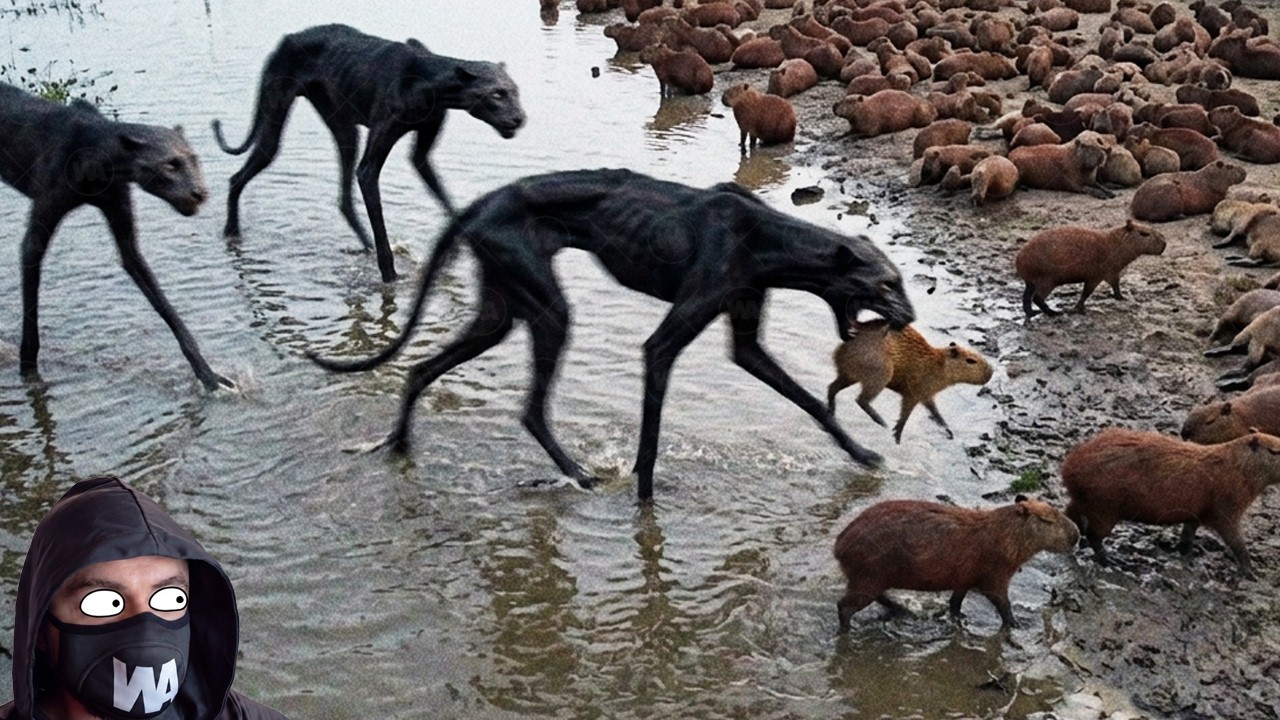
Argentina Released 3 Hungry Predators Into Wetlands Full of Capybaras and Nobody Expected This
Title history
- Argentina Released 3 Hungry Predators Into Wetlands Full of Capybaras and Nobody Expected This — observed on 20261031-2320 UTC (YouTube)
Keywords
Summary
166 words
Critical Evaluation
Value of the Information & Strength of the Argument
The video offers substantial scientific value by presenting concrete data from the rewilding project, including changes in prey density, vegetation recovery, and secondary ecological effects. The argumentation is logically structured: it establishes the problem (capybara overpopulation), explains the historical cause (jaguar extinction), describes the restoration effort, and details measured outcomes. The use of before-and-after comparisons and specific statistics (e.g., 132 to 3 capybaras per square mile) strengthens the narrative. However, the video tends to rely on a single source (the project itself) and does not present contrasting viewpoints, which limits the robustness of the argument. The tone is generally factual, though some dramatic language enhances engagement rather than scientific rigor.
Scientific Rigor, Source Quality, Title Accuracy
The video does not provide direct citations or links in the description, but it references specific studies (e.g., a medical study on jaguar attacks) and project data. The information appears consistent with known ecological principles and real-world rewilding initiatives, though independent verification is not possible from the video alone. The title adequately corresponds to the content, though it understates the scope by mentioning ‘3 hungry predators’ while the project released over a dozen. The scientific rigor is acceptable for a documentary format, but the lack of explicit source attribution and the reliance on potentially promotional project data reduce its credibility slightly.
226 words
Title / Content Match
The title is somewhat clickbait but accurately reflects the core content: the reintroduction of jaguars into capybara-rich wetlands and the unexpected ecological cascade that followed. The '3 hungry predators' refers to the initial release of three jaguars.
Quality & Reliability
8/10
The video presents specific ecological data (capybara densities, kill rates, vegetation changes) and refers to documented research, though some sensationalism and lack of explicit source citations reduce the score slightly.
Key Moments
Markers derived by PSI from the transcript: the creator did not define chapters.
- Introduction of capybara overpopulation in Iberá and their density estimates.
- Explanation of the dangers of capybara road accidents for drivers.
- Historical extinction of jaguars in Iberá and the beginning of the breeding program.
- Preparation and testing of jaguars before release, including hunting training and human avoidance.
- Impact of jaguars on capybara populations and vegetation recovery, with specific data.
- Transfer of a wild-born jaguar to another national park as a conservation milestone.
Contribution & Novelties
The video provides a compelling, data-rich narrative of a large-scale predator reintroduction and its cascading effects, offering a concrete example of trophic rewilding. It highlights the role of apex predators in regulating herbivore populations and restoring ecosystem structure, with measurable outcomes. The unique aspect is the combination of capybara control and feral pig suppression, demonstrating multifaceted benefits.
Pour aller plus loin :
- Trophic cascade — Directly relevant to the video’s main mechanism of ecological recovery.
- Rewilding — Contextualizes the jaguar reintroduction within broader conservation practice.
- Iberá Provincial Reserve — Background on the project site.
- Capybara — Understanding the ecology of the primary prey species.
104 words
Radar Profile
The radar profile shows high scores for quantity and quality of information, with a moderately high technical level and good reliability. The video excels in providing detailed ecological data and a clear narrative, but slightly lower technical depth and source transparency keep the reliability from being maximal.
💬 Très positif. Sur les 30 commentaires analysés, la quasi-totalité exprime de l'enthousiasme et du soutien pour le projet de réintroduction, avec des remarques sur l'importance des prédateurs et le succès de l'initiative, sans critiques notables.