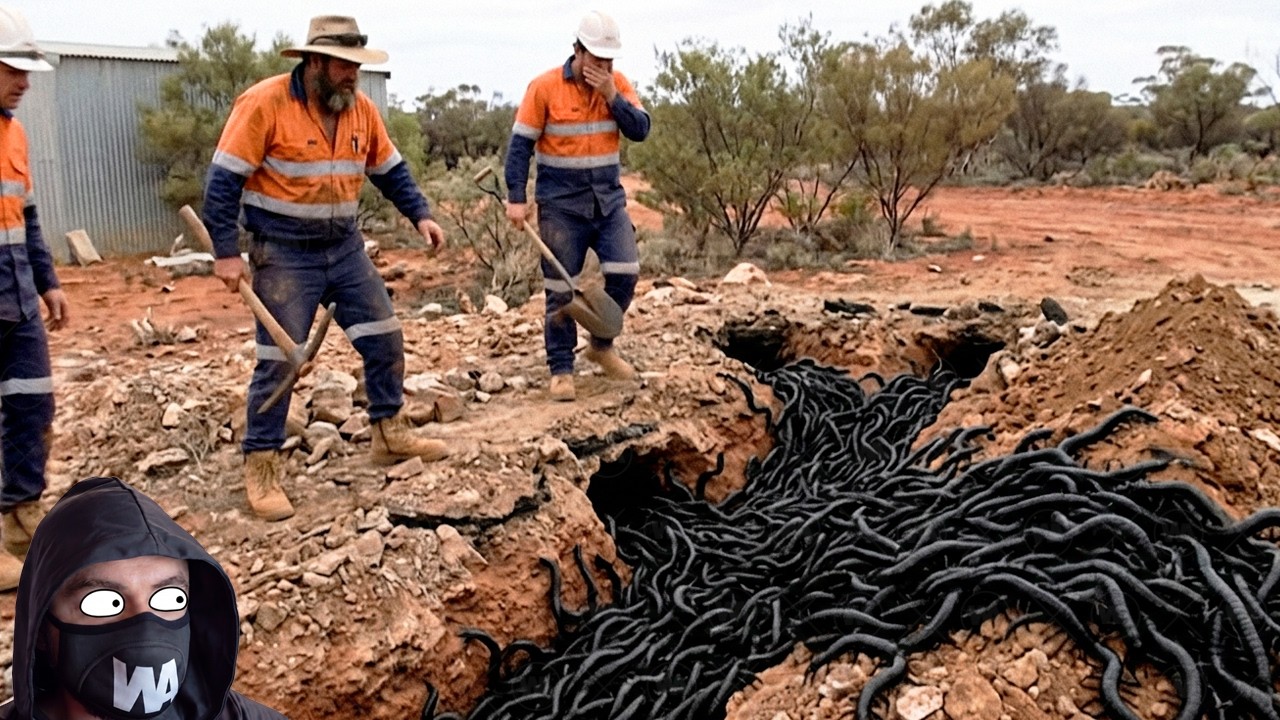
Australia Unleashes Endless Underground Hunters to Kill Venomous Snakes
Title history
- Australia Unleashes Endless Underground Hunters to Kill Venomous Snakes — observed on 20261031-2314 UTC (YouTube)
Keywords
Summary
165 words
Critical Evaluation
Value of the Information & Strength of the Argument
The video provides valuable information about the dual role of fire ants as natural predators of young snakes and as severe invasive pests. It effectively explains the ecological cascade triggered by their introduction, supporting the narrative with concrete examples such as the impact on native ants, plant pollination, and the stringent quarantine measures. The argumentation is persuasive and well-structured, transitioning from the snake problem to the ant solution and then to the unintended consequences. However, some claims are overstated for dramatic effect, such as the hypothetical venom volume comparisons, which are more sensational than scientifically substantive. The integration of specific program details (budget, treatment methods) adds credibility, but the lack of direct references weakens the overall evidentiary foundation.
Scientific Rigor, Source Quality, Title Accuracy
The scientific rigor is moderate. The video relies on general knowledge about fire ants and reports from eradication programs without citing peer-reviewed studies or official reports directly. It mentions Guiness World Records and CSIRO, but no specific publications. The title is appropriate, though somewhat clickbait-style, focusing on the predator aspect rather than the full invasive story. The content adheres to the title’s promise but also extends beyond it, which is acceptable. Public comments were not provided, so no analysis of audience reception is included.
217 words
Title / Content Match
The title is catchy and matches the core subject: fire ants are presented as predators of venomous snakes, though the broader invasive species issue is also covered.
Quality & Reliability
6/10
The video presents factual information about fire ants and their impact on Australian ecosystems, but relies on sensationalist numbers and lacks explicit source citations. The tone is accessible and engaging, yet the scientific rigor is moderate.
Key Moments
Markers derived by PSI from the transcript: the creator did not define chapters.
- Introduction: hundreds of thousands of predators attacking snakes in Australia.
- History of venomous snake evolution in Australia and impact of European settlement, including rabbit explosion.
- Mongoose attempts as biological control and their failure.
- Introduction of fire ant as ideal predator: tiny, numerous, and effective against snakes.
- Discovery of fire ants in Australia in 2001 and their invasive spread.
- Ecological impacts: displacement of native ants, threats to small wildlife and plants.
- Australia's eradication program: 1.2 billion AUD funding, large-scale treatments, and monitoring.
- Detailed biosecurity measures: quarantines, baiting strategies, and movement restrictions.
- Research on RNA interference and conclusion about the ironic outcome.
Contribution & Novelties
The video’s original contribution lies in presenting a concise, narrative-driven overview of fire ants as both snake predators and invasive species, highlighting the irony of biological control backfiring. It synthesizes information on the eradication program’s scale and methods, making it accessible to a broad audience. For deeper exploration, several concepts and references are suggested.
Pour aller plus loin :
- Red imported fire ant — Overview of the species’ biology and invasiveness.
- Biological pest control — Background on using natural enemies for pest management, including risks.
- RNA interference — Explanation of the genetic technique being researched for ant control.
98 words
Radar Profile
The radar profile shows a high quantity of information (8/10) and moderate quality (7/10), reflecting the video's comprehensive coverage of the topic. The technical level is low (5/10), making it accessible to lay audiences, while global reliability is moderate (6/10) due to lack of direct citations and some sensationalist claims.