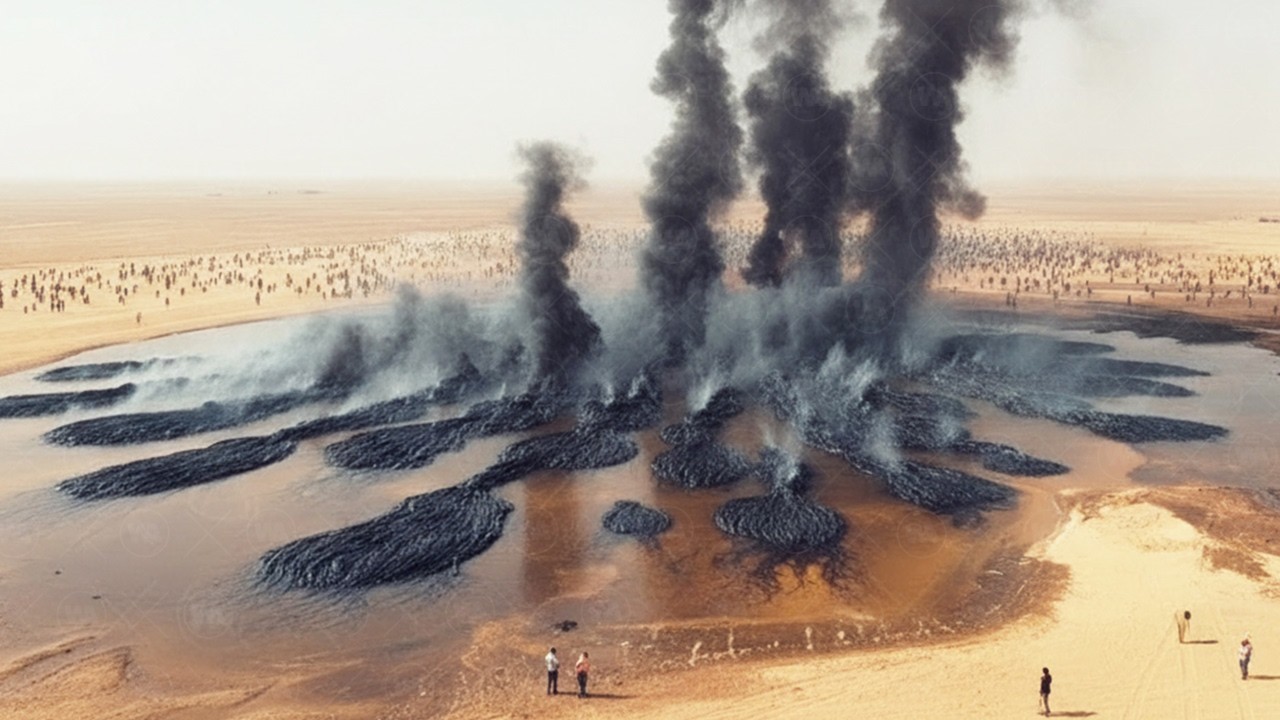
Florida Starts Pumping Billions of Tons of Unsalted Water Under the Desert to Stay One Step Ahead
Title history
- Florida Starts Pumping Billions of Tons of Unsalted Water Under the Desert to Stay One Step Ahead — observed on 20261101-0134 UTC (YouTube)
Keywords
Summary
167 words
Critical Evaluation
Value of the Information & Strength of the Argument
The video delivers substantial value by clearly explaining a complex water management technique, using accessible analogies and visual maps to illustrate how ASR works. The argumentation is logically structured: it starts with the problem, introduces the technology, addresses potential concerns (mixing, pressure, regulation), and provides real-world examples. However, it occasionally overstates the certainty of outcomes (e.g., ’everything’s under control’) and does not delve into known challenges such as clogging, geochemical reactions, or the long-term stability of injected water. The lack of citations weakens the scientific rigor, but the overall narrative is coherent and persuasive for a general audience.
Scientific Rigor, Source Quality, Title Accuracy
The video provides no explicit sources, relying on general knowledge and simplified explanations. It mentions numbers (e.g., 1.6 billion gallons per day, 21 wells in the Peace River system) without referencing official reports or studies. The title is inaccurate, as Florida has no desert, and the phrase ‘unsalted water’ is awkward but not incorrect. The content is generally aligned with established knowledge about ASR, but the omission of potential downsides (e.g., sinkhole risks, water quality concerns raised in comments) makes the presentation somewhat one-sided. The production quality is decent, but the lack of citations and the sensational title undermine its reliability.
214 words
Title / Content Match
The title is misleading: Florida has no desert, and the video actually discusses aquifer storage and recovery to manage water surplus and shortages, not pumping water under a desert.
Quality & Reliability
7/10
The video provides a reasonably accurate and accessible explanation of Aquifer Storage and Recovery (ASR) in Florida, but it oversimplifies complex hydrogeological processes and fails to mention notable controversies or limitations, while the title misleadingly refers to a desert that does not exist in Florida.
Key Moments
Markers derived by PSI from the transcript: the creator did not define chapters.
- Introduction to Florida's water paradox and the need for storage.
- Explanation of aquifers and the Floridan Aquifer's role.
- How ASR wells operate, including injection and recovery cycles.
- Discussion of costs, scale (1.6 billion gallons/day), and strategic benefits like saltwater intrusion prevention.
- Real-world examples, including the Peace River system and nationwide adoption; conclusion on underground storage advantages.
Contribution & Novelties
The video offers a straightforward, entertaining overview of ASR in Florida, making the concept accessible to laypeople. Its original contribution lies in framing ASR as a solution to both flooding and drought, and in visualizing the scale of the infrastructure. However, it does not present new research or unique data; it synthesizes existing knowledge.
Pour aller plus loin :
- Aquifer storage and recovery - Wikipedia — Provides a comprehensive technical background and global examples.
- Floridan aquifer - Wikipedia — Details the geology and significance of the aquifer system underlying Florida.
- Everglades - Wikipedia — Discusses the ecological importance of water management in Florida’s wetlands.
104 words
Radar Profile
The radar shows high quantity of information and moderate quality, with lower technical depth and reliability scores. The profile suggests a broadly informative but somewhat oversimplified presentation, where the emphasis is on breadth rather than technical precision.
💬 Skeptical: On the 30 comments analyzed, many question the desert reference and express concerns about potential sinkholes and the safety of injecting treated water into aquifers, while a few appreciate the educational value.