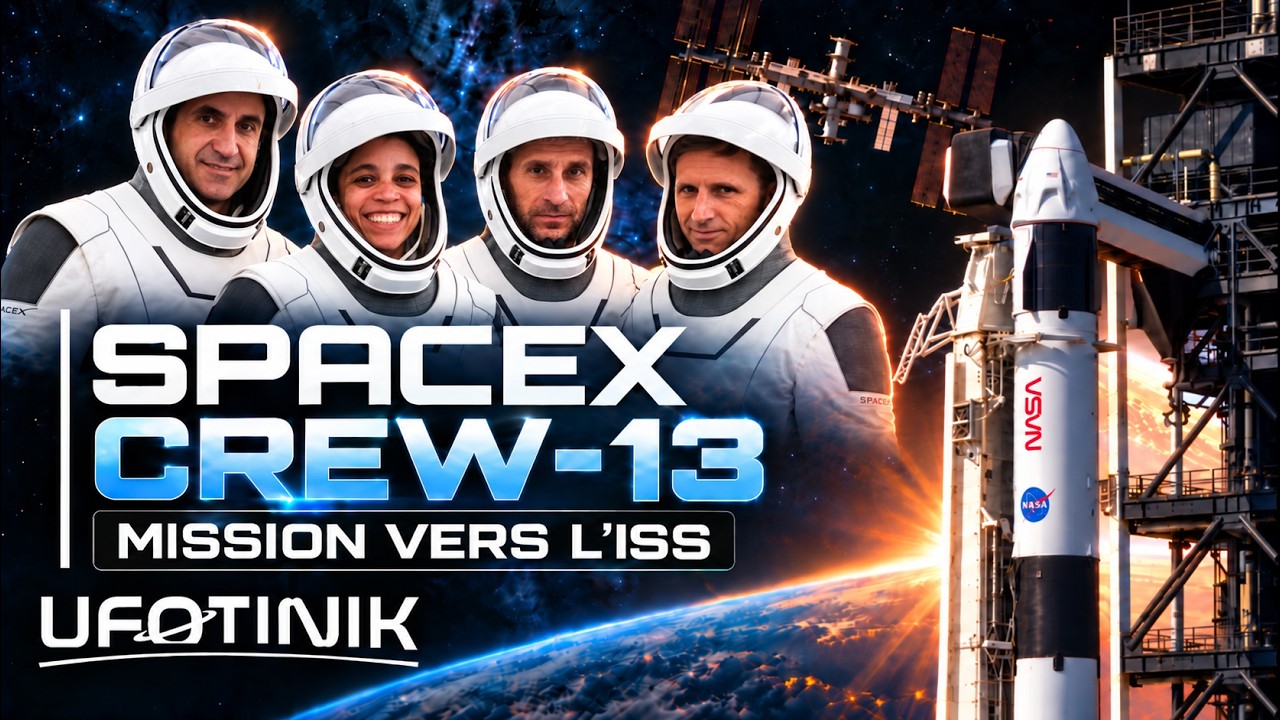
🔴 EN DIRECT LANCEMENT SPACEX NASA CREW-13 : Lancement habité vers l'ISS (Lancement spatial - FR)
🔴 LIVE SPACEX NASA CREW-13 LAUNCH: Crewed launch to the ISS (Space launch - FR)
Keywords
Summary
164 words
Critical Evaluation
Value of the Information & Strength of the Argument
The video offers substantial value by combining live event coverage with educational explanations. The host clearly explains complex concepts like hypergolic propellants, orbital phasing, and the aerodynamic stress of Max-Q, making them accessible to a general audience. His argumentation is sound, as he bases his statements on well-established facts about the mission, crew, and hardware. He also provides context, such as the history of the capsule and the reason for launch delays, which adds depth. The live nature allows for real-time adjustments and responses to events, increasing credibility.
Scientific Rigor, Source Quality, Title Accuracy
The scientific rigor is high: the host cites NASA and SpaceX implicitly through specific mission details and telemetry, and his technical descriptions align with known facts. However, he does not reference external documents or studies, relying on his own knowledge and official information. The title is precise and directly matches the content—a live stream of the Crew-13 launch. There are minor slips (e.g., mispronunciations) but they are corrected. The description includes links to the channel’s calendar and merchandise, which serve as supplementary resources but are not primary scientific sources.
192 words
Title / Content Match
The title accurately reflects the content: a live broadcast of the SpaceX NASA Crew-13 launch, with detailed commentary.
Quality & Reliability
8/10
The host provides detailed and accurate technical information about the mission, including crew biographies, orbital mechanics, and rocket specifications. The information appears well-researched, though live-streaming may lead to minor slips, which are promptly corrected.
Key Moments
Markers derived by PSI from the transcript: the creator did not define chapters.
- Introduction to the live stream and mission overview, including launch time and weather conditions.
- Detailed presentation of the four crew members, their backgrounds, and mission roles.
- Explanation of the Crew Dragon capsule's propulsion system, including hypergolic propellants and the recent valve issue.
- Final countdown and liftoff of the Falcon 9 rocket, with live telemetry and commentary on Max-Q.
- Update on first stage booster landing and second stage burn for orbital insertion.
Cited Sources
- Ufotinik Launch Calendar — Mentioned as a resource for upcoming launches.
- Starship Flight 14 Patch — Mentioned as merchandise, likely for supporting the channel.
Concurring Sources
- Crew Dragon - Wikipedia — Provides details on the spacecraft and its capabilities, consistent with the video's description.
- Falcon 9 - Wikipedia — Rocket vehicle details, matching the technical data given.
- International Space Station - Wikipedia — Background on the ISS, the destination of the mission.
External References
Contribution & Novelties
The live stream provides a unique, real-time commentary on a crewed space mission, offering viewers insights into the technical and human aspects of the launch. The host’s explanations of orbital mechanics and spacecraft systems serve as an educational complement to the raw footage.
Pour aller plus loin :
- Crew Dragon - Wikipedia — Detailed information on the spacecraft, its design, and missions, consistent with the video’s presentation.
- Falcon 9 - Wikipedia — Technical specifications and launch history of the rocket used in this mission.
- International Space Station - Wikipedia — Overview of the ISS, its orbit, and operations, relevant to the rendezvous profile discussed.
104 words
Radar Profile
The profile shows high quantity and quality of information, with a good technical level, indicating a well-informed and detailed presentation. The global reliability score of 8 underscores the host's attention to accuracy.