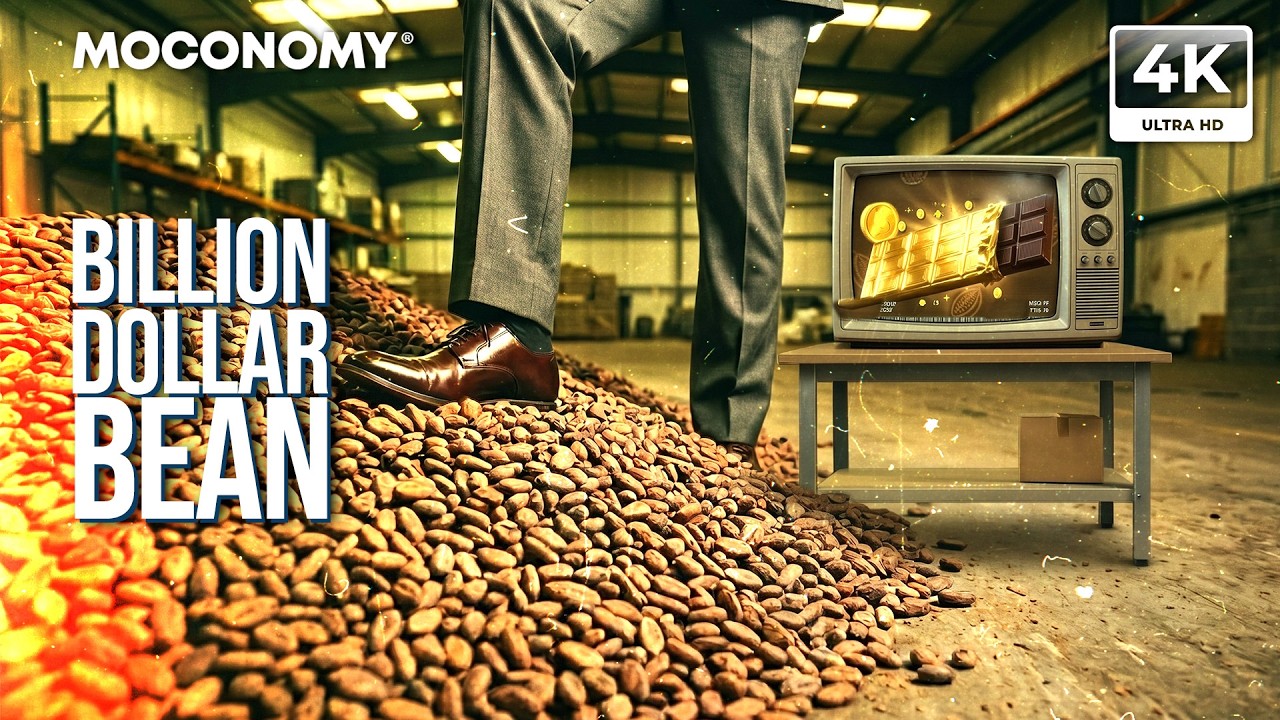
Big Cocoa: Prices Struggles In West Africa | Five million farmers against the market | 4K
Keywords
Summary
154 words
Critical Evaluation
Value of the Information & Strength of the Argument
The documentary provides valuable insights into the power asymmetries in the global cocoa supply chain, supported by concrete figures (e.g., farmers’ share of retail value, the $100 billion industry, and the LID’s limited impact). The argumentation relies on a diversity of voices, from corporate representatives to activists, which gives a multifaceted view. However, the presentation is clearly tilted toward advocacy, with interviewees largely sharing a critical perspective on Big Cocoa. The counterarguments are not equally represented, although the film does acknowledge complexities such as the differences between Ghanaian and Ivorian systems. Overall, the reasoning is coherent and backed by relevant expert testimony.
Scientific Rigor, Source Quality, Title Accuracy
The documentary uses a range of sources, including interviews with officials from the International Cocoa Organization (ICCO), fair-trade advocates, and legal experts, adding credibility. Historical references (e.g., the Harkin-Engel Protocol) and data from institutions like the World Economic Forum and corporate reports are cited. However, some statistics lack explicit citations, and the filmmakers’ affiliation with fair-trade movements could introduce bias. The title matches the content well, and the description lists the interviewees, enhancing transparency. No comments were provided for analysis, so public reception cannot be assessed.
203 words
Title / Content Match
The title accurately reflects the content: it focuses on cocoa price struggles in West Africa and the imbalance of power between millions of farmers and large corporations.
Quality & Reliability
8/10
Documentary featuring interviews with recognized experts and organizations (ICCO, Tony's Chocolonely, VOICE Network, human rights lawyer), with statistics and historical context. However, the narrative has a clear advocacy angle, and some claims would benefit from independent verification.
Key Moments
Markers derived by PSI from the transcript: the creator did not define chapters.
- Introduction: the problem of cocoa prices in West Africa.
- Paul Schoenmakers (Tony's Chocolonely) explains that farmers receive only 5-7% of the retail value.
- Michel Arrion (ICCO) discusses the dominance of Africa in cocoa production.
- Axel Emmanuel Gbaou, an Ivorian chocolatier, talks about local processing and ownership.
- Antonie Fountain (VOICE Network) explains how world market prices are set on commodity exchanges.
- Terry Collingsworth discusses child labor and the legal challenges against major chocolate companies.
- Analysis of the Living Income Differential (LID) and how companies circumvent it.
- Discussion on the EU supply chain directive (CSDDD) and potential future changes.
Cited Sources
- Support Moconomy (membership) — Link provided in the description for viewers to support the channel.
- More documentaries: Gold — Link to another documentary from the same channel.
- World Economy series — Link to a playlist of world economy documentaries.
- All playlists — Link to all playlists of the channel.
Contribution & Novelties
This documentary offers a comprehensive and accessible overview of the cocoa price-setting mechanisms, bringing together first-hand accounts from diverse stakeholders. It is particularly effective in explaining how futures markets and government policies interact to determine farmers’ incomes, and in exposing the gap between corporate commitments and actual practices.
Pour aller plus loin :
- Cocoa bean — Provides background on the cultivation and global trade of cocoa.
- Living Income Differential — Explains the mechanism designed to raise farmer incomes in West Africa.
- Harkin–Engel Protocol — A 2001 agreement aiming to eliminate child labor in cocoa production.
- Tony’s Chocolonely — Fair-trade company active in cocoa sustainability efforts.
- International Cocoa Organization — Intergovernmental body providing cocoa statistics and policy dialogue.
117 words
Radar Profile
The radar profile shows high scores in information quantity and quality, reflecting the documentary's substantial content and expert input. The technical level is moderate, making it accessible to the general public. Reliability is good, though the advocacy bias slightly reduces the score. Overall, the documentary excels in informing but may be less balanced in its critical stance.