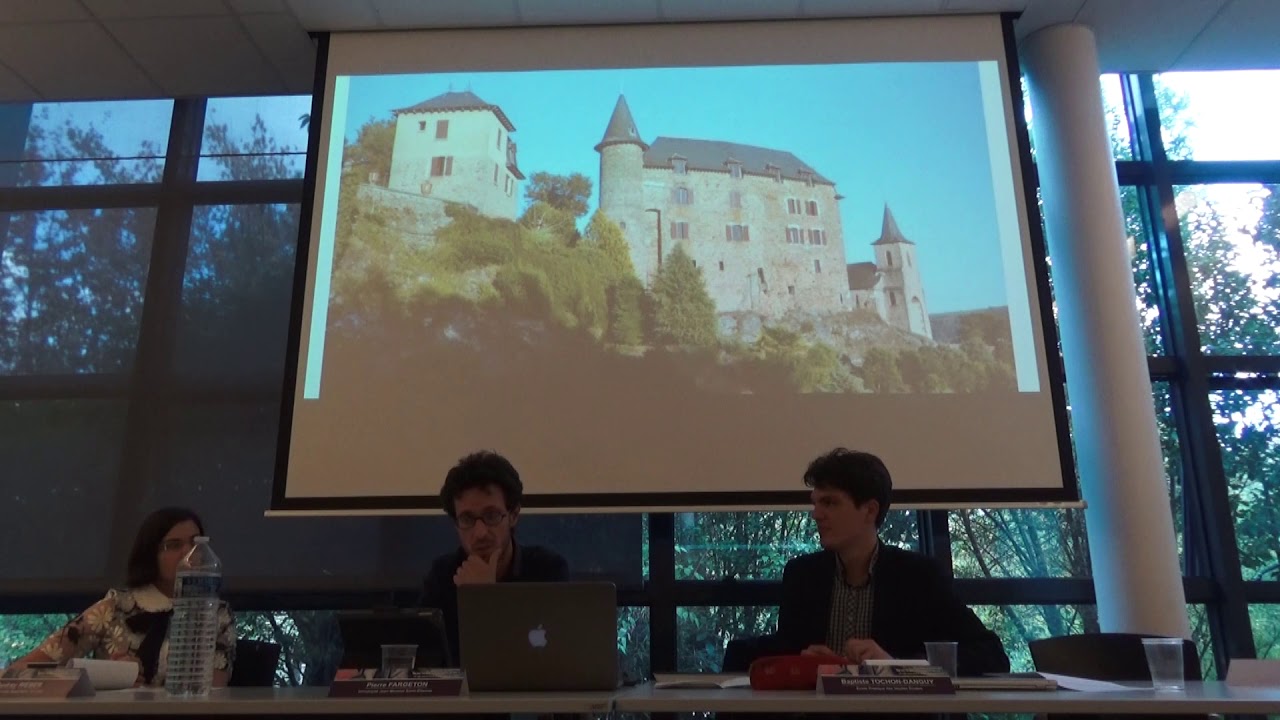
« Moderne / Modernisme. Qu’est-ce que la modernité en art ? » - Pierre Fargeton
Modern / Modernism. What is modernity in art? - Pierre Fargeton
Keywords
Summary
170 words
Critical Evaluation
Value of the Information & Strength of the Argument
The talk’s value lies in its detailed historical reconstruction and its framing of jazz criticism through the prism of political and religious ideologies. Fargeton convincingly demonstrates that Panassié’s anti-modernism was rooted in Catholic Maurrasian thought, and that Hodeir’s modernism was part of a broader epistemic worldview. The argument is structured: it first presents Panassié’s ideology, then Hodeir’s, then the reversal of perceptions. The evidence (quotes, archival letters) strengthens the argument, though some interpretations remain speculative due to the subjective nature of intellectual history.
Scientific Rigor, Source Quality, Title Accuracy
Fargeton relies on primary sources (books, articles, letters) and explicitly mentions secondary actors like Jacques Maritain. The talk is rigorous in its contextualization, but since it’s a conference oral presentation, precise citations are limited. The title accurately reflects the content, as the talk directly addresses the question of modernity in art through the case study of jazz criticism.
156 words
Title / Content Match
The title is broad and accurately reflects the talk's focus on modernity via the jazz critique of Panassié and Hodeir; the specific angle on politics and modernity clearly corresponds to the content.
Quality & Reliability
8/10
The talk is an academic conference by a musicology lecturer (Pierre Fargeton), drawing on archival documents, published books and letters. The argumentation is nuanced and well-documented, but some chronological markers are imprecise (e.g., 'attitude in 1951'), and the talk relies on a personal interpretation of primary sources.
Key Moments
Markers derived by PSI from the transcript: the creator did not define chapters.
- Introduction by the session chair and presentation of Pierre Fargeton.
- Fargeton introduces the two figures: André Hodeir and Hugues Panassié.
- Context of the jazz criticism field and the famous quarrel between ancients and moderns.
- Panassié's biography and his Catholic royalist background.
- Fargeton analyzes Panassié's primitivism and his letters on race and music.
- Hodeir's career and his book 'Jazz: its evolution and essence'.
- Debate on how critics' positions were later reinterpreted. Conclusion.
Cited Sources
- Colloque « Moderne / Modernisme » on Labex Comod website — The official page of the conference, providing details about the event and Fargeton's contribution.
Concurring Sources
- André Hodeir page on Wikipedia — Provides a summary of Hodeir's life and works, consistent with the talk.
Dissenting Sources
- Post-colonial critiques of European jazz criticism — Recent scholarship has accused Hodeir's approach of Eurocentrism, which Fargeton discusses and partially disputes in his talk.
Contribution & Novelties
This talk brings a fresh perspective on jazz criticism by showing how the modernist positions of Hodeir and the anti-modernist positions of Panassié were not merely aesthetic choices but were deeply embedded in political and religious worldviews. It highlights the importance of under-examined archival sources and proposes that the notion of modernity in art is constructed through controversy and rejection.
Pour aller plus loin :
- Jazz criticism in France — Useful for general context on the field.
- Hugues Panassié (French Wikipedia) — Detailed biography and legacy.
- André Hodeir (French Wikipedia) — Life and contributions.
- The Modernism concept — Background on the artistic movement that frames the debate.
107 words
Radar Profile
The radar profile is balanced, with high scores on quantity and quality of information, but a slightly lower score on technical level, aligning with this being an oral historical essay rather than an experimental study.