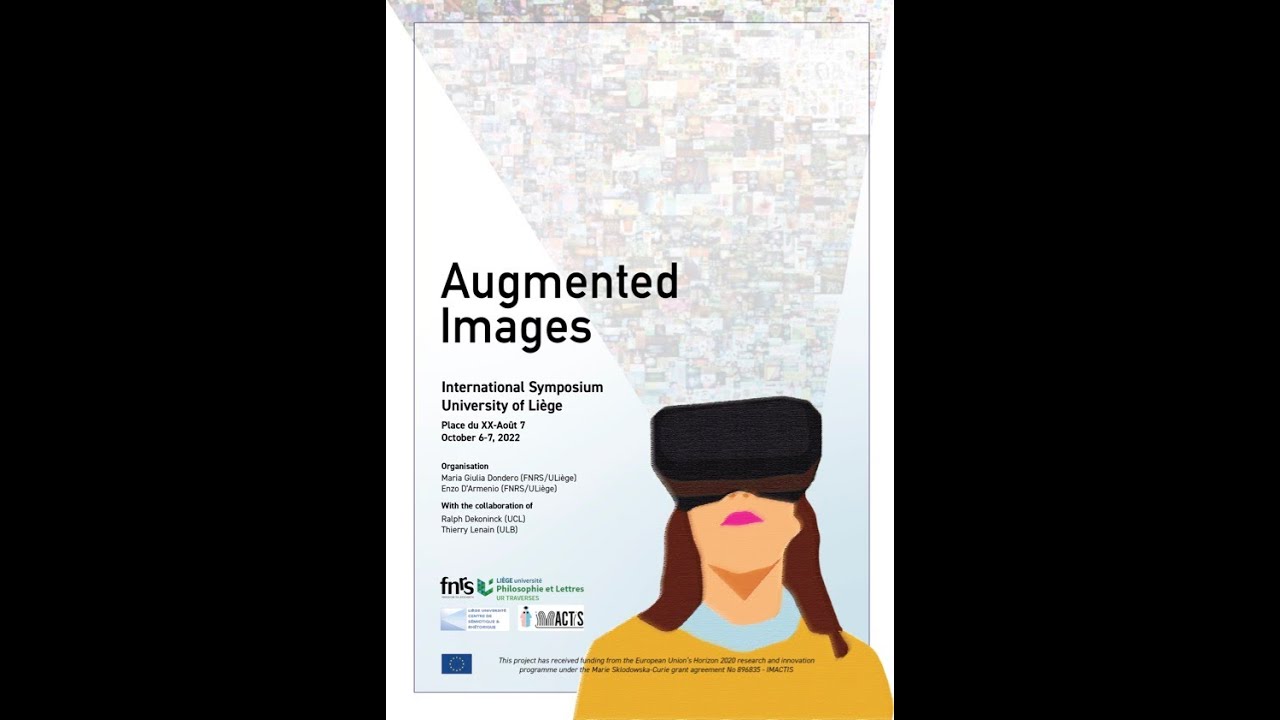
Lev Manovich — Augmented Images (ULiège)
Keywords
Summary
163 words
Critical Evaluation
Value of the Information & Strength of the Argument
The value of this talk lies in Manovich’s unique perspective as both a theorist and an artist experimenting at the cutting edge of AI generative tools. His argumentation is coherent and layered: he connects contemporary AI image synthesis to long-standing debates in art history, particularly modernism’s rejection of narrative and its focus on the visual medium itself. He effectively illustrates his points with concrete examples from his own work, such as the still-life series and the parameter-controlled evolution of images. However, the argument is somewhat informal and anecdotal, without systematic analysis or reference to broader research. The core contribution is the conceptual framing of AI tools as amplifiers of textual prompts, reversing the modernist notion that language delimits imagery. The discussion of repetition and variation as fundamental to human perception and creation is also insightful, though it remains at a philosophical level rather than a rigorously evidenced one.
Scientific Rigor, Source Quality, Title Accuracy
The talk is primarily grounded in the speaker’s personal experience and informal references to technologies like Midjourney and Stable Diffusion. Manovich mentions Roland Barthes’s essay on image and text, but does not cite specific papers or provide a systematic review. The intellectual rigor is moderate; the presentation is more exploratory than conclusive. The title is appropriate and reflects the content accurately, as the talk indeed revolves around AI-generated images and their cultural implications. No external links or sources are provided in the video description, and the absence of citations limits the ability to verify claims externally. Overall, the talk is a thoughtful expert opinion rather than a deeply researched scientific treatment.
274 words
Title / Content Match
The title matches the symposium theme of 'Augmented Images' and the talk indeed addresses AI's role in image generation and understanding, making it adequately aligned.
Quality & Reliability
6/10
The talk is a personal and theoretical reflection by an established media theorist and artist. It offers insightful perspectives based on his experience but lacks systematic empirical validation or references to peer-reviewed studies.
Key Moments
Markers derived by PSI from the transcript: the creator did not define chapters.
- Introduction to AI image synthesis and its analogy to language models like GPT-3
- First showcase of AI-generated still life series and the theme of repetition vs. variation
- Discussion of modernism's rejection of text and how AI amplifies text into image
- Demonstration of Stable Diffusion parameter changes creating an evolutionary path from abstract to realistic
- Concluding thoughts on analyzing what artists could have created but didn't, and the bias toward existing works
Cited Sources
- Midjourney — AI image generation tool used by the author in his artistic experiments
- Stable Diffusion — AI image generation tool that allows parameter control, demonstrated in the talk
- GPT-3 — Language model mentioned as an analogy for text generation and AI writing
Contribution & Novelties
Manovich’s contribution is a personal and theoretical exploration of how AI image synthesis challenges conventional assumptions about the relationship between text and image, and how the technology can be used to investigate fundamental patterns of repetition and variation in visual creation. His idea of using AI to map the space of possible images, including those never realized, offers a novel avenue for future research in visual culture analytics.
Pour aller plus loin :
- Diffusion model (Wikipedia) — A technical explanation of the probabilistic models behind tools like Stable Diffusion.
- Generative art (Wikipedia) — The broader artistic tradition that includes AI-based creation.
- Roland Barthes (Wikipedia) — The theorist whose ideas on image and text are referenced in the talk.
118 words
Radar Profile
The radar shows a moderate performance across all criteria, with slightly higher scores in information quantity and quality, but lower technical depth and reliability. This reflects a talk that is intellectually stimulating and rich in ideas yet lacks rigorous scientific grounding.