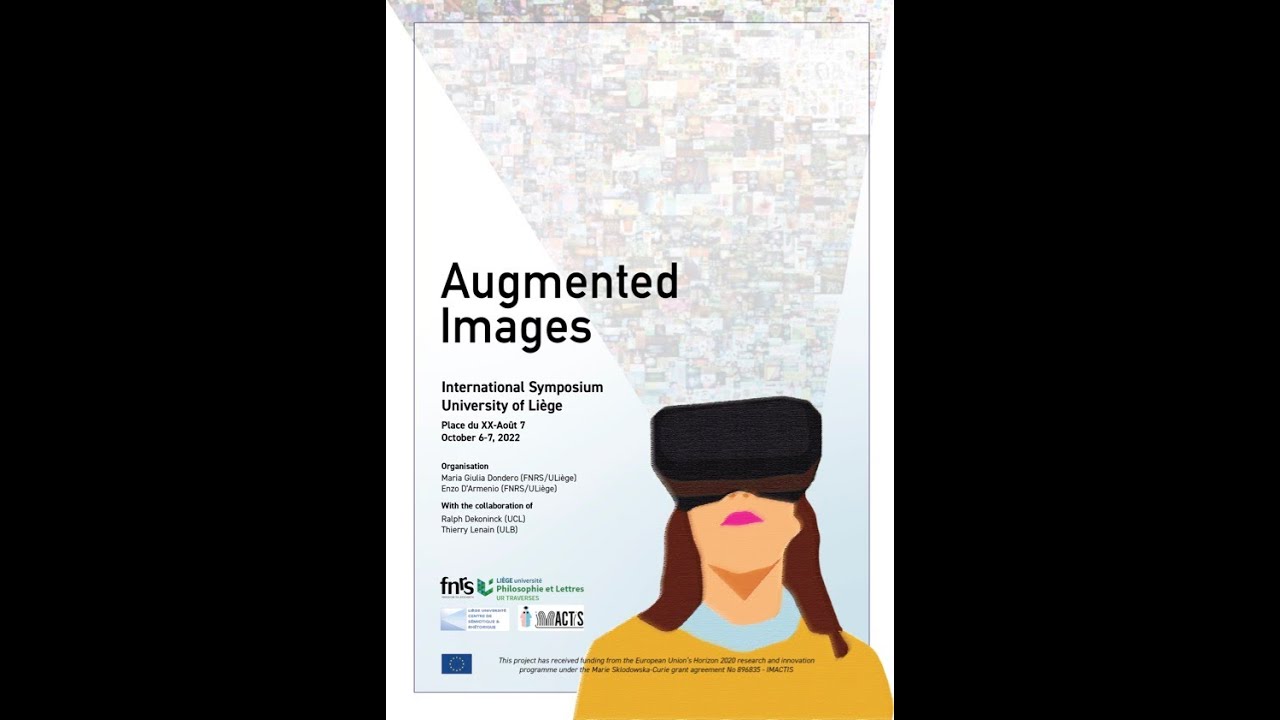
Augmented Images — Introduction by Anne Anne-Sophie Nyssen, Maria Giulia Dondero & Enzo D’Armenio
Keywords
Summary
184 words
Critical Evaluation
Value of the Information & Strength of the Argument
The value lies in the interdisciplinary perspective linking semiotics, art history, and computational methods. The argumentation is solid for an academic introduction: Dondero builds a case for a force-based segmentation model, grounding it in tensive semiotics, Deleuze, and Thom. D’Armenio supports his claims with references to specific theorists (Ricoeur, Manovich, Pinotti) and concrete examples. However, the arguments are presented as research proposals rather than empirically validated claims, and the technical details of the proposed algorithms are not fully elaborated. The reasoning is coherent but depends heavily on theoretical assumptions that may not be universally accepted in computer vision.
Scientific Rigor, Source Quality, Title Accuracy
The rigor is characteristic of an academic event: speakers cite numerous scholars (Warburg, Fontanille, Deleuze, Rene Thom, etc.) and mention their own funded projects. No external URLs are provided in the description, but the speakers clearly reference existing literature. The title ‘Augmented Images — Introduction’ is appropriate as it is the opening session of the symposium. The content matches the title, offering an overview of themes and objectives. No comments were provided to analyze audience reception.
189 words
Title / Content Match
The title accurately reflects the content: an introduction to the symposium on augmented images, featuring opening addresses and project overviews.
Quality & Reliability
7/10
The content is an academic symposium introduction by established researchers. It presents theoretical frameworks and ongoing research projects. The claims are grounded in semiotics and art history, but specific data or citations are not rigorously detailed in the transcript.
Key Moments
Markers derived by PSI from the transcript: the creator did not define chapters.
- Welcome and introduction by Maria Giulia Dondero.
- Opening address by university president Anne-Sophie Nyssen on impact of augmented images.
- Dondero introduces her research projects on visual semiotics and big visual data.
- Proposal for force-based segmentation; analysis of Tintoretto's paintings.
- Discussion on genealogy of visual forms and critique of current computer vision methods.
- D’Armenio presents project on identity and social media images, referencing influencers.
- Presentation of immersive qualities and 'movement-image' concept, with examples.
Contribution & Novelties
The video presents original research perspectives: Dondero’s proposal to segment images based on dynamic forces and genealogy offers a novel bridge between semiotics and computer vision. D’Armenio’s ‘movement-image’ concept provides a fresh lens for understanding interactive media. The symposium itself aims to foster interdisciplinary dialogue. However, these are initial ideas rather than fully developed findings.
Pour aller plus loin :
- Visual semiotics — Key theoretical foundation for the talks.
- Lev Manovich — His work on media visualization is extensively referenced.
- Gilles Deleuze’s Cinema books — Foundation for the ‘movement-image’ concept.
- Rainer Maria Rilke and art history — Connections to art historical analysis.
- Paul Ricoeur’s narrative identity — Basis for identity analysis in social media.
114 words
Radar Profile
The radar profile shows high scores in quantity of information and moderate-to-high in quality, with a slightly lower technical level due to the theoretical nature. The overall balance suggests a content-rich academic presentation with acceptable rigor.