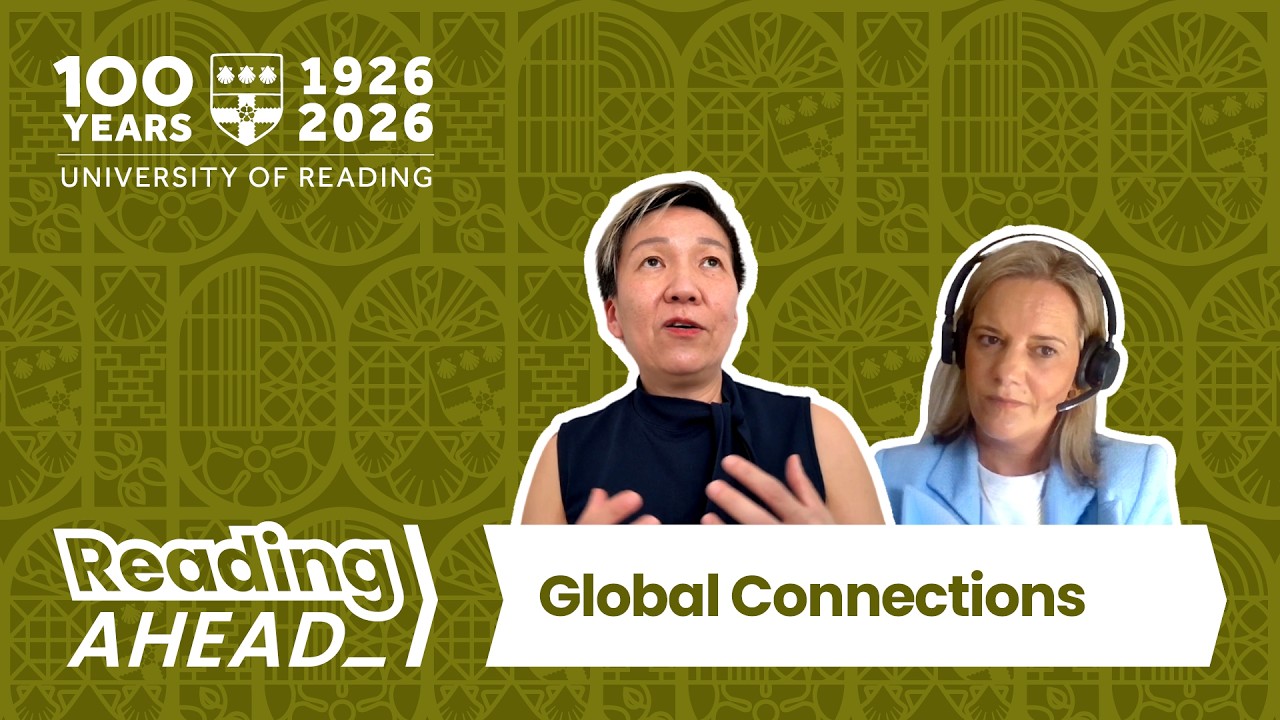
Reading Ahead S1 E6 | Global Connections
Keywords
Summary
138 words
Critical Evaluation
Value of the Information & Strength of the Argument
The discussion provides valuable perspectives from two different sectors: academia and banking. May Tan-Mullins offers deep insight into transnational education, drawing on her extensive experience across multiple countries. She argues convincingly that overseas campuses should evolve beyond income-generation to become locally engaged and globally networked, emphasizing co-creation of impact. Kate Manku brings a pragmatic finance view, discussing the financial challenges, the ~£9 billion needed for estate decarbonization, and the need for strategic responses. The argumentation is solid, grounded in real examples (e.g., the 1+1+1 degree with Bennett University, the decarbonization fund with National Wealth Fund). However, the conversation remains high-level and lacks quantitative data or comparative analysis. The hosts and guests maintain a constructive tone, exploring tensions but not deeply interrogating them. Overall, the value lies in the blend of practical experience and strategic vision, though the absence of counterarguments or detailed evidence tempers its depth.
Scientific Rigor, Source Quality, Title Accuracy
The content is rigorous in the sense that the guests are authoritative and the examples are concrete. However, no formal citations or references are given within the conversation; reliance is on their institutional roles and personal experience. The title ‘Global Connections’ is apt, as the episode systematically addresses cross-border university collaboration, international student mobility, and global education challenges. The description provides links to the University of Reading Malaysia and the podcast playlist, which serve as references but are not external sources. There is no evidence of misinformation or bias; however, the discussion does not engage with skeptical viewpoints on the benefits of transnational education or the financial viability of overseas campuses. The title matches the content accurately, and the epistemic stance is that of informed opinion rather than peer-reviewed research.
291 words
Title / Content Match
The title accurately reflects the episode's focus on international education, cross-border collaboration, and the role of universities in fostering global connections.
Quality & Reliability
8/10
The discussion features credible experts (university leader, banking sector head) with relevant experience, and touches on well-documented trends and challenges in higher education. While not citing specific studies, the arguments are consistent with public knowledge and institutional practices.
Key Moments
Markers derived by PSI from the transcript: the creator did not define chapters.
- Introduction to the podcast and the episode topic on global connections.
- May Tan-Mullins explains the evolution of transnational education and the co-creation concept.
- Kate Manku discusses the financial pressures facing universities and the shift in international student numbers.
- Sustainability and decarbonization of university estates, including a partnership example with the National Wealth Fund.
- Future outlook for 2048: AI, cultural exposure, and the importance of critical thinking and human connection.
Cited Sources
- University of Reading Malaysia — Mentioned as the institution for which May Tan-Mullins serves as Provost and CEO, and as the base for the Southeast Asian hub.
- Reading Ahead podcast playlist — Listed in the description as the full series for further episodes.
Contribution & Novelties
The episode contributes an up-to-date, cross-sector perspective on international higher education, particularly the argument that transnational education must shift from one-way transfer to mutual co-creation. It also highlights the intersection of financial sustainability and environmental sustainability in university planning, a topic less often discussed in public forums. The concrete example of a tri-national degree program (India, Malaysia, UK) illustrates innovative ways to build student global competence.
Pour aller plus loin :
- Transnational education — Provides an overview of the models and challenges discussed in the episode.
- Sustainable Development Goal 4 – Quality Education — Relates to the episode’s emphasis on equitable and inclusive education globally.
- Education for Sustainable Development (UNESCO) — Connects to the discussion of sustainability as a core university role.
122 words
Radar Profile
The radar profile shows high scores in quantity and quality of information, and in reliability, but a moderate score in technical level. This indicates that the episode offers substantial and trustworthy content for a general audience, without delving into highly technical or specialized details.