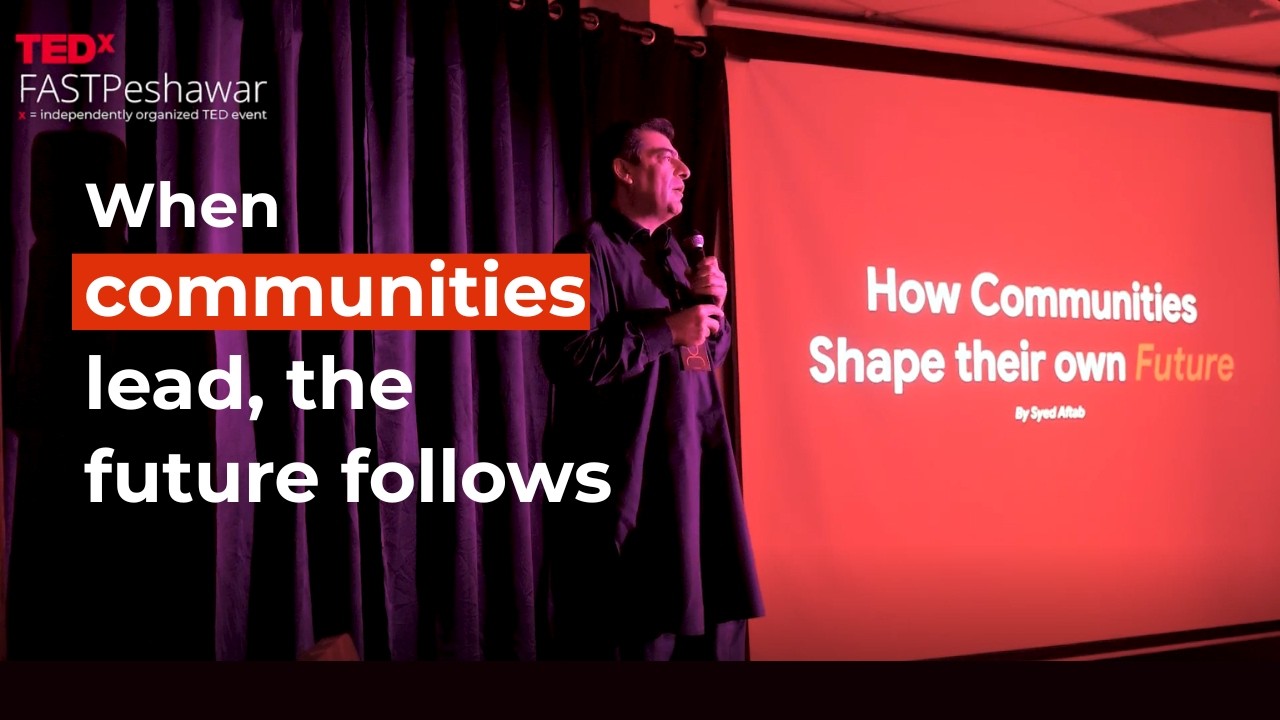
How Communities Shape Their Own Future | Syed Aftab Ahmad | TEDxFAST Peshawar
Keywords
Summary
167 words
Critical Evaluation
Value of the Information & Strength of the Argument
The talk provides valuable concrete examples from long-term field experience, showing how community participation can dramatically reduce costs and increase project longevity. The argumentation is coherent: by building on social capital and local networks, development outcomes improve. The strength lies in the authentic, grounded narrative, though it relies heavily on anecdotal evidence without quantitative data or comparative analysis. The speaker acknowledges challenges but does not deeply explore potential downsides or failures, which could strengthen the argument. Overall, the message is compelling and plausible, though not rigorously substantiated.
Scientific Rigor, Source Quality, Title Accuracy
The talk is based on the speaker’s two decades of practical involvement in community development, lending credibility through direct experience. However, no formal sources, academic references, or data are cited, limiting scientific rigor. The only external link is the generic TEDx page. The title accurately matches the content, as the entire talk centers on how communities can shape their futures when properly supported. The speaker uses clear, real-life stories, but the lack of verifiable evidence and the absence of citations reduce the overall scientific quality. The content is generally consistent with known participatory development approaches, but it remains an expert opinion rather than a systematic study.
208 words
Title / Content Match
The title faithfully reflects the talk's central theme of community-led development and empowerment.
Quality & Reliability
6/10
Based on direct field experience with concrete examples from Khyber Pakhtunkhwa, but without external verification or formal citations.
Key Moments
Markers derived by PSI from the transcript: the creator did not define chapters.
- Introduction: speaker introduces himself and his role at SRSP.
- Water supply project story: 11 villages, community built it at 1/6th of contractor cost.
- Flood relief anecdote showing the importance of local perspective.
- Micro-hydel power plant owned and maintained by the community.
- Village banks managed by women: 65,000 women managing their own funds.
- Need for catalyst organizations: characteristics and role of NGOs like SRSP.
Cited Sources
- TEDx Program — Official platform for the TEDx event where this talk was given.
Contribution & Novelties
The talk offers a practitioner’s perspective on community-driven development, reinforcing the importance of ownership and social capital. While not radically new, the specific examples from conflict-affected areas of Khyber Pakhtunkhwa provide fresh, practical illustrations. The speaker emphasizes flexibility, local adaptation, and the role of catalytic organizations, which are useful insights for development practitioners.
Pour aller plus loin :
- Community-driven development — Explores the broader concept and evidence base.
- Social capital — Key theoretical underpinning of the talk’s argument.
- Participatory development — Links to methods of involving communities in their own development.
- Rural Support Programmes Network — Context of the RSP network in Pakistan.
103 words
Radar Profile
The profile shows moderate scores across information quantity, quality, and reliability, with a lower technical level and a relatively high reliance on anecdotal evidence. The speaker's credibility is decent but not independently verified, and the content remains accessible rather than deeply analytical.