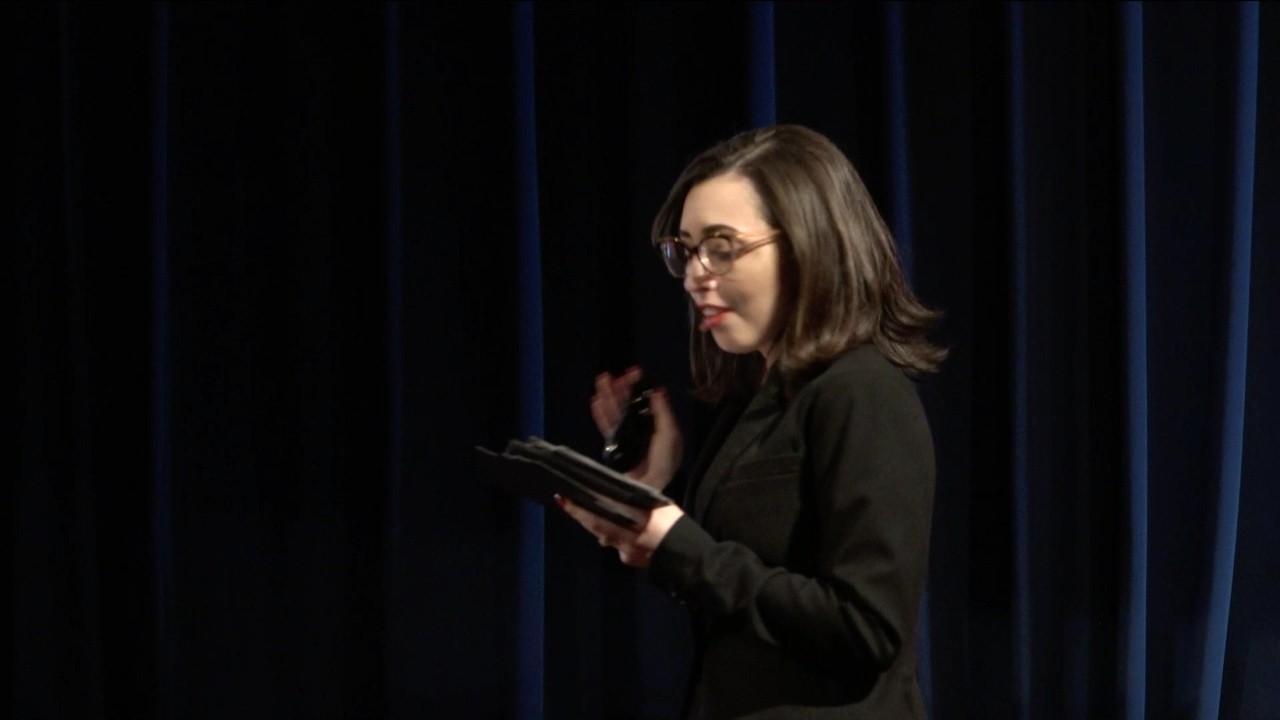
Bridging the worlds of head and heart | Kaylea Harris | TEDxUCO
Keywords
Summary
248 words
Critical Evaluation
Value of the Information & Strength of the Argument
The informational value here is conceptual and normative rather than empirical. The talk offers a usable distinction (persuasion versus presence), a diagnostic vocabulary (emotional absence mistaken for professionalism, professionalism as armour, untended silence as a trust eroder) and three named practices that are concrete enough to be operationalised in a seminar room or an office hour. The strongest passages are the ones that resist simplification: the treatment of silence is genuinely two-sided, noting that silence can signal trust in a healthy relationship and can corrode it when left unexplained; and the reading of Morrie and Mitch explicitly refuses the temptation to dissolve hierarchy, insisting that the relationship deepened without being relabelled. That is a more careful position than the usual ‘be more human’ exhortation, and it gives the talk its intellectual spine. The argumentation follows a clean arc — question, illustration, diagnosis, obstacle, practices, exhortation — and the transitions are deliberate rather than decorative. Its weaknesses are equally clear. The case of one memoir is used illustratively but also carries most of the persuasive weight, which is a category problem: a narrative that moves the speaker is not evidence that a communication practice works. Several claims are stated as absolutes without qualification, notably that clarity ‘must trump every other response in a relationship’ and that ‘if you are not being clear, you are not being kind’ — positions that would need at least a discussion of contexts where candour is constrained by power or safety. The diagnosis that academic culture rewards emotional distance is asserted as widely shared experience rather than demonstrated, and no counter-example (formal disagreement that is respectful, institutional safeguards that exist for reasons) is considered. The synthesis of Goulston, Fisher and Nouwen is selective and decontextualised from their own frameworks. The closing appeal is homiletic rather than argumentative: it invites assent through identification, which is legitimate for the genre but does not add evidential weight. Overall the reasoning is coherent, honest about its normative stance, and well-organised, but it persuades by resonance and testimony rather than by evidence, and it does not test its own claims against cases that might complicate them.
Scientific Rigor, Source Quality, Title Accuracy
Rigueur: the talk is intellectually careful in its conceptual distinctions but methodologically informal. No empirical study is presented, no data, no sample, no research design; the one appeal to evidence (‘research across linguistics and cognitive psychology shows us that meaning is not transmitted mechanically, but co-constructed through shared frameworks’) is a whole literature summarised in a sentence with no author, no date and no publication, which makes it impossible to check and impossible to weigh. The named authorities function as corroboration rather than as tested sources. Qualité des sources: the sources are real and identifiable but are invoked without bibliographic anchoring. Mitch Albom’s Tuesdays with Morrie is the only work named by title; Mark Goulston is introduced by his profession and a paraphrased claim without the work it comes from; Jefferson Fisher is described only as a ‘communication expert’; Henri Nouwen is correctly identified as a Dutch Catholic priest who taught at prestigious universities, with his reflections on control, risk, fear and the diminished character of managed love summarised in indirect speech; David Kessler is credited for a line explicitly acknowledged as originating in the context of grief and then extended by analogy — a move the speaker flags honestly, which is to her credit. The description supplies only a generic TEDx link, no reading list, so none of these can be followed up from the video page itself. Adéquation titre/contenu: the title announces a bridge between intellect and affect in academic life, and that is precisely the object of the talk, including its closing formulation that intellect can love and love can think; the promise is kept, even if the ‘head’ pole is characterised mostly as a counterweight rather than examined on its own terms.
656 words
Title / Content Match
The title's 'head and heart' framing is exactly what the talk develops: intellectual rigor versus relational presence in academic settings, closing on 'intellect can love and love can think'. The fit is strong, though the 'head' side is treated mostly as a foil rather than analysed in depth.
Quality & Reliability
4/10
A reflective TEDx talk that names real authors and practitioners (Albom, Goulston, Fisher, Nouwen, Kessler) but supplies no titles, dates, page references, study designs or data. The empirical claims ('research across linguistics and cognitive psychology shows...') are invoked generically without citation, and the argument rests mainly on one memoir and on personal experience. The reasoning is internally coherent and the speaker is transparent about the normative, testimonial nature of her case, but the evidentiary base is thin and unverifiable from the material provided.
Key Moments
Markers derived by PSI from the transcript: the creator did not define chapters.
- Opening framing: the unnamed divide between intellectual rigor and heart-centred connection, and the guiding question — conversation as presence rather than persuasion.
- Academia teaches analysis, critique and defence well, but not how to remain present; academic life described as a network of layered relationships.
- Tuesdays with Morrie introduced as the central case: an explicit communicative agreement, no hedging on difficult subjects including love.
- Diagnosis of academic culture: emotional distance rewarded, emotional absence mistaken for professionalism, closeness treated as a threat to objectivity; appeal to research on co-constructed meaning.
- Goulston on narrowed rational capacity when people feel unheard; Fisher on protecting the relationship so a next conversation remains possible.
- Two-sided treatment of silence: trust-signal in healthy relationships versus untended silence that erodes trust; clarity framed as care.
- Fear of vulnerability as the obstacle, with Henri Nouwen on love requiring relinquished control, exposure and risk even without security.
- Hierarchy and uneven power in academic speech; Morrie and Mitch refuse to let hierarchy dictate the relationship without redefining it.
- Three proposed practices: humility (entering as learners), curiosity (exploration over interrogation), care (protecting dignity and emotional safety).
- The fourteenth Tuesday, Mitch's choice of presence over avoidance, and the closing Kessler quote: what we avoid pursues us, what we face transforms us.
Cited Sources
- Tuesdays with Morrie (Mitch Albom, memoir) — Central case study of the talk; the Morrie/Mitch relationship is used to model presence, unhedged difficult subjects, and a bond that survives hierarchy without being relabelled.
- Mark Goulston — late psychiatrist, work on communication and conflict — Cited for the claim that when people feel unheard or dismissed, their capacity for rational thought narrows, and that listening restores a sense of safety.
- Jefferson Fisher — communication expert — Cited for the principle that the goal of a conversation is not to win the moment but to protect the relationship so that a next conversation remains possible.
- Henri J. M. Nouwen — Dutch Catholic priest and writer — Cited for his critique of academic life's competitive pressure on self-perception, and for the argument that love cannot be managed or protected without being diminished, that intimacy demands risk, and that fear is the primary obstacle to love.
- David Kessler — statement on grief — Source of the closing line 'what we avoid pursues us, and what we face transforms us', explicitly acknowledged as formulated about grief and extended by analogy to love.
- TEDx — event format and local organising — Only link supplied in the description; identified as the framework under which the talk was delivered by an independently organised local community.
Concurring Sources
- Interactional linguistics and cognitive psychology on co-constructed meaning — The talk's claim that meaning is negotiated from shared frameworks, context and lived experience is broadly consistent with mainstream work in these fields, though the speaker cites no specific study.
- Active listening literature (Rogers, Gordon lineage) — Supports the claim that listening is not passive and that restoring a sense of being heard lowers defensiveness.
- Work on vulnerability and interpersonal risk (Brené Brown) — Converges with the talk's argument that fear of exposure shrinks the space for connection, although the speaker does not cite it.
Contribution & Novelties
The talk’s distinctive contribution is not a new finding but a re-description of a familiar problem in educational settings: it reframes the head/heart split not as a tension between rigor and warmth but as a tension between persuasion and presence, and then locates the difficulty in communicative habits rather than in individual temperament. Two moves are worth retaining. First, the treatment of silence as a signal whose meaning depends on whether it is tended or untended — a more useful diagnostic than the usual advice to ‘communicate more’. Second, the insistence that hierarchy in academic relationships should not be dissolved or relabelled but held without letting it dictate the terms of the bond, illustrated by the Morrie/Mitch case. The three proposed practices (humility, curiosity, care) are not original in themselves, but their pairing with an explicit account of why presence feels risky under uneven power gives them a rationale. The talk does not close the loop, however: it offers no account of how such practices would be recognised, taught or evaluated, which is precisely the question an educational audience would want answered.
Pour aller plus loin :
- Tuesdays with Morrie — Background on the memoir that supplies the talk’s central case and its reception.
- Henri Nouwen — Biographical and bibliographic context for the theologian whose account of love, risk and control underpins the vulnerability section.
- Active listening — The established construct closest to the talk’s account of listening as a stabilising rather than passive act.
- Brené Brown — Widely read research programme on vulnerability and shame that overlaps the talk’s treatment of fear of exposure.
- Mark Goulston, Just Listen — The psychiatrist cited on narrowed rationality under perceived dismissal; his work on conversational de-escalation is the direct textual source, cited by name here without a verifiable link.
- Co-construction of meaning in interactional linguistics — The unnamed literature invoked when the speaker says meaning is not transmitted mechanically but built from shared frameworks and lived experience.
325 words
Radar Profile
The profile is heavily skewed toward conceptual and rhetorical qualities, with low technical demand and only modest informational density: the talk spends its time on framing, illustration and exhortation rather than on data or method. Reliability sits mid-range because the named sources are real and the reasoning is internally consistent, but nothing in the material is checkable from the video page. This is a profile typical of a reflective humanities talk rather than an empirical presentation.