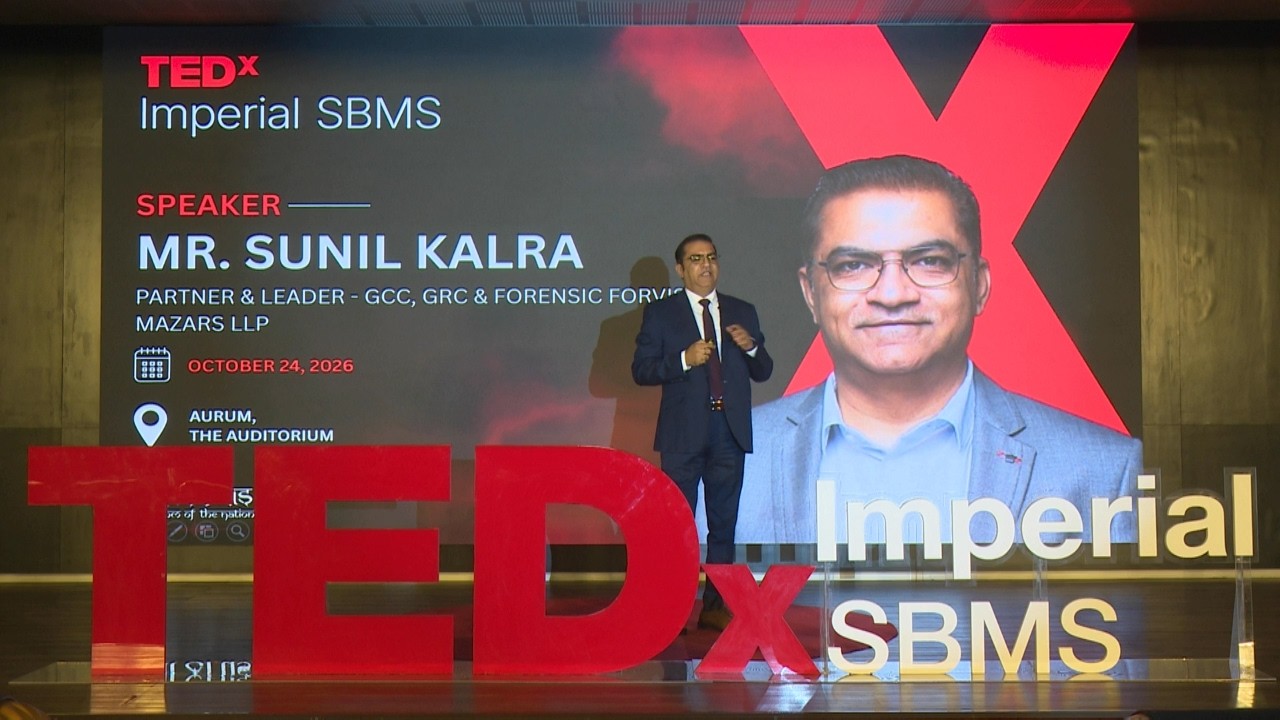
Dreams to Destiny | Sunil Kalra | TEDxImperial SBMS
Title history
- Dreams to Destiny | Sunil Kalra | TEDxImperial SBMS — observed on 20261120-1758 UTC (YouTube)
Keywords
Summary
150 words
Critical Evaluation
Value of the Information & Strength of the Argument
The value of the information lies in its clear, memorable structure and relatable analogies from the speaker’s professional background. The argumentation is consistent, using personal anecdotes and professional examples to illustrate each point. However, the claims are largely anecdotal and lack empirical support or reference to psychological research on goal setting. The reasoning is logical but does not engage with potential counterarguments or complexities. The speaker effectively uses rhetorical devices and a conversational tone to motivate the audience, but the substance is more inspirational than instructional.
Scientific Rigor, Source Quality, Title Accuracy
The talk adheres to the typical TEDx genre of personal storytelling and practical advice. No external sources are cited; the only link in the description is to the TEDx program. The title ‘Dreams to Destiny’ accurately captures the theme of transforming aspirations into outcomes through deliberate effort. The content’s rigor is moderate: it is internally consistent but not backed by citations or data. The speaker’s authority comes from his 21 years in forensic auditing, which lends credence to his discussions on accountability and ownership, but the framework itself is not empirically validated.
193 words
Title / Content Match
The title accurately reflects the content: a journey from dreams to achieving them through a five-stage framework, with a focus on personal discipline and ownership.
Quality & Reliability
5/10
The talk offers a personal framework based on anecdotes and professional experience in forensic investigation, but lacks verifiable evidence or scientific studies to support the claims. The advice is commonsensical and inspirational rather than empirically grounded.
Key Moments
Markers derived by PSI from the transcript: the creator did not define chapters.
- Sunil introduces the 5-stage framework: Dream, Decide, Dedicate, Do Not Deflect, Destination.
- Dream stage: importance of dreaming big, example of Verghese Kurien and the white revolution.
- Decide stage: setting specific, measurable, and dated goals; contrast with vague wishes.
- Dedication stage: consistency over motivation, personal story of pursuing a management degree.
- Do Not Deflect: taking ownership, avoiding excuses, and learning from failures.
- Destination: life as a balance sheet, time as currency, and the concluding message.
Cited Sources
- TEDx program — The talk was given at a TEDx event, using the TED conference format but independently organized.
Contribution & Novelties
The talk presents a simple, memorable 5-D framework that synthesizes common goal-setting principles with forensic audit metaphors. While not scientifically novel, it offers a practical mental model that combines personal accountability, specificity, and persistence. The speaker’s background adds a distinctive perspective on ownership and detecting deviations. The main originality lies in the analogy between a fraud investigation and personal goal adherence, where small oversights can derail success.
Pour aller plus loin :
- SMART criteria — Relevant to the ‘Decide’ stage, emphasizing specific, measurable, achievable, relevant, and time-bound goals.
- Growth mindset — Aligns with the idea of seeing challenges and failures as opportunities to learn, complementary to the ‘Do Not Deflect’ stage.
- Self-determination theory — Provides a psychological framework for intrinsic motivation, which underlies sustained dedication and consistency.
127 words
Radar Profile
The qualitative scores indicate a talk that is moderate in information quantity and quality, but low in technical depth and reliability. The profile suggests a motivational, accessible speech with anecdotal support rather than rigorous scientific evidence, typical of a TEDx personal development talk.