What’s Traditional Calligraphy All About? | Aiden Ghim | TEDxNewton Academy Youth
Keywords
Summary
154 words
Critical Evaluation
Value of the Information & Strength of the Argument
The talk provides a personal and emotional perspective on a traditional art, highlighting its aesthetic principles and the challenges it faces. The argumentation is built on personal narrative, making it compelling but not data-driven. The speaker’s passion is evident, and he effectively conveys the art’s importance through his family’s story. However, it lacks empirical evidence or broader cultural analysis, relying instead on anecdote. The value lies in raising awareness about a fading tradition and offering an intimate look at its practice.
Scientific Rigor, Source Quality, Title Accuracy
The speaker does not cite scholarly sources but draws from personal experience and family history. The quality of sources is limited to personal testimony, which is appropriate for a personal talk but not for rigorous academic analysis. The title accurately represents the content, as the talk covers what traditional calligraphy is about from a personal perspective. The adéquation is high. There are no external references provided aside from the TEDx platform. Overall, the talk is sincere but lacks objective verification, which is typical for TEDx personal stories.
183 words
Title / Content Match
The title accurately reflects the content, which explains the essence of traditional calligraphy through personal experience and family history.
Quality & Reliability
7/10
The talk is a personal narrative, with sincere reflections but lacks external verification. It is authentic and emotionally compelling, though anecdotal throughout.
Key Moments
Markers derived by PSI from the transcript: the creator did not define chapters.
- Introduction of the mysterious drawer at grandmother's house, sparking curiosity.
- Explanation of traditional calligraphy: brush, black ink, white paper, and focus on balance and stroke weight.
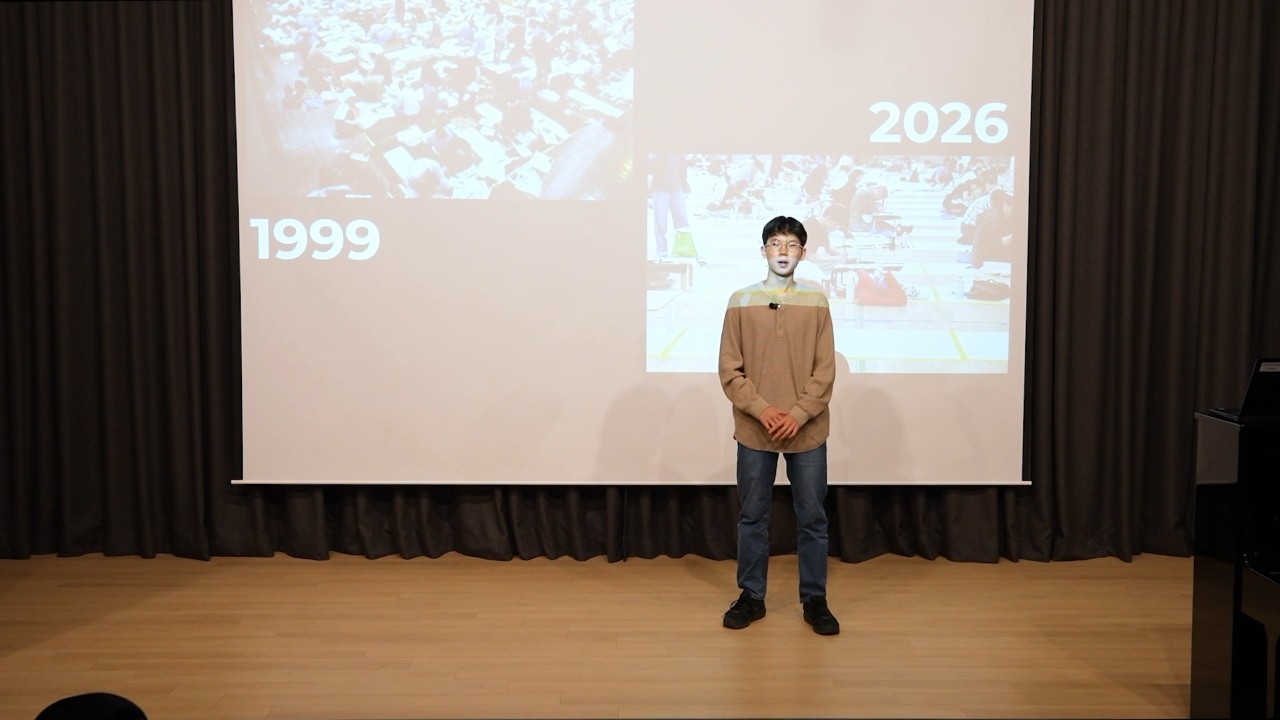
- Discussion of competitive calligraphy, where mistakes are irreversible and precision is critical.
- Decline of calligraphy in Korea: dwindling student participation and aging practitioners.
- Grandmother's first encounter with calligraphy at a library, and the librarian's disappearance.
- Grandmother's return to calligraphy in her late 30s, overcoming gender barriers and becoming a master.
- Personal significance of calligraphy as a connection to family, community, and cultural heritage.
Cited Sources
- TEDx official website — Provided in the video description as general information about TEDx events.
Concurring Sources
Dissenting Sources
Contribution & Novelties
The talk offers a unique personal lens on traditional calligraphy, intertwining the art’s decline with an intimate family story. It highlights the gender barriers in Korean calligraphy and the emotional weight of cultural loss. For further exploration, the following references are suggested.
Pour aller plus loin :
- East Asian calligraphy — Overview of the art form’s history and techniques.
- Korean calligraphy — Specific traditions and styles in Korea.
- Intangible cultural heritage — UNESCO framework for preserving traditions.
77 words
Radar Profile
The radar profile shows higher scores in information quantity and quality, reflecting a substantive personal narrative, while technical level and reliability are moderate, as the talk relies on anecdote rather than systematic analysis.