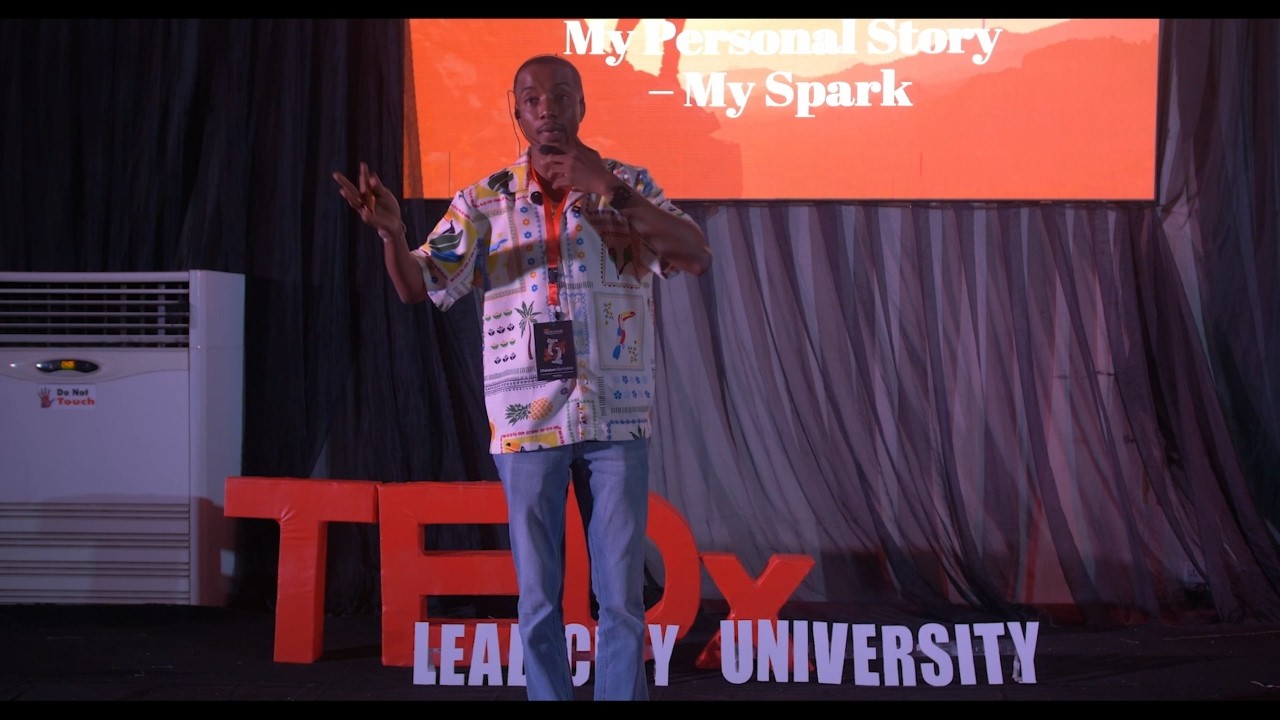
Individual spark to collective fire | Olamilekan Bamidele (King Pexxie) | TEDxLead City University
Keywords
Summary
156 words
Critical Evaluation
Value of the Information & Strength of the Argument
The talk offers a clear and engaging narrative, using personal anecdotes and relatable analogies (lighter, power rangers) to argue that collaboration is the key to impactful change. The argument is structured around a central metaphor and supported by examples from the speaker’s professional life, making it accessible and persuasive for a general audience. However, the reasoning relies heavily on anecdotal evidence and does not engage with any empirical research or theoretical frameworks on collective action or organisational behaviour. The emotional appeal is strong, but the intellectual depth is limited, and the claims about collaboration as a ‘currency’ are presented as obvious truths rather than propositions to be examined.
Scientific Rigor, Source Quality, Title Accuracy
The talk is a personal testimony rather than a scientific presentation. No external sources are cited, and the only link provided in the description is the generic TEDx page, which does not support the content with references. The title accurately captures the essence of the talk, and the content stays on topic. However, the lack of evidence and reliance on motivational clichés reduces the scientific rigour. The speaker’s authority is professional (lawyer, entrepreneur) but not academic, and the talk does not claim to present research. The absence of any data or case studies weakens the reliability, though the message itself is coherent and well-delivered.
227 words
Title / Content Match
The title accurately reflects the central metaphor of an individual spark growing into a collective movement, which is consistently developed throughout the talk.
Quality & Reliability
4/10
The talk is based on personal anecdotes and motivational rhetoric, with no scientific evidence or citations to external research. It relies on subjective experience and inspirational analogies, offering limited verifiable or reliable data.
Key Moments
Markers derived by PSI from the transcript: the creator did not define chapters.
- Introduction with a lighter metaphor, explaining spark turning into fire.
- Discusses the power of 'we' over 'I', citing examples of big companies like Apple and Microsoft.
- Introduces the LBIP initiative for mentoring young lawyers and creatives.
- Uses the Power Rangers analogy to illustrate that a group is more powerful than an individual.
- Explores how everyday people have sparks but need catalysts, such as mentors or supporters.
- Highlights Nigeria's tendency to compete instead of collaborate, and argues for collaboration as the first instinct.
- Call to action: move from 'I' to 'we', find your spark and help others find theirs.
Cited Sources
- TEDx Program — Description of the TEDx event format and the program itself.
Concurring Sources
- Collective intelligence — Supports the idea that groups can outperform individuals under certain conditions.
- Collaboration — Provides a theoretical background for the talk's central theme.
Contribution & Novelties
This talk offers a personal and emotionally resonant perspective on the importance of collective effort, but it does not present novel scientific insights or original research. Its contribution lies in its motivational framing and the speaker’s real-world examples from law, business, and creative industries. The ‘collective fire’ metaphor is effective for general audiences, though it repeats common wisdom about teamwork and collaboration.
Pour aller plus loin :
- Collective intelligence — A concept relevant to how groups can achieve more than individuals.
- Collaboration — The act of working together, which the talk advocates as a primary strategy.
- Social capital — The networks of relationships that enable collective action, often cited in community building.
112 words
Radar Profile
The radar profile shows moderate scores in information quantity and quality, but low technical level and low reliability, reflecting the talk's anecdotal and motivational nature. The emphasis is on personal anecdote and inspiration rather than empirical evidence or technical depth.