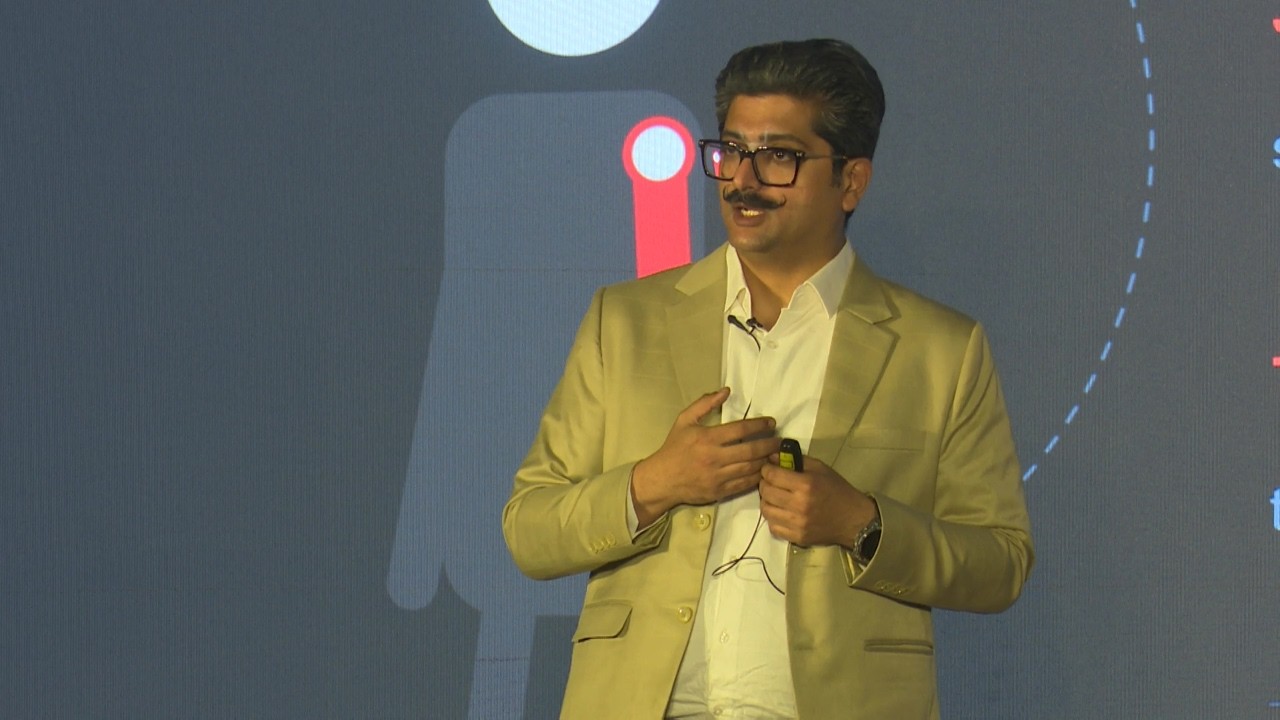
The Rhythm of Movement | Aditya Sai | TEDxImperial SBMS
Keywords
Summary
273 words
Critical Evaluation
Value of the Information & Strength of the Argument
The informational value is essentially conceptual rather than factual. The talk delivers a clear and clinically credible framework — patient-centred indication, individualised treatment, return to participation rather than return to imaging — but it does so without a single figure: no incidence of ACL rupture, no rate of return to sport after reconstruction, no comparison of operative versus non-operative management, no discussion of failure, re-injury or revision. What is offered is a way of thinking, distilled from practice, and the listener is expected to accept it on the speaker’s authority.
The argumentation is narrative and rhetorical rather than demonstrative. Its strongest device is the paired case: the young athlete and the older sedentary worker with the same lesion but different needs, then the active 50-year-old and the 55-60-year-old with the same irreparable cuff tear and different solutions. This parallel construction makes the thesis of individualised indication intuitively compelling and is genuinely effective pedagogy. The chain of reasoning is coherent — movement, identity, individualised indication, surgery as keystone rather than endpoint, multidisciplinary rehabilitation, social participation — and it escalates cleanly from joint to person to community. But the escalation to society rests on a single hypothetical (the delivery worker who loses his job), and the concluding appeal to ‘safe spaces’ and a ‘360-degree framework’ is asserted rather than specified: no actor, no mechanism, no funding, no measure of success.
There are also internal tensions that go unflagged. The talk states that the 50-year-old office worker with an ACL tear ‘may not need the surgery in the first place’, and shortly afterwards that ‘recovery starts from surgery’ — a formulation that quietly generalises a statement valid for operated patients to all patients. Similarly, surgery is called both a ‘keystone’ and a mere ‘ripple’, two metaphors pulling in different directions. No opposing view is entertained: nothing on the well-documented risk of over-treatment, on the placebo dimension of many orthopaedic procedures, or on access inequalities that make the multidisciplinary team described here largely aspirational in most health systems. The value of the talk therefore lies in its reframing of clinical success around what the patient wants to do again, which is a real and useful corrective to image-driven practice; its weakness is that this reframing is argued by anecdote and metaphor alone.
Scientific Rigor, Source Quality, Title Accuracy
No source is cited anywhere in the talk: no study, no author, no guideline, no registry, no epidemiological figure. The description supplies only the generic TEDx link, so the viewer has no documentary trail to follow. The terminology, by contrast, is rigorous and correctly used — anterior cruciate ligament, rotator cuff, instability, adhesive capsulitis, arthroscopy, arthroplasty, the notion of tendon transfer to restore strength around an irreparable cuff — with no visible anatomical or clinical error, and the description of rehabilitation as non-linear, with good days and bad days, is consistent with standard practice. The technical register is deliberately restrained: procedures are named and briefly situated but never described in operative detail, and the talk stays at the level of indications and goals.
On title-to-content fit, the match is acceptable but partly rhetorical. ‘Movement’ is genuinely the object of the whole talk, and the ‘rhythm’ metaphor is set up in the opening seconds and paid off in the closing passage on the ‘rhythm of the nation’. The core content, however, is injury, indication and rehabilitation; a listener seeking an analysis of rhythm, motor control or gait would not find it. The gap is stylistic rather than misleading, and it should not weigh heavily in the overall assessment.
600 words
Title / Content Match
The title is broadly honoured: movement is the central object of the talk and the 'rhythm' metaphor is opened at the start and closed in the final section on the 'rhythm of the nation'. It remains a rhetorical framing however, since the substance is injury, individualised indication and rehabilitation rather than rhythm as such.
Quality & Reliability
5/10
The speaker is a practising orthopaedic surgeon and the anatomical and clinical vocabulary is accurate and current (ACL, rotator cuff, adhesive capsulitis, arthroscopy, arthroplasty, tendon transfer). However, the talk is built entirely on professional experience and illustrative case vignettes: no study is named, no quantitative data (incidence, outcomes, complication or failure rates) is given, no guideline or registry is invoked, and the only link in the description is the generic TEDx page. Reliability is that of informed expert testimony, not of documented evidence.
Key Moments
Markers derived by PSI from the transcript: the creator did not define chapters.
- Opening audience experiment: which everyday movements (walking, stairs, top shelf) did you perform today, and did you have to think about them first?
- The speaker introduces himself as an orthopaedic surgeon specialising in sports injuries and shoulder surgery, and states his purpose: restoring the movement that gives meaning to a life.
- Core thesis: loss of movement means loss of activity, community, identity and independence, and clinicians must treat what the person has lost, not the imaging.
- The 17-year-old footballer vignette: non-contact knee twist, pop, swelling, loss of confidence — presentation of an ACL rupture and its life consequences.
- Same lesion, different person: the 50-year-old office worker may not need surgery at all — 'return' means different things to different people.
- Surgery reframed: arthroscopy and arthroplasty are technical means whose endpoint is restoration of participation, not a perfect procedure.
- Anatomy of the shoulder: tendons, muscles and ligaments working in tandem to give the 360-degree range taken for granted until it fails.
- Shoulder case: nocturnal pain, inability to lift children, abandonment of weekend swimming; rotator cuff tear, instability, frozen shoulder and arthritis as one joint with different problems.
- Rehabilitation as a team effort: surgeon, anaesthetist, rehabilitation team, nutritionist and psychologist from day one; non-linear course with good and bad days.
- Scaling up from joint to society — the delivery worker, the family, the community — and the closing message on the 'rhythm of the nation' and differing movement rhythms.
Cited Sources
- TEDx — official programme page — The only link provided in the video description; it points to the general TEDx organisation and does not document any of the clinical claims made in the talk.
Concurring Sources
- Rotator cuff tear — Wikipedia — General reference consistent with the talk's description of cuff tears as a cause of night pain and loss of overhead function.
- Anterior cruciate ligament injury — Wikipedia — Confirms the non-contact pivoting mechanism, the audible pop, swelling and instability described in the 17-year-old footballer vignette.
- Biopsychosocial model — Wikipedia — Supports the talk's argument that psychological and social factors, and not only tissue damage, determine recovery.
Contribution & Novelties
The talk does not present new findings. Its contribution is pedagogic and conceptual: it makes explicit, for a general audience, an argument that is well established in orthopaedic and rehabilitation practice but rarely articulated this clearly outside the clinic — that the indication for surgery is set by the patient’s life project rather than by the lesion visible on the scan. The deliberately parallel construction of two patients with the same ACL lesion, and of two patients with the same irreparable cuff tear, gives a compact and reusable model of individualised decision-making. The most distinctive element is the final shift of scale: mobility is presented not as an individual medical outcome but as a contribution to social and economic life, with the loss of one person’s shoulder framed as a break in a chain that reaches family and community. This is a rhetorical rather than an evidential contribution, and the talk offers no data, no implementation path and no counter-argument on over-treatment or access, but it provides a serviceable framework for thinking about what ‘recovery’ should be measured against.
Pour aller plus loin :
- Anterior cruciate ligament injury — Reference entry on the lesion at the centre of the athlete vignette, including non-contact mechanisms and treatment options.
- Rotator cuff tear — Background on the shoulder pathology discussed in the second half, including degenerative versus traumatic tears and indications.
- Adhesive capsulitis (frozen shoulder) — The ‘opposite end of the spectrum’ named in the talk, useful for distinguishing stiffness from instability.
- Biopsychosocial model — Conceptual frame that underwrites the speaker’s insistence on treating the person and not only the image.
- Patient-reported outcome measures (PROMs) — the standard instruments (e.g. Oxford Shoulder Score, IKDC for the knee) that would operationalise the talk’s claim that success should be measured by regained function; cited by name only.
302 words
Radar Profile
The profile is flat: information density, technical level, quality and reliability all sit at a middling level, which is characteristic of a well-structured clinical reflection rather than of an evidence-based review. The talk scores on clarity of framework and accuracy of terminology, and loses symmetrically on absence of data, absence of citations and absence of counter-argument. Technical depth is neither a strength nor a weakness here, since the register is intentionally accessible.