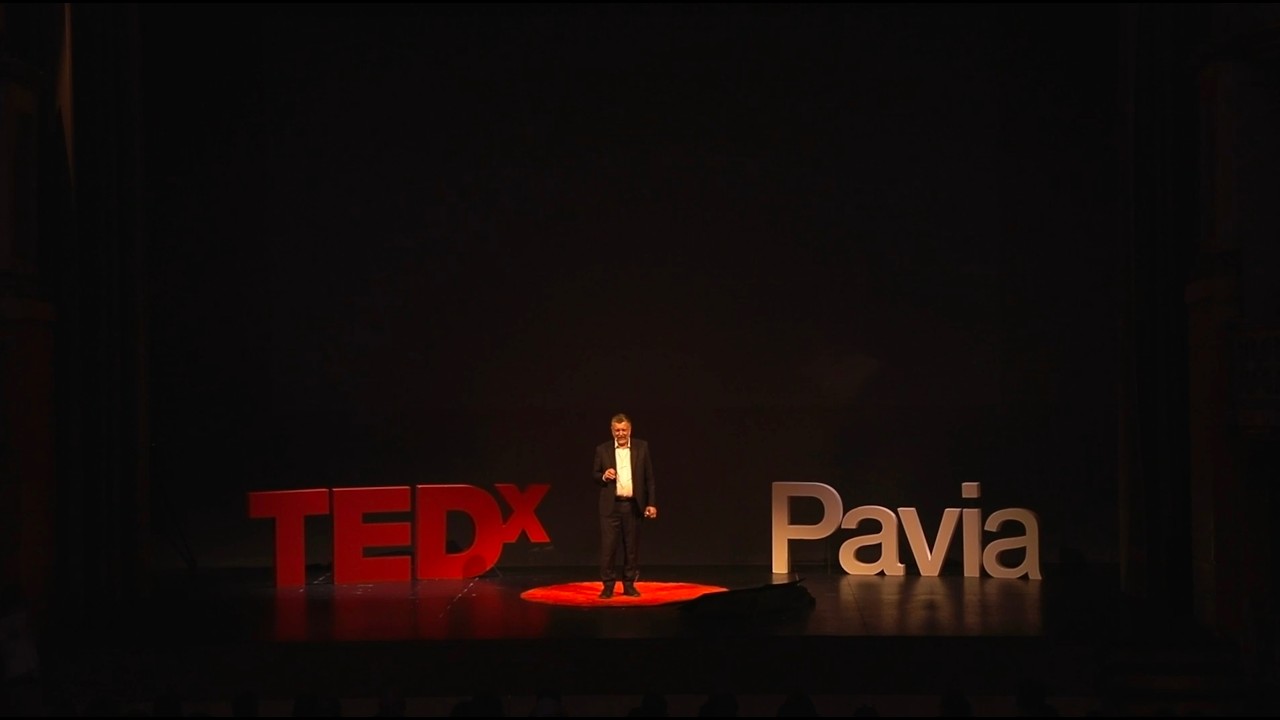
Rileggere Dante: tra terra e cielo, tra passato e futuro | Domenico De Martino | TEDxPavia
Title history
- Rileggere Dante: tra terra e cielo, tra passato e futuro | Domenico De Martino | TEDxPavia (PSI archive)
- Rileggere Dante: tra terra e cielo, tra passato e futuro | Domenico De Martino | TEDxPavia — observed on 20261120-1939 UTC (YouTube)
Keywords
Summary
204 words
Critical Evaluation
Value of the Information & Strength of the Argument
The talk offers valuable insights by reframing the Divine Comedy as a proto-humanistic work, emphasizing psychological and existential depth over mere theology. De Martino’s arguments are well-structured, moving from common misconceptions to a nuanced reading of key passages. He supports his points with close textual analysis, such as the significance of Dante’s use of ’nostra vita’ and the dialogue with Adam, which illustrate a sophisticated interpretation. The speaker’s expertise shines through, making the case for Dante’s relevance persuasive. While the reasoning is compelling, it remains an interpretive essay rather than a rigorous academic paper, relying on rhetorical persuasion and personal testimony. Still, the value lies in offering a fresh lens that reactivates curiosity and underscores the poem’s enduring human questions.
Scientific Rigor, Source Quality, Title Accuracy
The speaker does not cite external sources explicitly during the talk, but his academic background lends credibility. The only link provided in the description is to the TEDx platform, which offers general information but no direct references. The argumentation is internally consistent and grounded in the text of the Divine Comedy, which is itself the primary source. The title accurately matches the content, focusing on reading Dante from a balanced perspective between past and future, and between earthly and celestial concerns. There is no apparent discrepancy between title and message. The lack of explicit citations may limit verification, but the talk’s nature as an expert opinion mitigates this concern.
244 words
Title / Content Match
The title accurately reflects the talk's focus on re-reading Dante's work with a view to its timeless significance and the tension between earthly and heavenly aspects. The content consistently engages with these themes.
Quality & Reliability
8/10
The speaker, an academic with extensive experience in Dante studies and literary criticism, offers a well-informed and thoughtful interpretation. The talk is grounded in textual evidence, though it presents personal viewpoints rather than formal citations. The arguments are coherent and reflect scholarly expertise, but the nature of a TEDx talk limits depth and did not include explicit source references.
Key Moments
Markers derived by PSI from the transcript: the creator did not define chapters.
- Introduction: dealing with common reactions to Dante, including boredom
- Challenging the idea that Paradise is pure theology; presenting the poem as a human journey
- Explaining the selva oscura and the three beasts as inner obstacles to self-knowledge
- Dialogue with Adam: the human nature of language and its impermanence
- Concluding remarks: Dante wrote for future generations; encouraging a fresh reading
Cited Sources
- TEDx Platform — Mentioned as the platform hosting the talk, provided in the description.
Contribution & Novelties
De Martino contributes a thought-provoking re-evaluation of the Divine Comedy, shifting the focus from a purely theological or moralistic reading to a deeply humanistic and existential one. He highlights the concept of equilibrium as a dynamic tension, and explores the mutability of language as a uniquely human trait, challenging even biblical authority. This talk offers a bridge between medieval scholarship and contemporary concerns about identity and meaning.
Pour aller plus loin :
- Dante Alighieri — Overview of Dante’s life and works, providing context for his philosophy.
- Divine Comedy — Detailed encyclopedia entry on the poem’s structure, themes, and historical influence.
- Humanism — Relevant to the talk’s emphasis on human dignity and the value of human reason and creativity.
118 words
Radar Profile
The radar profile shows a talk that is strong in information quality and reliability, reflecting the speaker's expertise, but moderate in quantity of information and technical level, as it is an accessible lecture. The overall shape indicates a balanced, engaging presentation rather than a dense academic treatise.