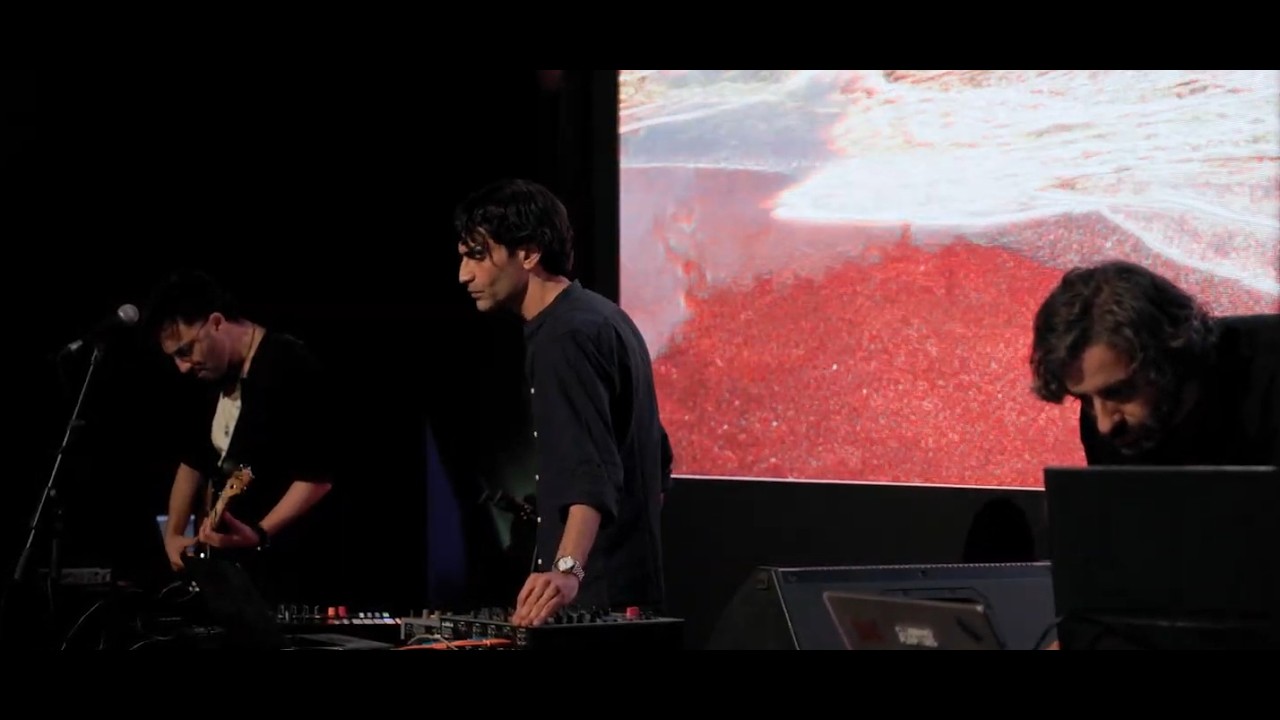
This is Dreaming | Tarek Abou El Fetouh, Mahmoud Shiha & Hany Mustafa | TEDxEast Katameya
Keywords
Summary
128 words
Critical Evaluation
Value of the Information & Strength of the Argument
The value of the talk lies in its inspirational and experiential approach to creativity and storytelling, rather than in offering factual or technical information. The argumentation is built on personal anecdotes and philosophical reflections, notably referencing Alan Watts’ ideas on dreams and beauty. While this makes the content emotionally resonant and thought-provoking, it lacks empirical backing or rigorous logical structure. The speaker relies on the persuasive power of narrative and artistic demonstration rather than evidence-based reasoning, which limits its scientific or intellectual contribution.
Scientific Rigor, Source Quality, Title Accuracy
From a scientific perspective, the talk disregards rigor: no concrete studies, statistics, or verifiable sources are cited; the mention of ‘studies’ about architects and designers is vague and unsubstantiated. The only external reference is Alan Watts, whose work is philosophical rather than scientific. The title accurately matches the content, which is entirely focused on the theme of dreaming and immersive artistic expression. The lack of proper citations and the reliance on subjective experience make the talk methodologically weak by academic standards.
179 words
Title / Content Match
The title 'This is Dreaming' accurately reflects the central theme of the talk and performance, which revolves around dreams and creativity.
Quality & Reliability
4/10
The talk relies on anecdotal experiences and philosophical quotes (e.g., Alan Watts) without empirical evidence or proper citation, making it more inspirational than scientifically reliable.
Key Moments
Markers derived by PSI from the transcript: the creator did not define chapters.
- Speaker introduces the question of where stories come from and shares personal background.
- Transition into the performance; invitation to experience dreams together.
- Poetic dialogue about dreaming and catching ideas; analogy of the chef and the fish.
- Alan Watts' passage about dreaming any dream and the ultimate reality.
- Discussion on beauty as a compass and the simultaneous project of awakening.
Cited Sources
- TEDx program — Official TEDx description and context for independently organized TED-like events.
Contribution & Novelties
The original contribution of this talk is its blending of a conventional TEDx lecture with a live immersive artistic performance, effectively demonstrating the concept of multisensory storytelling. It introduces the idea that creativity arises from unexpected connections between disciplines, supported by the collective work of a musician, visual artist, and storyteller. The philosophical underpinnings, particularly the reference to Alan Watts’ ‘dream’ metaphor, provide a unique angle on creativity and consciousness.
Pour aller plus loin :
- Lucid dream — A psychological phenomenon related to the dream control discussed in the talk.
- Alan Watts — The philosopher quoted in the talk, whose works explore consciousness and the nature of reality.
- Immersive art — Contemporary art that encompasses the audience, similar to the described performance.
122 words
Radar Profile
The radar profile shows relatively low scores across all dimensions, with qualitative and technical aspects slightly higher than reliability and quantity. This reflects a talk that is creative and emotionally engaging but lacks scientific depth and verifiable information, fitting its nature as an artistic performance rather than an informative lecture.