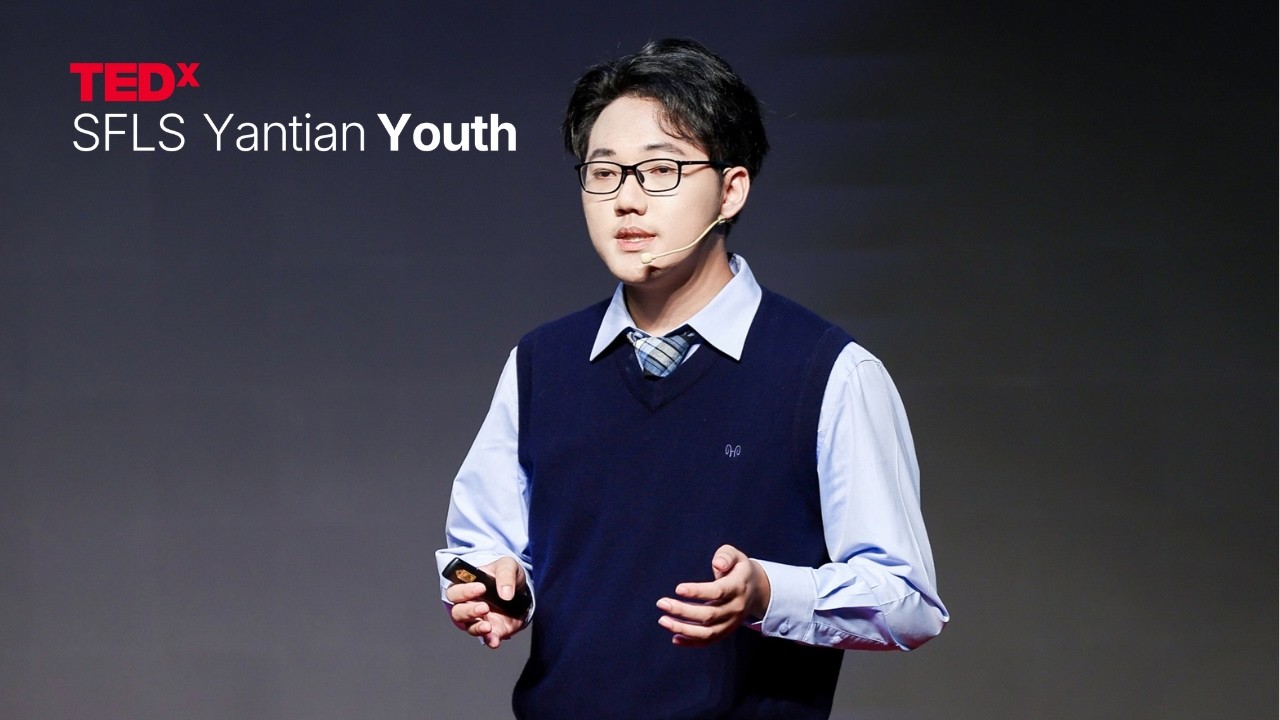
A Universe of Memories, One Riverbank at A Time? | Pinghan Chen | TEDxSFLS Yantian Youth
Keywords
Summary
135 words
Critical Evaluation
Value of the Information & Strength of the Argument
The talk’s value lies in its authentic emotional narrative and the practical insight that preserving memories is less about sophisticated technology than about intentional caring. Chen argues convincingly that Alzheimer’s attacks identity rather than the body, a point supported by his vivid anecdote of his grandfather forgetting his name. His argument progresses from personal observation to a community-driven solution, culminating in a simple but powerful call to action. The logic is sound, though somewhat reliant on pathos over evidence. The reasoning is coherent and accessible, making a persuasive case for prioritizing human connection in the face of cognitive decline.
Scientific Rigor, Source Quality, Title Accuracy
The scientific rigor is moderate; the talk is a personal testimony rather than a research presentation. The speaker does not cite any studies or external sources, instead grounding his claims in his own observations and family experience. The title is evocative and aligns with the content: it signals a contemplative exploration of memory and time, which matches the narrative. The channel description links to the TED platform but provides no specific references. No comment data is available, so audience tendencies cannot be assessed.
197 words
Title / Content Match
The title creatively reflects the central metaphor of preserving memories along with a loved one, and accurately matches the narrative content.
Quality & Reliability
7/10
The talk provides an honest personal account of living with an Alzheimer's patient and the development of a memory-preservation tool, but lacks external scientific references or rigorous clinical details. The emotional authenticity is high, yet the scientific depth is limited.
Key Moments
Markers derived by PSI from the transcript: the creator did not define chapters.
- Introduction: the speaker asks what you would do with free time and contrasts with spending time with elderly.
- Description of fishing with grandfather and the lessons learned from listening to old stories.
- Observing grandfather's memory decline and the eventual diagnosis of Alzheimer's.
- Volunteering with elderly community and realizing their need for preserving memories.
- Building the 'Memory Universe' app and its purpose.
- Concluding message: the importance of spending time with loved ones and a call to action.
Cited Sources
- TEDx Program — The talk was given at a TEDx event using the TED conference format, as stated in the video description.
Contribution & Novelties
The talk offers a unique personal perspective on Alzheimer’s caregiving, emphasizing the power of simple digital tools to preserve memories. Its originality lies in combining intimate family narrative with a practical technological solution, making the abstract concept of memory loss tangible. The speaker’s proposal for a ‘memory universe’ is adaptable and low-tech, contrasting with high-tech AI approaches.
Pour aller plus loin :
- Alzheimer’s disease — Provides medical background on the condition, helpful for context.
- Memory — Explores cognitive mechanisms of memory, relating to the talk’s core theme.
- Digital preservation — Discusses methods to archive digital content, relevant to the ‘Memory Universe’ project.
- Intergenerational solidarity — Addresses connections between age groups, echoing the speaker’s advocacy.
114 words
Radar Profile
The profile shows moderate scores across quantity, quality, and reliability, with a lower technical level consistent with a personal narrative rather than a technical exposition. The strong emotional quality and authentic argumentation elevate the overall value.