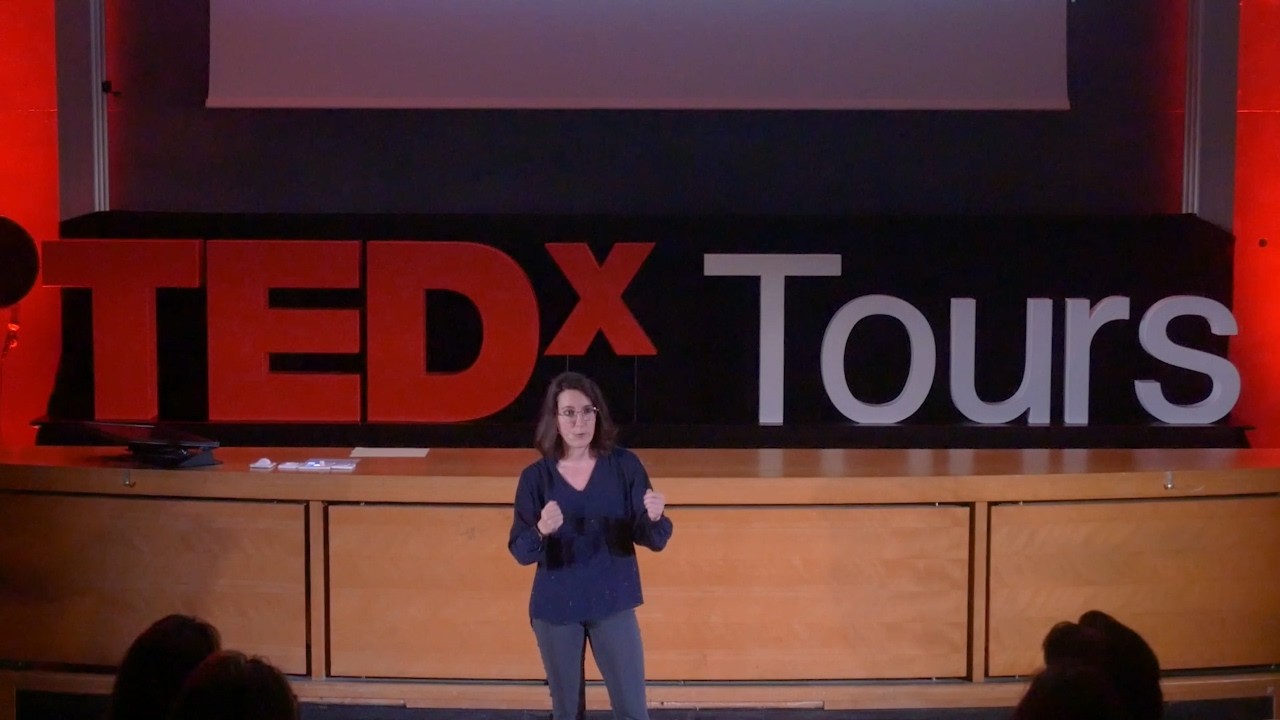
Et si votre équipe était plus intelligente que vous ? | Julia Aubouin-Bonnaventure | TEDxTours Salon
What if your team was smarter than you? | Julia Aubouin-Bonnaventure | TEDxTours Salon
Keywords
Summary
271 words
Critical Evaluation
Value of the Information & Strength of the Argument
The informational value lies mainly in two contributions: a conceptual clarification and a well-chosen experimental anchor. The clarification is genuinely useful — distinguishing collective intelligence from team cohesion and team performance, then defining it as a process rather than a result, gives the audience an operational handle that the usual managerial slogan (’let’s show collective intelligence’) does not provide. The three-behaviour decomposition (diffusion, retrieval, integration of information) is memorable and maps cleanly onto the hidden-profile literature, which is exactly the literature that describes group information sampling failures. The argumentative structure is therefore coherent: problem, definition, operational illustrations, underlying mechanism, empirical demonstration, prescription. The weakness is that the mechanism is asserted more than demonstrated. The claim that a group with high collective intelligence will be more performant is presented as a necessary ordering (‘it would be necessary that the team first have a high level of collective intelligence’) without engaging with the direction of causality or with the possibility that performance and interaction quality reinforce each other. The prescriptions in the conclusion — cultivate openness to novelty, take time to explore atypical information, encourage diversity of ideas, ask questions — are reasonable extrapolations from the hidden-profile findings, but they are offered as evident corollaries rather than as interventions with measured effect sizes. The single quantitative element (88% of teams failing) carries almost the entire evidential load of the talk and is delivered without describing the task, the sample or the decision rule, which limits what the audience can actually do with it. The fictionalised team used as a running example works well pedagogically but contributes no evidence.
Scientific Rigor, Source Quality, Title Accuracy
Scientific rigour is above average for the format. The speaker states her institutional affiliation and laboratory explicitly, distinguishes clearly between what is observable (cohesion, performance) and what is a process (collective intelligence), names the theoretical framework she uses (hidden profiles) and attributes it to identifiable researchers with their institutions (Garold Stasser, Miami University; William Titus, Carleton College) — a level of attribution rarely seen in short talks. She also concedes that the scientific community itself struggles to define collective intelligence, which is an honest framing of the state of the field rather than an overclaim. On source quality, the limitation is that nothing is referenced in a citable way: no publication, no year, no journal, and the description of the video contains only a generic link to the TEDx programme, with no bibliography for the audience to follow up. The 88% figure is presented as a demonstration without protocol detail, and the humour about researchers’ photographs, while effective, occupies space that could have carried that detail. No counter-arguments or failed replications are mentioned, and the ecological validity question — laboratory groups deciding on artificial tasks versus real teams over months — is not raised. On title/content fit, the title’s comparative hook (‘smarter than you’) is a rhetorical device; the talk actually argues that team intelligence is a property of interaction, not a sum that exceeds any individual, and on that point the content is more careful than the title. The gap is rhetorical rather than substantive.
527 words
Title / Content Match
The title poses a provocative question about a team being 'smarter than you', and the content does address collective intelligence as an emergent property of interaction rather than individual expertise. The framing is somewhat more sensational than the fairly academic content delivered, but there is no real mismatch.
Quality & Reliability
6/10
The speaker is an academic researcher (University of Tours, QualiPsy laboratory) presenting a research-based definition of collective intelligence and explicitly naming the hidden-profile paradigm and its authors (Stasser & Titus). Claims are attributed and a quantitative experimental result is cited. However, the talk remains a short popularisation format: no bibliography is provided, the key 88% figure is given without reference details, protocol or context, and the practical prescriptions ('encourage diversity of ideas', 'take time to explore atypical information') are stated as self-evident consequences rather than as interventions validated by tested evidence. The illustrative case (Sylvie, Gérard, Claire and Yannis) is openly fictional framing, which is fine as pedagogy but adds no evidential weight.
Key Moments
Markers derived by PSI from the transcript: the creator did not define chapters.
- Opening scenario: being consulted by a superior who does not really listen, with the decision apparently already made.
- Why the topic matters: increasingly complex environments, hyper-specialised roles, and the corporate bet that combined knowledge outperforms individual knowledge.
- The running case study: a web-development team (commercial, communications, developer, team leader) used to illustrate each concept.
- Key conceptual distinction: collective intelligence is not team performance or cohesion (observable outcomes) but the interactional dynamic that produces them.
- Formal definition from the QualiPsy laboratory, then restated plainly: the capacity to turn individual knowledge into collective knowledge.
- First behaviour: information sharing (diffusion), contrasted with information hoarding justified by the belief that exclusive knowledge makes one indispensable.
- Second behaviour: inclusive decision-making (retrieval of information), taking into account input from every member regardless of status.
- Third behaviour: group learning (integration of information), drawing lessons from both successes and failures.
- The hidden-profile paradigm of Stasser and Titus: why teams with all the needed knowledge still decide badly.
- Experimental finding: 88% of teams failed to reach the correct decision for lack of retrieving and using each member's information.
- Closing prescriptions: openness to novelty, exploring atypical information, encouraging diversity of ideas, asking questions.
Cited Sources
- TEDx programme page — Only external link given in the video description; generic reference to the TEDx format and to the independently organised local event.
- Stasser & Titus — hidden-profile paradigm (experimental work on group information sampling) — Explicitly named in the talk, with institutional affiliations (Miami University; Carleton College) and credited for the 88% failure result. No specific publication or link is provided by the speaker.
- QualiPsy laboratory (University of Tours) — collective intelligence definition — The speaker's own laboratory, cited as the source of the interactional/behavioural definition of collective intelligence given in the talk. No document is referenced.
Concurring Sources
- Collective intelligence (Wikipedia) — General overview consistent with the talk's framing of collective intelligence as a property emerging from interaction rather than a simple aggregation of individual abilities.
- Hidden profile (Wikipedia) — Describes the Stasser & Titus paradigm referenced in the talk and the finding that groups under-discuss uniquely held information.
- Groupthink (Wikipedia) — Related literature on why groups converge on shared, already-known information and avoid dissent — matches the talk's point about conflict avoidance silencing unique knowledge.
- Psychological safety (Wikipedia) — Directly relevant to the talk's explanation that some members do not share what they know because they lack the space to speak freely.
- Transactive memory (Wikipedia) — Complementary framework on how groups encode, store and retrieve knowledge distributed across members.
Dissenting Sources
- Replication and ecological-validity questions around hidden-profile experiments — The hidden-profile effect is robust in the laboratory but has been discussed and qualified in later work: effect sizes depend heavily on task design, group size and information distribution, and laboratory groups deciding on short artificial tasks differ from real teams working together over months. The talk presents the 88% figure without this context, which makes the result sound more directly transposable to everyday workplace meetings than the underlying literature warrants.
- Causal direction between collective intelligence and performance — The speaker asserts that a high level of collective intelligence is a prerequisite for collective performance, whereas the empirical literature often describes a mutually reinforcing relationship in which prior successful collaboration also improves the quality of later interaction. Presenting the relation as one-directional simplifies the evidence.
Contribution & Novelties
The originality of this talk lies less in new findings than in the articulation it proposes: a definition of collective intelligence as a process of converting individual informational resources into collective ones, decomposed into three distinct informational operations — diffusion, retrieval and integration — each illustrated by its characteristic failure mode (information hoarding, sham consultation, silence about difficulties). This mapping of concept to behaviour to dysfunction is a practically usable contribution, and it is anchored in a well-established experimental tradition (hidden profiles) rather than in managerial jargon. The talk’s distinctive move is to insist that collective intelligence cannot be measured by the quality of results, only by the quality of interactions, which reframes the usual question (‘is the team performing?’) into a more diagnostic one (‘how does information move inside the team?’). Its limitation is that it stops at the descriptive level: it explains why teams under-share unique knowledge but does not present tested interventions for changing that, which is where the audience would need the most help.
Pour aller plus loin :
- Collective intelligence — Overview of the concept and of the different traditions (sociology, computer science, organisational psychology) that use the term.
- Hidden profile — Direct entry point to the Stasser & Titus paradigm referenced in the talk and to the experimental design behind the shared-versus-unique information findings.
- Groupthink — Complementary account of why groups converge on already-shared information and suppress dissent.
- Psychological safety — Relevant to the talk’s point that some members withhold knowledge for lack of a safe space to speak.
- Transactive memory — Framework on how teams encode and retrieve knowledge distributed across their members, a natural extension of the diffusion/retrieval/integration triad.
- Anita Williams Woolley and colleagues’ work on a general collective-intelligence factor in human groups (Science, 2010) — Not linked here because of uncertainty about the exact address; it is the most direct empirical complement to the talk’s claim that interaction quality, not average individual ability, predicts group performance.
325 words
Radar Profile
The profile is asymmetric: high on reliability and information quality for the format, but deliberately low on technical depth, since the talk is a 12-minute popularisation with no methodological detail. Information quantity is moderate — one definition, three behaviours and one paradigm — reflecting the short format rather than any poverty of content. The overall shape is that of a solid, well-structured conceptual introduction rather than an in-depth treatment.