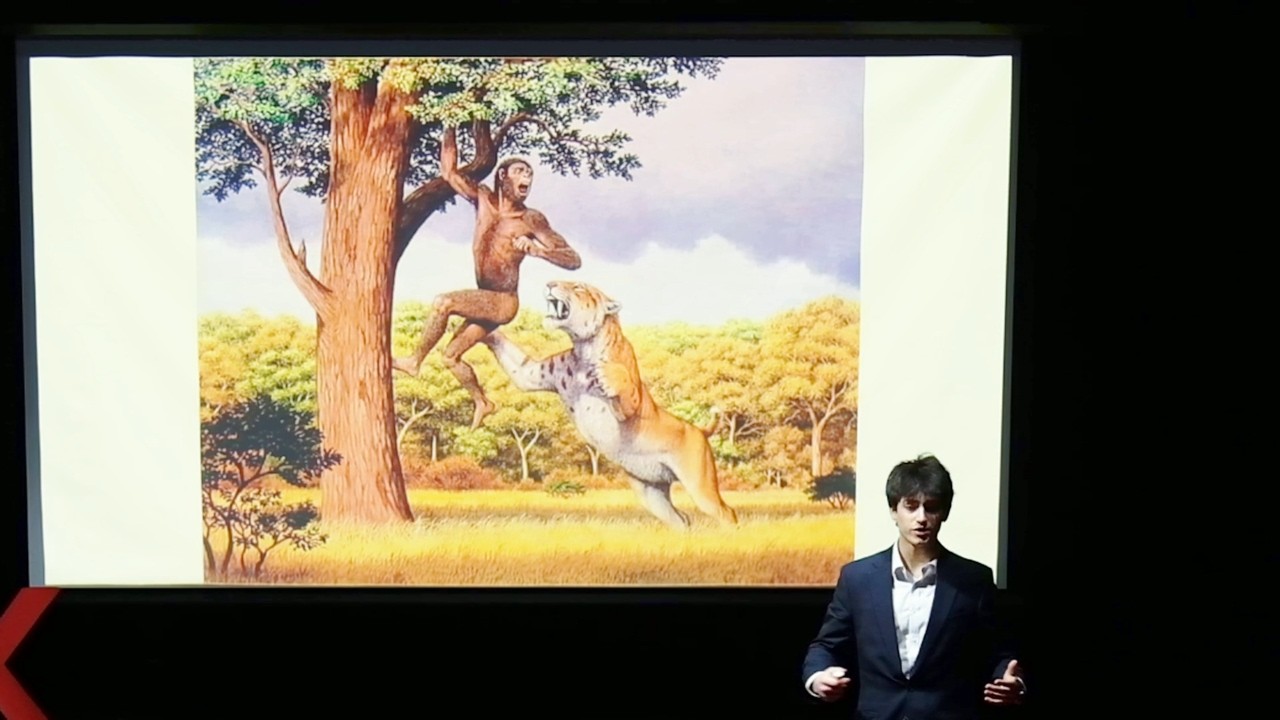
How Trust Bridges People | Adrià Mir Muntades | TEDxDulwich College Youth
Keywords
Summary
169 words
Critical Evaluation
Value of the Information & Strength of the Argument
The talk provides valuable insight into trust as a biological and social phenomenon, connecting evolutionary history with modern practical advice. The argument is well-structured, moving from evidence to application, and the use of concrete examples (impalas, sardines, handshake deals) strengthens the narrative. The speaker’s perspective is persuasive, though some generalizations (e.g., the universal effectiveness of denial) lack nuance. The closing action items are useful and actionable, offering a clear takeaway for the audience.
Scientific Rigor, Source Quality, Title Accuracy
The scientific rigor is moderate: the talk draws on established concepts like symbiosis and the dilution effect, but provides no specific citations. The speaker’s authority is not established (a student/amateur), and the claims are presented without quantitative evidence. The title accurately reflects the content, and the talk stays on topic. The only source provided in the description is the general TEDx link, which does not offer additional references.
156 words
Title / Content Match
The title accurately captures the core message of using trust to forge connections and bridge societal gaps, as fully explored throughout the talk.
Quality & Reliability
7/10
The talk presents a coherent and engaging argument about trust's evolutionary origins and practical applications, drawing on real-world examples like handshake deals and animal behavior. However, it lacks explicit citations or verifiable sources, and some claims (e.g., the exact effectiveness of silence) are stated without empirical backing, reducing its overall scientific rigor.
Key Moments
Markers derived by PSI from the transcript: the creator did not define chapters.
- Introduction with handshake deals (Red Bull, Rolex, McDonald's) highlighting trust's power.
- Evolutionary origins: symbiosis and the dilution effect in social species.
- Animal examples: impalas grooming each other and sardines swimming in schools.
- The three pillars of trust: ability, integrity, and benevolence.
- Anatomy of an effective apology and discussion of malicious repair tactics (denial, silence).
- Actionable advice: transparency, empathy, and manageable tasks to build trust.
Cited Sources
- TEDx Program — Official TEDx page, referenced as the event organizer; no specific academic sources provided.
Concurring Sources
- TEDx Program — The talk is independently organized under TEDx license, aligning with the general framework for disseminating ideas.
Contribution & Novelties
The talk offers an accessible synthesis of trust from an evolutionary and psychological perspective, proposing a practical framework with three actionable pillars. It bridges biological examples with everyday applications, encouraging introspection on how to build and restore trust. The discussion of apology structure and the contrast between integrity- and ability-based violations adds depth, though it is not ground-breaking.
Pour aller plus loin :
- Trust (social science) — Overview of trust as a social and psychological construct, directly relevant to the core theme.
- Symbiosis — The biological concept underpinning the talk’s early evolutionary claim.
- Dilution effect — The mechanism cited to explain the survival benefit of group living.
- Apology — Psychological and communicative aspects of apologies, supporting the talk’s analysis.
119 words
Radar Profile
The radar profile is relatively balanced, with slightly higher scores in quality and reliability than in quantity and technical level. This suggests a talk that is accessible and credible but not deeply technical or exhaustive, fitting a general-audience TEDx format.