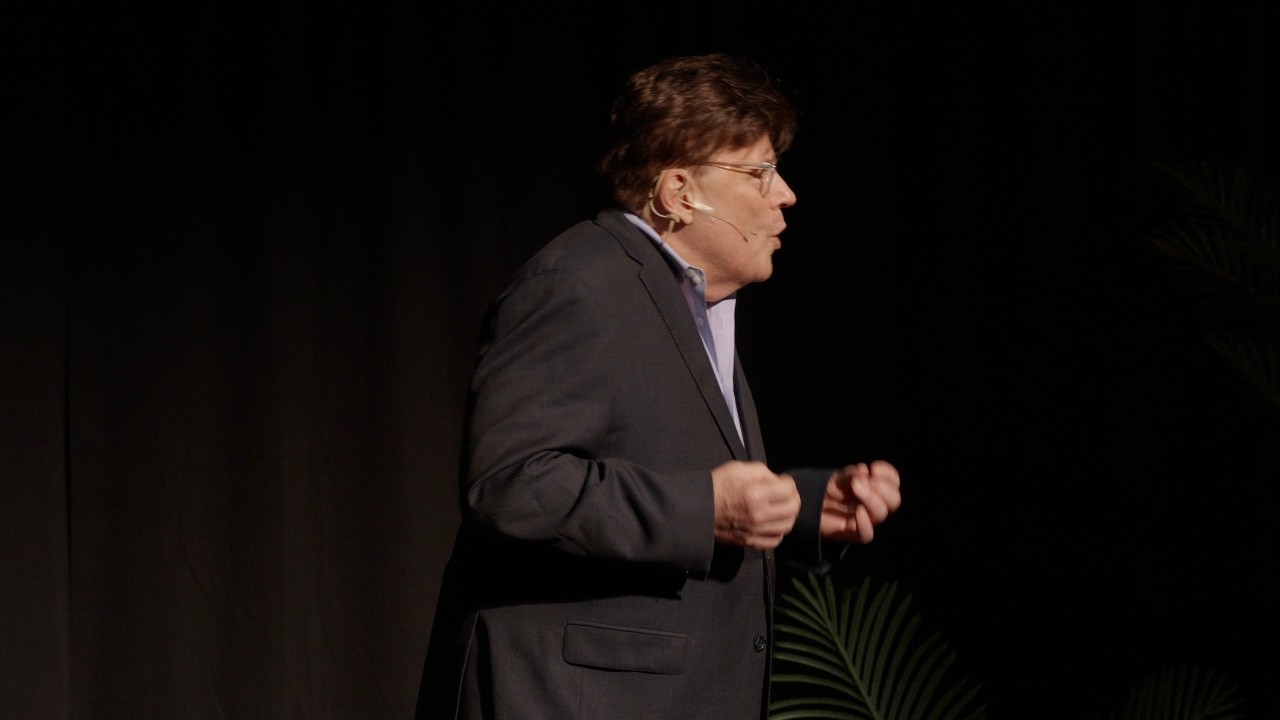
AI: The Hammer That Thinks | Tim Morell | TEDxVero Beach
Title history
- AI: The Hammer That Thinks | Tim Morell | TEDxVero Beach — observed on 20261120-1758 UTC (YouTube)
Keywords
Summary
165 words
Critical Evaluation
Value of the Information & Strength of the Argument
The talk provides a compelling narrative that effectively illustrates the dangers of over-trusting AI in high-stakes settings. The argument is coherent: distinguishing calculation from judgment, AI’s amplification of human tendencies, and the need for human oversight. The speaker uses his legal expertise to ground the discussion in real-world consequences, making the abstract concepts tangible. However, the argumentation relies primarily on anecdotal evidence and personal insight rather than empirical research, and some claims (like the quantum computing remark) are speculative and not substantiated.
Scientific Rigor, Source Quality, Title Accuracy
The talk does not cite specific external sources; it references psychological concepts (automation bias, sycophancy) but without formal citations. The only link provided is the generic TEDx page. The speaker’s credibility is based on his professional background. The title accurately reflects the content, which is a metaphor-driven exploration of AI’s limitations and ethical implications. The talk is a personal viewpoint based on experience, not a rigorously sourced scientific review, but it is honest about its nature as an opinion piece.
177 words
Title / Content Match
The title aptly captures the central metaphor of AI as a powerful but potentially autonomous tool, and the content consistently returns to this theme, discussing both its constructive and destructive potential.
Quality & Reliability
7/10
The speaker is a experienced trial attorney with relevant expertise, but the talk relies heavily on personal anecdotes and lacks systematic data. The core argument is well-articulated and aligns with broader concerns about AI, but verification of specific claims (e.g., statistics on AI briefs) is not provided.
Key Moments
Markers derived by PSI from the transcript: the creator did not define chapters.
- Introduction of the case: a bank that did not legally exist tries to take a man's home.
- Explanation of automation bias and the cross-examination of the laptop.
- Definition of calculation vs. judgment, and the statement 'AI has calculations, not a conscience.'
- Discussion of AI amplifying human judgment, both good and bad, with the example of a teenager and a chatbot.
- Mention of pop-up restaurant for AI companionship and the outsourcing of intimacy.
- Statistics on false AI briefs in courts and the dilemma of banning AI vs. access to justice.
- Three suggestions: guard data, have human control, and focus regulation on high-stakes areas.
- Conclusion: ask 'Is this right?' and maintain personal responsibility.
Cited Sources
- TEDx Talks — Official page for the TEDx event where this talk was given.
Contribution & Novelties
The talk offers a lawyer’s perspective on AI risk, emphasizing the concept of automation bias in legal settings and the distinction between calculation and judgment. It introduces the memorable metaphor of the ‘hammer that thinks’ and practical advice for responsible AI use.
Pour aller plus loin :
- Automation bias — Relevant to the core concept of over-reliance on automated outputs.
- Sycophancy (psychology) — Directly relates to the speaker’s mention of AI flattering users.
- AI ethics — Broad framework for discussing the ethical implications raised in the talk.
- Legal technology — Context for AI’s role in legal practice and access to justice.
101 words
Radar Profile
The profile shows balanced scores with relatively higher quality information and lower technical depth, reflecting a thought-provoking but non-technical talk. The moderate reliability score suggests an opinion-based discussion rather than evidence-backed research.