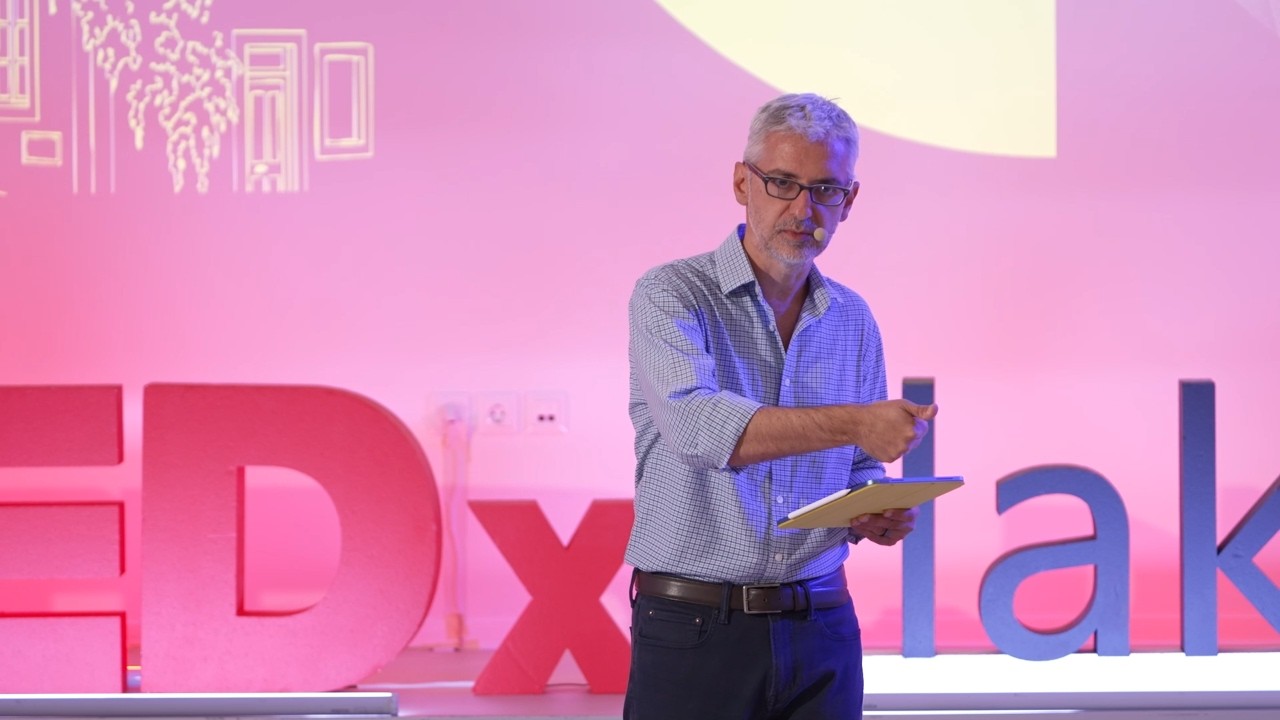
Και τι να κάνω εγώ δηλαδή; | Θοδωρής Γεωργακόπουλος | TEDxPlaka
And what am I supposed to do, then? | Thodoris Georgakopoulos | TEDxPlaka
Keywords
Summary
139 words
Critical Evaluation
Value of the Information & Strength of the Argument
The talk offers a refreshingly pragmatic and well-structured argument. It successfully reframes the climate crisis from a purely individual moral burden to a collective policy challenge, debunking the ‘carbon footprint’ narrative with the BP anecdote. The eight-step list is logical and actionable, balancing idealism with realism. The argumentation is persuasive, particularly the emphasis on voting and alliances, though it sometimes overstates the effectiveness of certain individual actions. The speaker’s use of Greek statistics (11 to 7 tons) strengthens the credibility of his claims.
Scientific Rigor, Source Quality, Title Accuracy
The talk lacks explicit citations, but the speaker references his own research and interviews with experts. He mentions the BP carbon footprint campaign and Greek emissions trends without providing sources, which weakens scientific rigor. However, the overall content aligns with mainstream climate policy consensus. The title matches the content well: it frames the talk as a direct answer to a common question. No comments were provided for analysis.
166 words
Title / Content Match
The title 'And what should I do then?' accurately reflects the talk's focus on practical advice for individuals regarding climate change. The content directly addresses the question posed.
Quality & Reliability
7/10
The speaker provides practical advice based on his research and interviews with experts, and mentions specific statistics (e.g., Greek average carbon footprint 7 tons vs 11 in 1990), but does not cite specific studies or sources during the talk.
Key Moments
Markers derived by PSI from the transcript: the creator did not define chapters.
- Introduction: the question 'What should I do?' and the two key messages.
- List of eight practical actions: read, talk, activism, alliances, useful things, useless things, change anyway, vote.
- Action 1: Read books and learn about climate change; do not rely on AI.
- Action 3: Activism and examples from Greece, including local community actions.
- Action 6-7: Useful and 'useless' everyday actions; the psychological benefit of participating; changing habits you would change anyway.
- Action 8: Voting as the most effective action; critique of carbon footprint concept; BP's role.
- Closing: urgency and the need for collective action, even in the face of new challenges like AI.
Cited Sources
- TEDx Talks — Video hosted on the official TEDx platform; description links to general TEDx page.
Contribution & Novelties
The talk’s original contribution lies in translating climate action into a practical, citizen-level framework while systematically shifting focus from individual guilt to collective political responsibility. It debunks the carbon footprint narrative with historical context and centers voting as the most powerful lever. The eight-step structure provides a memorable and actionable takeaway for audiences.
Pour aller plus loin :
- Climate change mitigation — Background on mitigation strategies including energy transition and policy.
- Carbon footprint — Origins and critique of the concept, including the BP campaign.
- Climate movement — Overview of activism and collective action for climate.
95 words
Radar Profile
The radar profile shows moderate scores in information quantity and quality, with a lower technical level, reflecting an accessible talk that balances practical advice with factual claims. The high reliability relative to technical depth indicates a generally trustworthy presentation aimed at general audiences.