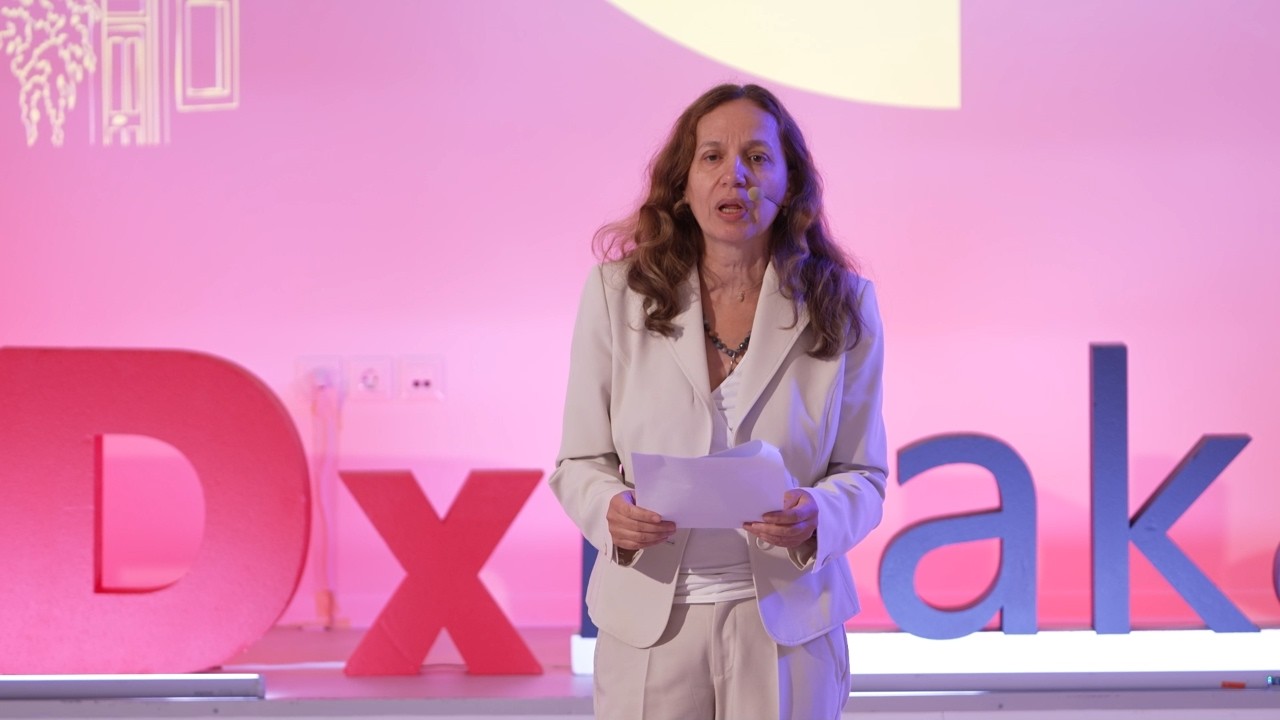
Εταιρική λογοδοσία και διαφάνεια στην επικοινωνία | Μάρθα Κεσίσογλου | TEDxPlaka
Corporate accountability and transparency in communication | Martha Kesissoglou | TEDxPlaka
Keywords
Summary
185 words
Critical Evaluation
Value of the Information & Strength of the Argument
The talk provides insightful, practice-based perspectives on corporate communication and accountability, particularly valuable for professionals in the field. The argumentation is coherent and logically structured: from the importance of trust, to the pitfalls of greenwashing, to the necessity of taking a stand on social issues. The use of concrete examples—such as the Starbucks incident and the Greenpeace report on Greek public transport—strengthens the practical relevance of the points made. However, the reasoning relies heavily on anecdotal evidence and the speaker’s personal expertise rather than on systematic research or data. The advice is sensible but not novel, echoing widely discussed concepts in corporate social responsibility and public relations. The emotional appeal to intuition and ‘gut feeling’ adds a humanistic dimension, though it may lack rigorous empirical backing. Overall, the talk offers useful heuristics for practitioners but does not present new evidence or a comprehensive analytical framework.
Scientific Rigor, Source Quality, Title Accuracy
The talk does not cite specific academic or industry sources, but references the Starbucks 2018 case and a Greenpeace bulletin as contemporary examples. These are verifiable real-world events, lending some credibility. The lack of formal references reduces the scientific rigor; it is an opinion piece rather than a research-based presentation. The title ‘Corporate Accountability and Transparency in Communication’ accurately matches the content, which focuses on how companies can communicate honestly about their actions, particularly regarding sustainability and social responsibility. The speaker’s professional background in corporate affairs adds authority, but the absence of evidence-based support limits the reliability of some claims. The public reception, while not available from comments in this dataset, would likely be positive given the clear and accessible delivery, but the substance is more reflective of industry wisdom than of academic depth.
294 words
Title / Content Match
The title accurately reflects the content, as the talk directly addresses corporate accountability and transparency in communication practices.
Quality & Reliability
6/10
The talk is grounded in professional experience, offering practical advice and real-world examples (e.g., Starbucks case, Greenpeace reporting), but it lacks formal citations, empirical data, or scientific references. The speaker is credible, yet the content remains largely anecdotal and subjective.
Key Moments
Markers derived by PSI from the transcript: the creator did not define chapters.
- Introduction: linking corporate accountability to climate crisis, emphasizing trust and 'walk the talk'.
- Discussion on the role of AI in writing and strategy, stressing that narratives must reflect genuine strategy.
- Shift in accountability: from vague donations to measurable ESG outcomes, with example of restoration projects.
- On corporate neutrality and political stances: impossibility of silence, citing Grexit period as first case.
- Practical tips: separating personal and corporate views, staying factual and calm, listening to public.
- Examples: Starbucks 2018 case (closing 8000 stores for training) and Greenpeace bulletin on transport, leading to company actions.
- Conclusion: authenticity and honesty as core values; human intuition detects truth amidst fake news and AI-driven information.
Cited Sources
- TEDx Program — General platform for independently organized TED-like events, hosting the talk.
Contribution & Novelties
The talk synthesizes common themes in corporate communication into a concise, practitioner-oriented framework, emphasizing that transparency and authenticity are not just ethical choices but strategic necessities. Its original contribution lies in connecting corporate accountability to the specific context of climate crisis and the Greek business environment, offering local examples. The emphasis on ‘communication as a mirror, not a curtain’ and the need for fast response in a cancel-culture era adds a contemporary nuance.
Pour aller plus loin :
- Greenwashing — Relates directly to the speaker’s warnings about superficial sustainability claims.
- Corporate social responsibility — Foundational concept for the discussed ESG reporting and corporate accountability.
- Stakeholder theory — Underpins the need to address diverse parties in corporate communication.
- Cancel culture — Context for the rapid public backlash mentioned in the talk.
130 words
Radar Profile
The profile shows a moderate level across all dimensions, indicating a talk that is balanced but not deeply technical. The highest score is in information quantity, while technical level is relatively low, reflecting the accessible, beginner-friendly nature of the presentation. The reliability is moderate, suggesting the content is more expert-opinion than evidence-based.