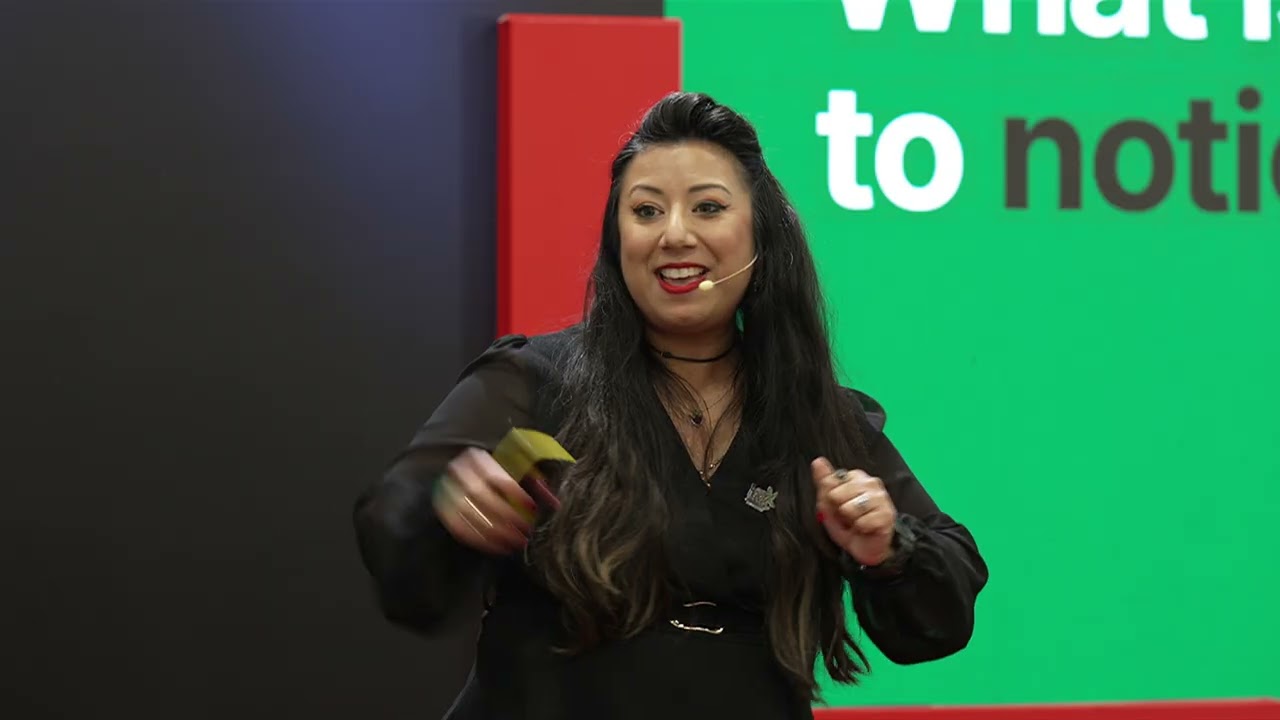
We’ve Been Using Storytelling Wrong – How to fix it | Dr. Paulina Sosa-Quintanilla | TEDxBrownsville
Keywords
Summary
177 words
Critical Evaluation
Value of the Information & Strength of the Argument
The talk provides a pragmatic framework (story stewardship) that is accessible and potentially valuable for professionals in public health, education, journalism, and community work. The argument is coherent, built on personal experience and illustrative anecdotes, and avoids overclaiming. However, it relies heavily on rhetorical appeal and lacks empirical backing or references to established research. The case for the five steps is logically presented, but the evidence is anecdotal. The speaker acknowledges her own imperfections, which adds humility but not rigor. Overall, the value lies in prompting a reflective shift in how listeners approach stories, but the argumentation would benefit from integration with existing literature on narrative ethics and listening practices.
Scientific Rigor, Source Quality, Title Accuracy
The speaker does not cite external sources, and the only provided link is to the general TEDx page. The talk is based on personal observation and experience, rather than a systematic review. While this is acceptable for an expert opinion, the lack of references weakens its scientific credibility. The title accurately reflects the content, and the talk stays on topic. There is no misrepresentation. The structure is clear, but the depth of academic rigor is limited. The speaker mentions qualitative research as a background but does not provide specific citations. Overall, the scientific quality is moderate, suitable for a TEDx talk but not for academic purposes.
231 words
Title / Content Match
The title accurately reflects the talk's focus on rethinking storytelling as stewardship rather than mere sharing. The subtitle and content align well.
Quality & Reliability
6/10
The speaker offers a personal, experience-based framework for responsible storytelling, but the claims lack empirical evidence or citations beyond anecdotal examples. The talk is generic in nature, more inspirational than scientifically rigorous.
Key Moments
Markers derived by PSI from the transcript: the creator did not define chapters.
- Introduction to pandemic era and sense of uncertainty.
- Story of the brewery couple in El Paso, highlighting deeper meaning.
- Introduction of the key question: 'What is this story asking us to notice?'
- Explanation of the layers of a story: story, meaning, pattern, insight, action.
- Beginning of the five steps of story stewardship: listen, honor, notice, connect, respond.
- Example with grandmother's story, illustrating multiple layers.
- Summary of three practices for daily application.
- Closing remarks emphasizing responsibility after the story is told.
Cited Sources
- TEDx Talks official page — General TEDx resource mentioned in the video description.
Contribution & Novelties
The talk offers a novel conceptualization — ‘story stewardship’ — as a deliberate practice for handling entrusted stories responsibly. While the term is not widely used in academic literature, the idea aligns with narrative ethics and listener-centered approaches. The contribution is primarily a memorable framework that bridges personal narrative and public health informatics.
Pour aller plus loin :
- Narrative medicine — Relevant for understanding how stories can be used in healthcare and the ethical responsibilities of listeners.
- Qualitative research — Provides methodological background on analyzing narratives and meaning-making.
- Active listening — A foundational skill that complements the ’listen intentionally’ step.
100 words
Radar Profile
The radar profile shows balanced scores across moderate ranges, with slightly higher qualitative content and lower technical depth. This indicates a talk that is conceptually engaging but lacks empirical grounding, typical of an experience-based expert perspective.