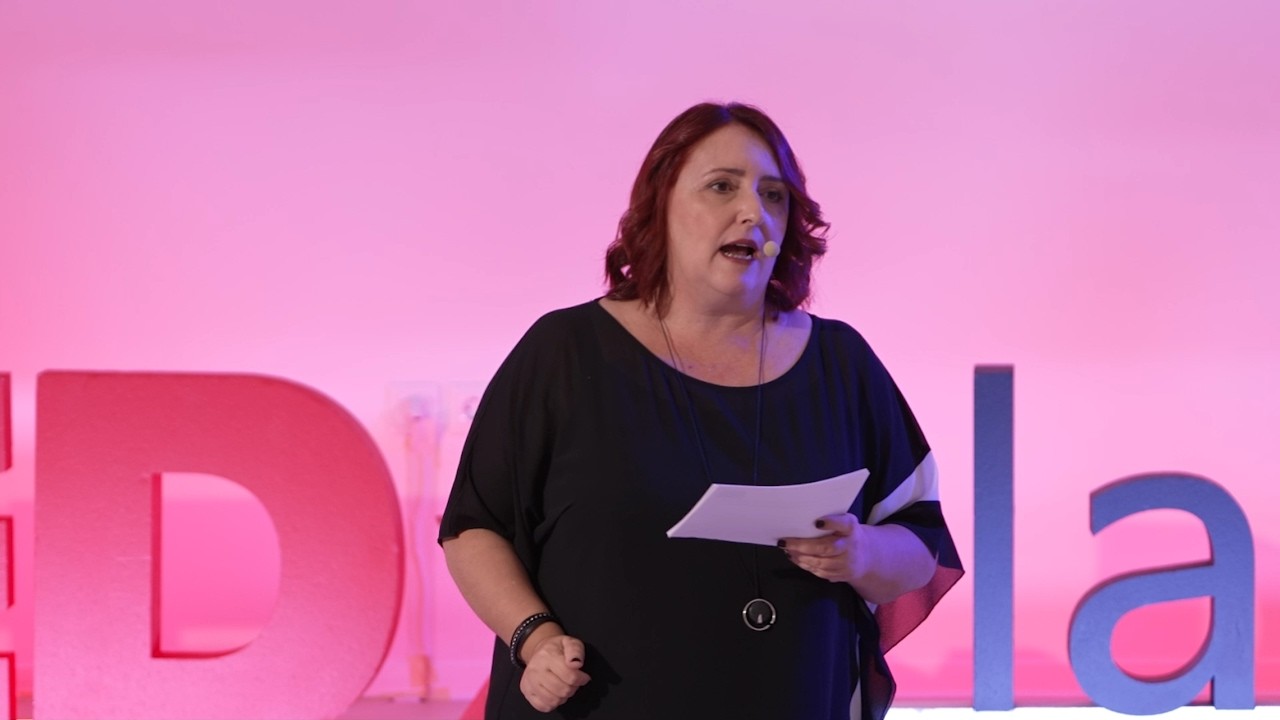
Κλιματική κρίση: Η ιστορία που είπαμε λάθος | Έλλη Παπαδοπούλου | TEDxPlaka
Climate crisis: The story we told wrong | Elli Papadopoulou | TEDxPlaka
Keywords
Summary
112 words
Critical Evaluation
Value of the Information & Strength of the Argument
The talk provides a valuable perspective on climate communication, backed by personal experience. The argumentation is clear and structured, using anecdotes and rhetorical devices. However, some claims lack robust evidence, and the suggested solutions, while sensible, are not novel. The speaker effectively highlights common pitfalls, such as temporal distancing and the ‘boiling frog’ metaphor. The call for storytelling aligns with existing research in science communication. The talk is persuasive but could benefit from stronger citations.
Scientific Rigor, Source Quality, Title Accuracy
The talk references a few sources: An Inconvenient Truth, a 1912 newspaper article, and a quote from a NYU professor (likely Thomas Horton, though the name is unclear). It mentions the Nature journal (mispronounced as ‘Nature Matrix’) for economic costs. However, these references are not formally cited, and the speaker does not provide specific URLs. The title accurately reflects the content. The talk is more of an opinion piece than a systematic review, and its rigor is moderate. No substantial literature is cited, reducing its scientific weight.
177 words
Title / Content Match
The title accurately reflects the content: the speaker discusses how the climate crisis has been communicated incorrectly and proposes improvements.
Quality & Reliability
7/10
The talk offers practical insights based on the speaker's 25 years of experience, but it contains anecdotal evidence and lacks systematic citations. Claims like the boiling frog experiment are presented as fact without caveats.
Key Moments
Markers derived by PSI from the transcript: the creator did not define chapters.
- Introduction: speaker sets the stage to discuss climate communication failures.
- References An Inconvenient Truth and a 1912 newspaper article linking CO2 and temperature.
- Critique of the 'planet is in danger' narrative and the image of human hands holding Earth.
- The problem of future-based language ('will') and its psychological impact.
- Boiling frog syndrome: gradual change leads to inaction.
- Critique of overusing climate change as a catch-all for all weather events, breeding skepticism.
- Why misinformation spreads and the need for simplicity and storytelling.
- Four proposals: simplicity, storytelling, here and now, personal relevance.
- Conclusion: urgency and call to action at a critical point.
Cited Sources
- TEDx Program — The talk is part of the TEDx series, independently organized by a local community.
Contribution & Novelties
The talk offers a practitioner’s perspective on improving climate communication, emphasizing the need for emotional connection and personal relevance. While many points align with existing literature, the talk synthesizes them into practical advice. It underscores the importance of storytelling and simplicity in countering misinformation.
Pour aller plus loin :
- Climate change communication - A comprehensive overview of research and strategies in the field.
- Construal level theory - Explains how psychological distance affects public engagement with climate issues.
- Boiling frog - The anecdote’s origin and its use as a metaphor for gradual change.
92 words
Radar Profile
The radar profile shows moderate scores across all dimensions, with higher quantity of information but lower technical level and reliability. This suggests a talk that is informative and engaging but not deeply scientific or well-cited.