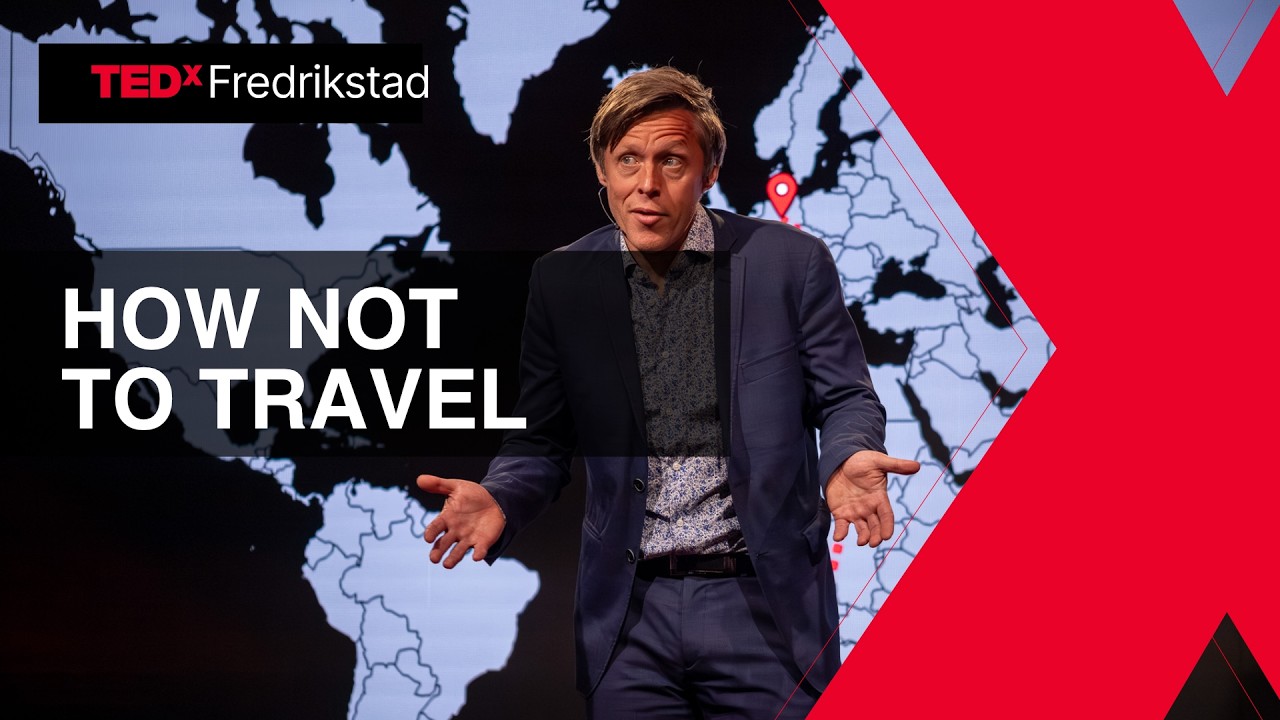
How not to travel | Gunnar Garfors | TEDxFredrikstad
Keywords
Summary
189 words
Critical Evaluation
Value of the Information & Strength of the Argument
The value of this talk lies in its accessible, experience-based advice that challenges conventional tourism habits. Garfors presents a compelling case for mindful, independent travel, supported by vivid anecdotes that illustrate each point, from the mugging in Rome to the haggling incident in Eswatini. His argumentation is persuasive due to his unique authority as a record-breaking traveler, but it relies on personal narrative rather than statistical evidence or academic references. Nevertheless, the logical progression—from identifying pitfalls to offering constructive alternatives—makes the argument coherent and compelling.
Scientific Rigor, Source Quality, Title Accuracy
The talk does not cite external scientific sources, but it references common travel practices and guidebook culture (e.g., Lonely Planet). The speaker’s credibility stems from his extensive firsthand experience, though the lack of verifiable references limits scientific rigor. The title accurately reflects the content, which uses humorous self-deprecation to convey serious lessons about travel behavior. The description provides a clear summary and context, including the TEDx format, but no additional sources or links beyond the general TEDx page.
178 words
Title / Content Match
The title is ironic and effectively encapsulates the video's core message: learning from mistakes to improve travel. It piques curiosity and matches the humorous, reflective tone.
Quality & Reliability
7/10
The speaker draws on extensive personal experience (visiting every country twice) and offers pragmatic advice, but the content is anecdotal rather than empirically validated, and no scientific sources are cited.
Key Moments
Markers derived by PSI from the transcript: the creator did not define chapters.
- Introduction: the importance of engaging with locals instead of passive observation.
- Italy example: splitting up from travel companions to meet new people.
- Namibia: consent in photographs and respecting local people.
- Mozambique: relying on local knowledge instead of guidebooks.
- Marshall Islands: climate change and leaving the western bubble.
Cited Sources
- TEDx Program — Official TEDx platform where this talk is published; provides context for the TEDx format and speaker information.
Contribution & Novelties
The talk’s original contribution is its reframing of common travel advice through a lens of ‘how not to travel’, based on concrete mistakes made during an extraordinary lifetime of travel. It offers a relatable and insightful critique of mass tourism and social media culture, urging viewers to prioritize genuine human connections. The speaker’s unique global experience adds authority.
Pour aller plus loin :
- Overtourism - Wikipedia — Directly relates to the talk’s critique of tourist hotspots and mass tourism.
- Sustainable tourism - Wikipedia — Addresses the call for more responsible travel and supporting local economies.
- Cultural relativism - Wikipedia — Relevant to the speaker’s emphasis on understanding different cultures and not imposing one’s own values.
115 words
Radar Profile
The radar profile shows high scores in information quantity and quality, reflecting the rich, experience-based advice. The low technical level indicates a non-specialist audience. The moderate reliability score suggests anecdotal evidence but credible speaker expertise. Overall, the talk excels in practical wisdom rather than scientific rigor.