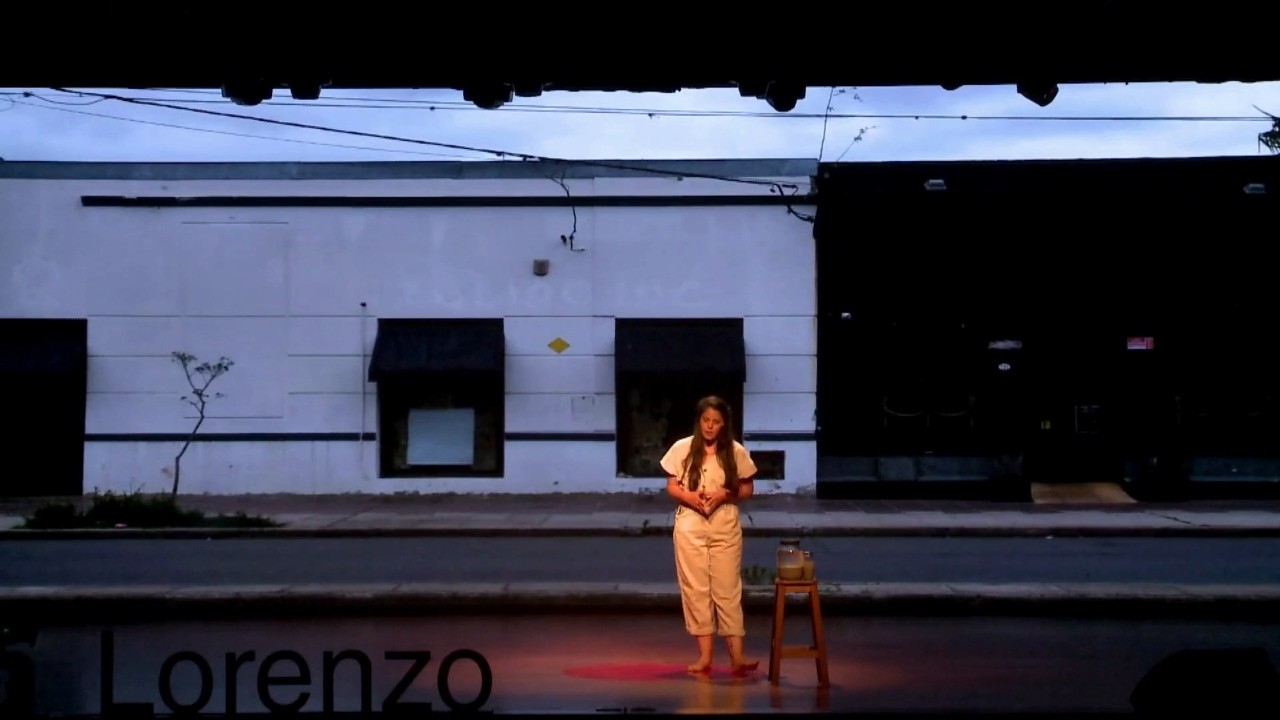
Construcción natural | Silvina Diciembre | TEDxSan Lorenzo
Natural Building | Silvina Diciembre | TEDxSan Lorenzo
Title history
- Construcción natural | Silvina Diciembre | TEDxSan Lorenzo — observed on 20261119-1709 UTC (YouTube)
Keywords
Summary
191 words
Critical Evaluation
Value of the Information & Strength of the Argument
The talk offers valuable insight into natural building as a sustainable alternative to conventional methods. The speaker’s argumentation is rooted in personal experience and community practice, which lends authenticity but lacks empirical evidence. She makes valid points about the environmental impact of cement and the benefits of natural materials, but does not provide specific data or research. The narrative is compelling and emphasizes the social and cultural value of bioconstruction, but the technical depth is moderate, focusing more on philosophy than detailed engineering.
Scientific Rigor, Source Quality, Title Accuracy
The talk is not rigorously scientific in the traditional sense; it is primarily an advocacy and educational piece. No external sources are explicitly cited, though the speaker references historical facts and local examples. The sources available in the description are limited to the official TEDx page, which does not provide additional scholarly references. The title accurately reflects the content, and there is a clear alignment between the title and the talk’s focus on natural construction. The absence of citations and the reliance on anecdotal evidence reduce the scientific rigor, but the talk succeeds in raising awareness.
194 words
Title / Content Match
The title accurately reflects the content, which focuses on natural construction methods and their cultural and environmental significance.
Quality & Reliability
6/10
The speaker shares a personal and practical perspective on natural construction, blending anecdotal experience with technical insights, but lacks rigorous scientific references and quantitative data.
Key Moments
Markers derived by PSI from the transcript: the creator did not define chapters.
- Introduction to the smell of wet earth and the speaker's life-changing discovery of natural construction.
- Discussion of cement's short history (200 years) and its environmental impact in terms of CO2 emissions.
- Explanation of 'minga' and the importance of collective construction in ancestral traditions.
- Personal anecdote about volunteering in Chile after the 2024 wildfire to bioconstruct a community center.
- Coverage of regional techniques such as adobe and quincha, tailored to local materials and climates.
- Demonstration of a simple jar test to analyze soil composition, including layers of sand, silt, clay, and organic matter.
- Mention of wool as an insulating material and discussion on gender inclusion in construction, concluding with a call to reconnect with natural building.
Cited Sources
- TEDx program — Official page for TEDx events, providing context that this talk was independently organized under the TED format.
Contribution & Novelties
The talk offers a personal and community-centered perspective on natural construction, emphasizing the revival of ancestral techniques as a sustainable solution. It uniquely highlights the jar test as a simple, accessible method for soil assessment, and connects bioconstruction with social and gender empowerment. The narrative of crossing the Andes by bicycle to help rebuild after a wildfire adds a compelling humanitarian dimension.
Pour aller plus loin :
- Adobe — Earth-based building material widely used in traditional and modern construction.
- Quincha — A traditional construction system using a wooden frame filled with earth and straw, common in South America.
- Earthen architecture — Overview of building with raw earth, including various techniques like cob, rammed earth, and adobe.
- Green building — Broader context of sustainable construction practices and materials.
- Natural building — Comprehensive entry on building with natural, locally sourced materials.
139 words
Radar Profile
The radar chart shows balanced scores across all dimensions, reflecting a talk that delivers moderate information with a consistent level of technical depth and reliability. The lack of extreme highs or lows indicates a well-rounded but not deeply specialized presentation.