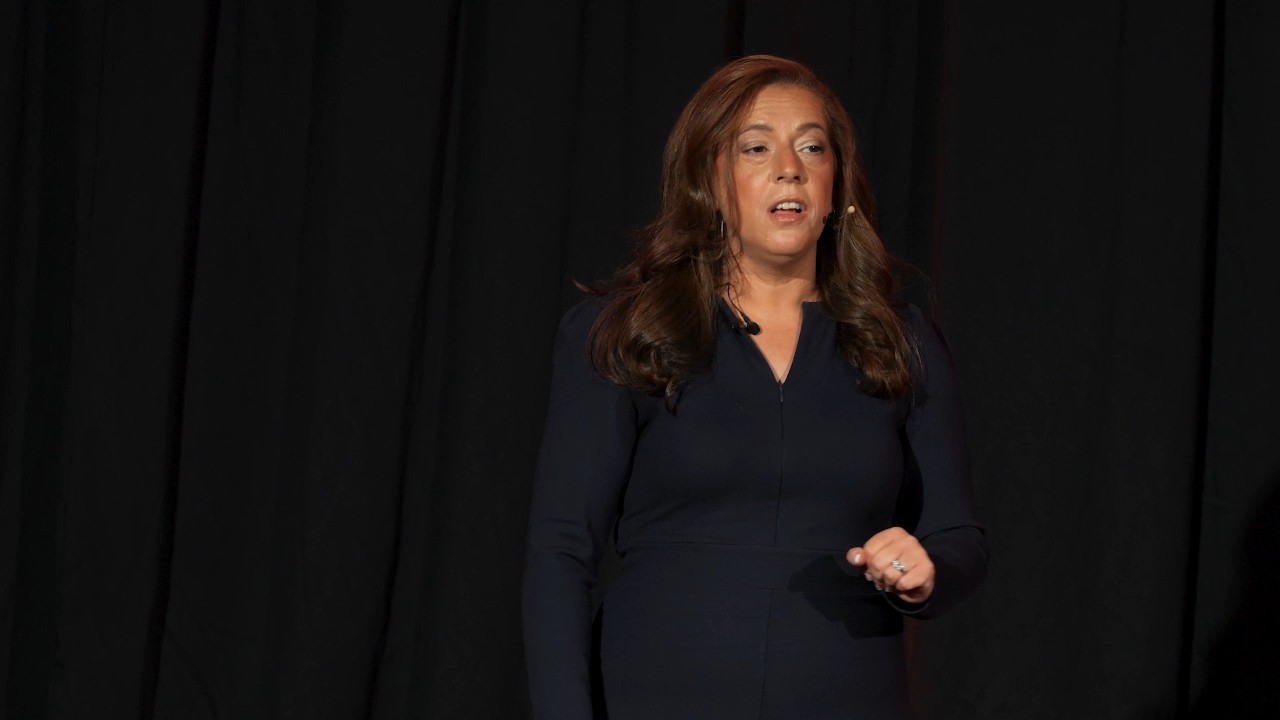
Your diagnosis is not your destiny | Dr. Amy Gershkoff Bolles | TEDxTAFE Queensland
Keywords
Summary
165 words
Critical Evaluation
Value of the Information & Strength of the Argument
The talk offers practical, actionable advice for patients facing serious diagnoses, emphasizing the importance of research and collaboration. The argumentation is largely anecdotal, but the speaker explicitly acknowledges the limitations of her personal experience and does not overgeneralize. She references credible medical sources (NEJM, BMC Medicine, and Eric Topol’s book) to support her claims, though without citing specific studies. The strength lies in its motivational and empowering message, grounded in a personal narrative that resonates emotionally. However, it lacks rigorous empirical backing for the causal link between diet and autoimmune remission, which the speaker wisely disclaims. The three questions at the end provide a clear, memorable framework for patient empowerment.
Scientific Rigor, Source Quality, Title Accuracy
The speaker demonstrates scientific rigor by citing peer-reviewed literature and distinguishing between correlation and causation. She mentions a meta-analysis in BMC Medicine and a study in the New England Journal of Medicine, though without providing full citations. The reference to Eric Topol’s ‘The Patient Will See You Now’ accurately supports the historical context of medical paternalism. The title adequately captures the central message of the talk, and the content stays aligned with the theme of patient agency. The description includes a link to TEDx, which is the standard source for this talk. Overall, the talk is scientifically grounded in its claims, with appropriate caveats, and the title accurately reflects its content.
236 words
Title / Content Match
The title accurately reflects the message that patients are not defined by their diagnosis and can influence outcomes through agency.
Quality & Reliability
7/10
The talk provides personal experience with clear caveats and references to medical literature, but lacks formal systematic evidence.
Key Moments
Markers derived by PSI from the transcript: the creator did not define chapters.
- Receives life-threatening autoimmune diagnosis on Christmas Eve 2020.
- Describes severe side effects of initial and new medications.
- Discusses paternalism in medicine and references Eric Topol's book.
- Decides to research evidence-based treatment options.
- Adopts anti-inflammatory diet and sees markers become undetectable.
- Proposes three questions patients should ask their doctors.
- Concludes with the importance of the patient's voice.
Cited Sources
- TEDx Official Website — Description link for the TEDx event.
- The Patient Will See You Now by Eric Topol — Book cited in the talk to illustrate historical paternalism in medicine.
- Study from New England Journal of Medicine — Mentioned as evidence that patient collaboration improves outcomes for some chronic conditions.
- Meta-analysis in BMC Medicine — Cited as showing possible links between gut inflammation and autoimmune symptoms.
- David Cutler's quote in MIT Technology Review — Referenced to highlight the underutilized role of patients in healthcare.
Contribution & Novelties
The talk provides an original personal narrative that bridges professional analytical skills with patient experience, offering a concrete framework (three questions) for enhancing patient agency. It advocates for a shift from paternalistic to collaborative care, supported by references to existing literature. The emphasis on the patient’s voice as a key resource is a valuable, actionable takeaway.
Pour aller plus loin :
- Patient participation — Relevant to shared decision-making and patient involvement.
- Medical paternalism — Historical background of doctor-patient dynamics.
- Autoimmune disease — Overview of the condition discussed in the talk.
- Shared decision-making in medicine — Closely related to the proposed collaborative approach.
102 words
Radar Profile
The radar profile shows moderate scores in information quantity and quality, a low technical level, and a high reliability score. This reflects an accessible yet credible talk that prioritizes practical advice over deep technical detail.