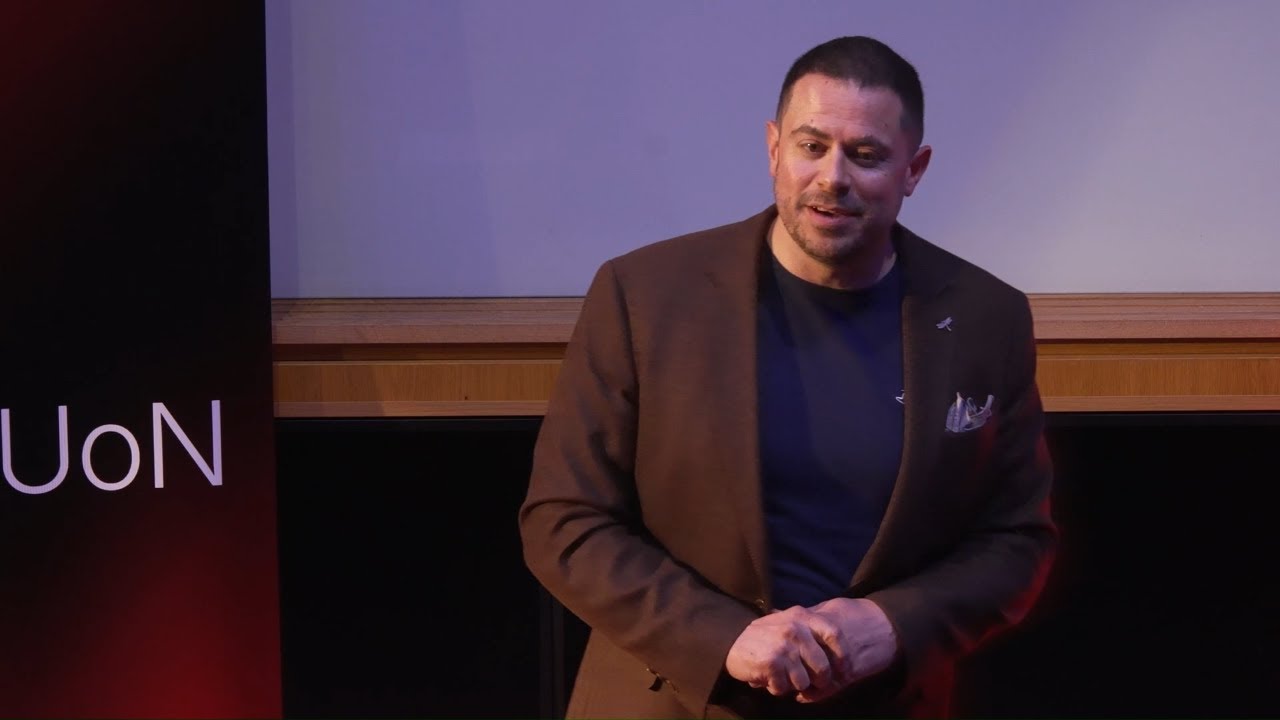
The Secret Rhythm Behind Every Great Story | Ian Mullen | TEDxUoN
Keywords
Summary
192 words
Critical Evaluation
Value of the Information & Strength of the Argument
The talk provides a clear and intuitive framework for improving communication, grounded in familiar examples like the alphabet song, Toy Story, and everyday conversations. The argument progresses logically: rhythm is a natural human pattern, it underpins effective storytelling, and it can be intentionally applied to interviews, pitches, and apologies. The three tools (setup-shift-outcome, pause, echo) are practical and actionable. However, the argumentation relies primarily on anecdote and personal experience rather than empirical evidence. The speaker does not cite studies on memory, attention, or neurological entrainment, which would strengthen the scientific basis. Claims about brain synchronization and cognitive load are plausible but unsubstantiated. The talk is persuasive for a general audience but lacks the rigor of a researched review.
Scientific Rigor, Source Quality, Title Accuracy
The talk includes no formal citations or references to academic literature. The only external source mentioned is the TEDx program itself (via the description link). The speaker draws on personal observations and well-known examples (Toy Story, alphabet song) without providing data or third-party verification. The title and content are well-aligned: the secret rhythm is indeed the central theme. The talk is more about practical communication than rigorous science, which is acceptable for a TEDx format but limits its evidentiary value. No comments were provided to analyze.
219 words
Title / Content Match
The title accurately reflects the talk's focus on rhythm as the underlying structure of compelling storytelling and effective communication.
Quality & Reliability
4/10
The talk offers practical communication frameworks but relies on anecdotal evidence and personal observation rather than scientific research. No external sources or data are provided to support claims about memory, attention, or rhythm.
Key Moments
Markers derived by PSI from the transcript: the creator did not define chapters.
- Audience experiment: saying the alphabet triggers the familiar tune, demonstrating rhythm's memory power.
- Toy Story as a perfectly structured story: safe start, disruption, chase, and return—a rhythmic pattern.
- Job interview example: flat answer vs. rhythmic answer with tension, shift, and outcome.
- Startup pitches fail due to excess information and lack of story beats.
- Communication failures are about structure, not confidence.
- Three tools: three-beat story, pause, and echo to create rhythm.
- Rhythm fosters alignment and understanding; conclusion about remembering rhythm, not words.
Cited Sources
- TEDx Program — Official TEDx website referenced in the video description, indicating the event's format and organizational context.
Contribution & Novelties
The talk offers a simple, memorable framework for communication by repurposing narrative structures into everyday contexts. Its originality lies in presenting rhythm as a transferable skill independent of charisma or confidence, with concrete tools (setup-shift-outcome, pause, echo) that can be applied instantly. The call to focus on rhythm rather than wording provides a fresh perspective for professional communication.
Pour aller plus loin :
- Storytelling — Broad overview of storytelling as a human practice, relevant to the talk’s foundation.
- Three-act structure — The narrative framework behind setup, conflict, and resolution, closely related to the three-beat story.
- Mnemonic — Discusses memory aids like rhythm and song, which support the alphabet example.
- Cognitive load — Relates to the talk’s claim that rhythm respects cognitive load and aids understanding.
125 words
Radar Profile
The radar profile shows moderate quantity and quality of information (5-6), low technical depth (3), and moderate reliability (4). The talk is accessible and practical but lacks empirical backing, making it more inspirational than evidence-based.