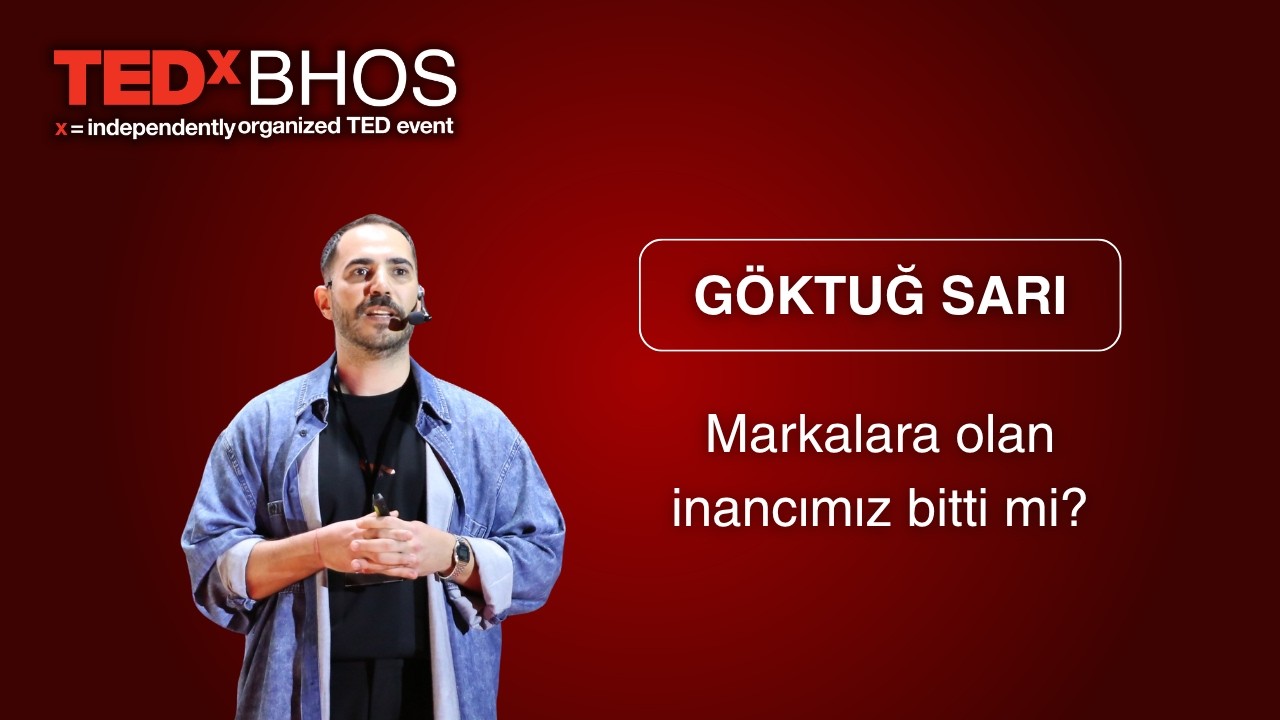
Markalara olan inancımız bitti mi? | Goktug Sari | TEDxBHOS
Keywords
Summary
151 words
Critical Evaluation
Value of the Information & Strength of the Argument
The value of this talk lies in its nuanced view of the relationship between consumers and brands, framed through the lens of romanticism and capitalism. Sari’s argument is that the era of unquestioning brand faith is over, replaced by a discerning generation that expects authenticity and social responsibility. He supports this with personal anecdotes (e.g., his own consumption patterns) and references to rhetorical principles, making a compelling case for a shift from emotional manipulation to value-driven engagement. The argumentation is coherent and persuasive, though it lacks empirical evidence and relies heavily on individual experience, which limits its theoretical depth.
Scientific Rigor, Source Quality, Title Accuracy
The talk is built on personal narrative and anecdote rather than systematic research. While Sari cites Aristotle’s rhetoric and references Steve Jobs, these are not presented with formal citations or sources. The only explicit external reference is the TEDx platform itself. The title is clearly aligned with the content, which consistently addresses the desirability and direction of brand trust. The talk is well-structured and logically developed, but it would benefit from more concrete data or studies to strengthen its claims about contemporary consumer behavior. Overall, the rigor is moderate, typical of a TEDx talk that prioritizes storytelling over evidence.
213 words
Title / Content Match
The title accurately captures the central question explored throughout the talk, which is the evolving trust in brands. The content directly addresses this question with personal anecdotes and societal analysis, making a strong fit.
Quality & Reliability
6/10
The talk is a personal and professional reflection grounded in the speaker's dual background in literature and advertising. It offers coherent arguments and references rhetorical theory (Aristotle) and brand examples, but lacks empirical data or verifiable sources. The subjective perspective reduces reliability, though the reasoning is transparent and intellectually honest.
Key Moments
Markers derived by PSI from the transcript: the creator did not define chapters.
- Introduction: 'I am a romantic' – defines romanticism as a historical and personal stance.
- Background: studies in comparative literature and advertising, the tension between art and capitalism.
- Shows a 2014 photo of himself in Marseille, illustrating his consumerist phase and identity conflict.
- Introduces Aristotle's rhetoric (logos, pathos, ethos) as a key lens for understanding persuasion.
- Discusses Generation Z, social media's role in increasing scrutiny, and changing expectations of brands.
- Personal disillusionment with Apple: privacy concerns, ethical issues, and the gap between stated values and actions.
- Encourages embracing sensitivity and romanticism as strengths; urges consumers to question brands.
- Conclusion: 'we are stronger than we think' – call to action for conscious consumption.
Cited Sources
- TEDx Program — General reference to the TEDx event platform in the video description.
Contribution & Novelties
The talk contributes a personal perspective on the intersection of romanticism and capitalism, introducing the concept of ‘romantic capitalism’ as a way to navigate the ethical dilemmas of branding. It focuses on the psychological and emotional aspects of consumer-brand relationships, emphasizing a shift from emotional manipulation to ethical accountability. The speaker’s own transformation from a brand-obsessed to a critical consumer offers a relatable case study.
Pour aller plus loin:
- Aristotle’s Rhetoric – The foundational text on logos, pathos, and ethos, which the speaker uses to dissect advertising persuasion.
- Generation Z – The demographic characterized by digital nativity and increased social and environmental consciousness, central to the talk’s discussion of shifting consumer expectations.
- Brand Activism – A concept related to how brands take stands on social issues, which invites parallel thinking to the talk’s critique of superficial engagement.
137 words
Radar Profile
The radar profile shows a balanced but moderate performance across all dimensions. Quality of information is the highest, reflecting the coherent and insightful personal narrative, while technical level is lower, indicating accessibility to a general audience. Reliability and quantity are moderate, consistent with a talk that is more reflective than data-driven.