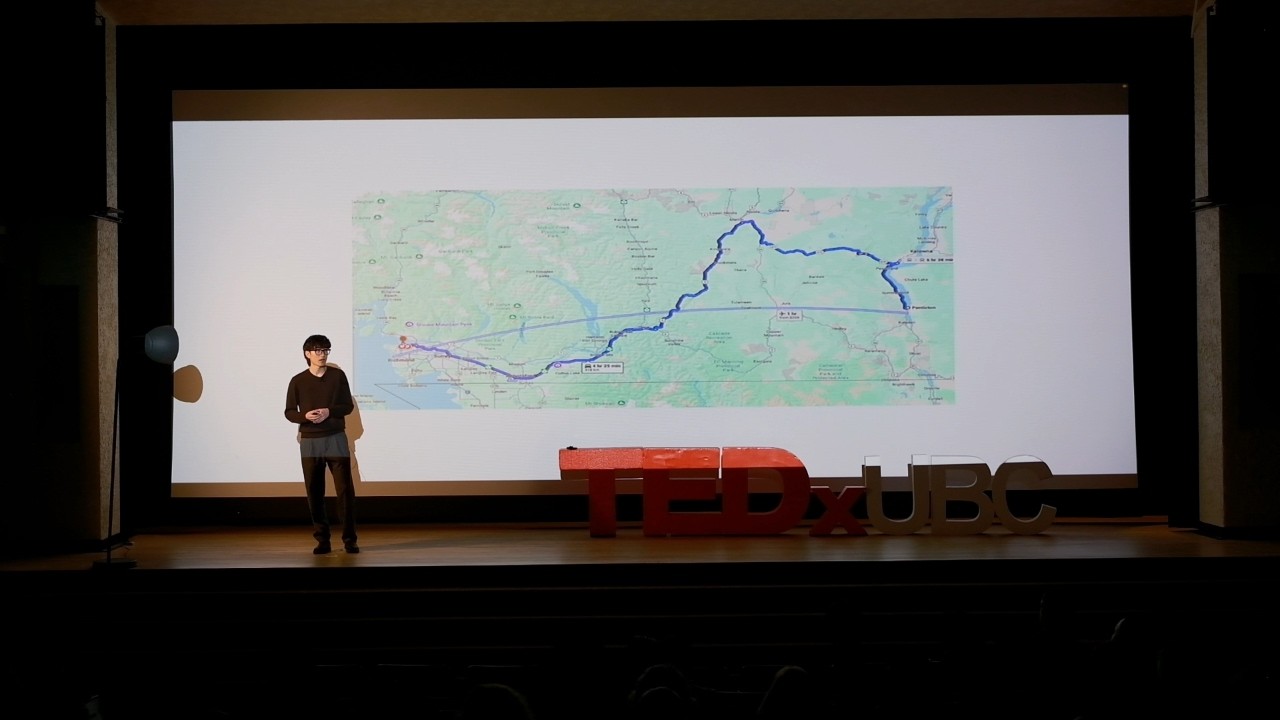
Voices Unheard: What Rural Communities Teach us | David Chang | TEDxUBC
Keywords
Summary
185 words
Critical Evaluation
Value of the Information & Strength of the Argument
The talk’s value lies in its authentic personal testimony, which humanizes the abstract issue of rural healthcare disparities. Chang effectively uses two contrasting narratives—one of opportunity from community support, another of vulnerability due to systemic gaps—to build a compelling emotional case. His argumentation is primarily anecdotal, leaning on the ‘incoherent sound summation effect’ and the ‘Lombard effect’ to metaphorically justify collective advocacy. While these references add scientific flavor, they are not deeply elaborated. The reasoning is clear and persuasive for a general audience, but lacks empirical data or citations to strengthen causal claims. The speaker’s background as a medical student lends some credibility, yet the talk remains more of a personal plea than an evidence-based analysis.
Scientific Rigor, Source Quality, Title Accuracy
The scientific rigor is moderate. The speaker mentions an unnamed article documenting emergency room closures in the Interior Health region from April 2023 to 2025, but provides no specific citation or dataset. He references two acoustic effects (incoherent sound summation and Lombard effect) without explaining their scientific basis or providing sources. The titular promise—‘what rural communities teach us’—is fulfilled through the two illustrative stories, which are well-chosen and directly support the message. The title is accurate and engaging, though the content is more about healthcare advocacy than a comprehensive exploration of rural teachings. No external sources are listed in the video description beyond the general TEDx link, limiting the ability to verify claims independently.
245 words
Title / Content Match
Title accurately reflects the core message about rural communities and their often-unheard perspectives.
Quality & Reliability
6/10
Personal narrative with some references to healthcare data (hospital closures) but no explicit sources provided. The talk is grounded in lived experience, which adds authenticity but limits verifiability.
Key Moments
Markers derived by PSI from the transcript: the creator did not define chapters.
- Introduction and first story begins: childhood dream of becoming an Olympian in taekwondo.
- Recounts being offered a spot on Team DC training in Vancouver, but having to decline due to distance.
- Transition to becoming an assistant instructor, gaining teaching experience that later proves valuable in university.
- Second story: father's TIA emergency, hospital visit, and the lucky circumstances.
- Discusses hospital closures, specifically 1,120 hours at South Okanagan General Hospital, and the crisis in rural healthcare.
- Concert analogy and call to action: become an extra voice for rural healthcare with reference to Paul Farmer quote.
Cited Sources
- TEDx Program — Official TEDx page referenced in the video description as the organizer of the event.
Contribution & Novelties
The talk’s original contribution is the integration of personal rural upbringing with a pressing healthcare advocacy message. It highlights the often-unseen strengths of rural communities (e.g., trust, informal mentorship) while exposing their systemic vulnerabilities. The use of acoustic effects as a metaphor for collective action is a creative framing that underscores the power of many voices. However, the novelty is limited by anecdotal evidence and lack of novel data.
Pour aller plus loin :
- Lombard effect — Relevant to the speaker’s metaphor about voices rising in noisy environments; note that the effect is a well-documented psychological phenomenon.
- Paul Farmer — The quoted ‘some lives matter less’ is a known aphorism from this global health advocate; his work on health equity deepens the ethical argument.
- Rural health — Provides broader context on healthcare disparities in rural areas, offering data and policy discussion that complement the speaker’s narrative.
146 words
Radar Profile
The profile shows moderate scores across information quantity, quality, and technical depth, with a slightly lower reliability. This reflects a talk that is emotionally engaging and rich in personal detail but lacks rigorous data and citations. The low technical level aligns with its general audience focus, making the content accessible yet not deeply analytical.