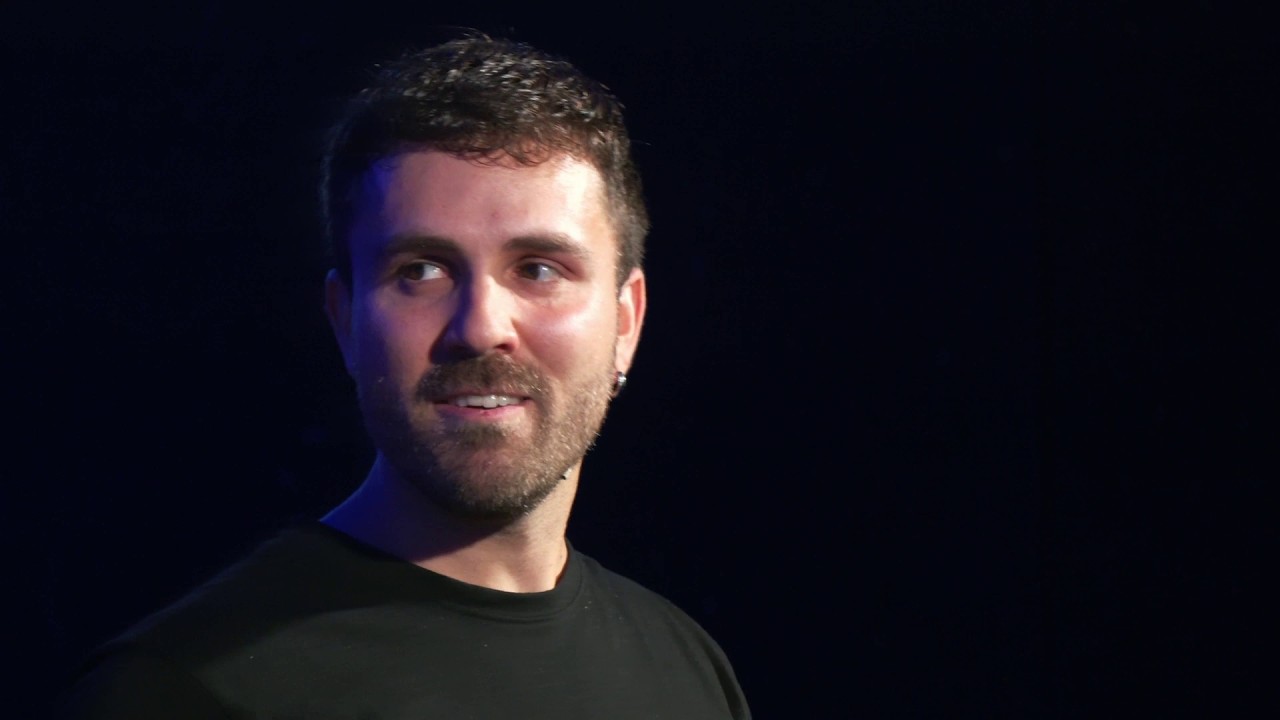
Facce della stessa medaglia | Luigi Gisolfi | TEDxApricena
Two sides of the same coin | Luigi Gisolfi | TEDxApricena
Title history
- Facce della stessa medaglia | Luigi Gisolfi | TEDxApricena — observed on 20261120-1758 UTC (YouTube)
Keywords
Summary
241 words
Critical Evaluation
Value of the Information & Strength of the Argument
The talk provides a compelling narrative that unifies various astronomical observations into a coherent story about interplanetary dust. The argument is well-structured: it starts with a personal anecdote, moves to historical context, explains the physical composition, and then introduces a theoretical puzzle and its solution, culminating in a practical application (planetary defense). The speaker effectively uses analogies and personal engagement to make complex concepts accessible. The value lies in showing how fundamental research, often perceived as disconnected or trivial, can lead to significant societal benefits. The argumentation is solid, with logical progression from observational facts to theoretical explanation and final application. All claims are consistent with current scientific understanding, though the talk does not engage with any controversies or alternative hypotheses, which is typical for a short popular science presentation.
Scientific Rigor, Source Quality, Title Accuracy
The scientific content is accurate and up-to-date, reflecting established knowledge in solar physics and planetary science. The speaker cites key historical figures (Julius Berkowski, Ernst Öpik) and modern scientists (Andrea Milani, Giovanni Valsecchi), and references the SOHO mission, which is credible. However, no specific publications or primary sources are explicitly cited during the talk, only general references. The title ‘Faces of the same medal’ is a poetic yet precise metaphor for the idea that different celestial phenomena share a common origin—interplanetary dust. This aligns perfectly with the content, though the title might be slightly metaphorical for a lay audience. The talk’s structure is coherent, and the content matches the title without exaggeration or misleading claims. The inclusion of the TEDx disclaimer indicates adherence to the TED format, ensuring independent organization and educational intent.
278 words
Title / Content Match
The title 'Faces of the same medal' aptly captures the central theme that solar eclipses, zodiacal light, and meteor showers are all manifestations of interplanetary dust.
Quality & Reliability
7/10
The speaker is an astronomy researcher with expertise in orbital mechanics, and the content aligns with established scientific knowledge. However, no specific sources are cited in the talk itself, and the presentation is aimed at a general audience.
Key Moments
Markers derived by PSI from the transcript: the creator did not define chapters.
- Introduction: speaker asks who has seen a total solar eclipse, sharing his own experience in Spain.
- Mentions the first eclipse photograph by Julius Berkowski in 1851 and modern coronagraphs on SOHO.
- Explains the composition of the solar corona: K-corona (electron scattering) and F-corona (interplanetary dust).
- Introduces the zodiacal light and its connection to interplanetary dust, with a reference to Brian May's PhD.
- Links meteor showers to cometary debris, showing they are manifestations of the same dust.
- Discusses Ernst Öpik's theory explaining the scarcity of large meteors, including the four mechanisms.
- Connects Öpik's work to planetary defense and concludes with the broader lesson of interconnectedness.
Cited Sources
- TEDx official page — The talk is part of the TEDx program, and this link is the general reference for TEDx events.
Concurring Sources
- Zodiacal light - Wikipedia — Supports the claim that zodiacal light is caused by interplanetary dust.
- Stellar corona - Wikipedia — Confirms the composition of the solar corona (K and F components).
- Ernst Öpik - Wikipedia — Provides background on Öpik's theories and his contributions to the field.
- Planetary defense - Wikipedia — Corroborates the evolution of planetary defense initiatives.
Contribution & Novelties
This talk offers a fresh synthesis of well-known astronomical facts, framing them as a single narrative about interplanetary dust and its implications for planetary defense. The speaker’s personal approach and the inclusion of historical and modern research provide a unique perspective for a general audience. The original contribution lies in the clear demonstration that solar eclipses, zodiacal light, and meteor showers are all observable effects of the same physical phenomenon, and that this understanding evolved from a 19th-century photograph to a practical tool for protecting Earth. The talk encourages viewers to appreciate the value of pure research and its unforeseen applications.
Pour aller plus loin :
- Zodiacal light — Detailed overview of the phenomenon and its relation to interplanetary dust.
- Solar corona — Explains the corona’s structure, including the K and F components.
- Ernst Öpik — Biography of the Estonian astronomer and his contributions to planetary science.
- Planetary defense — Overview of efforts to detect and mitigate asteroid impact threats.
- Solar and Heliospheric Observatory (SOHO) — Information about the SOHO mission that studies the Sun and its corona.
178 words
Radar Profile
The profile shows high scores in information quantity and quality, with moderate technical depth, reflecting a talk that is informative and scientifically sound but designed for a general audience. The fiabilité score is slightly lower due to the lack of explicit source citation during the talk, though the speaker's authority mitigates this.