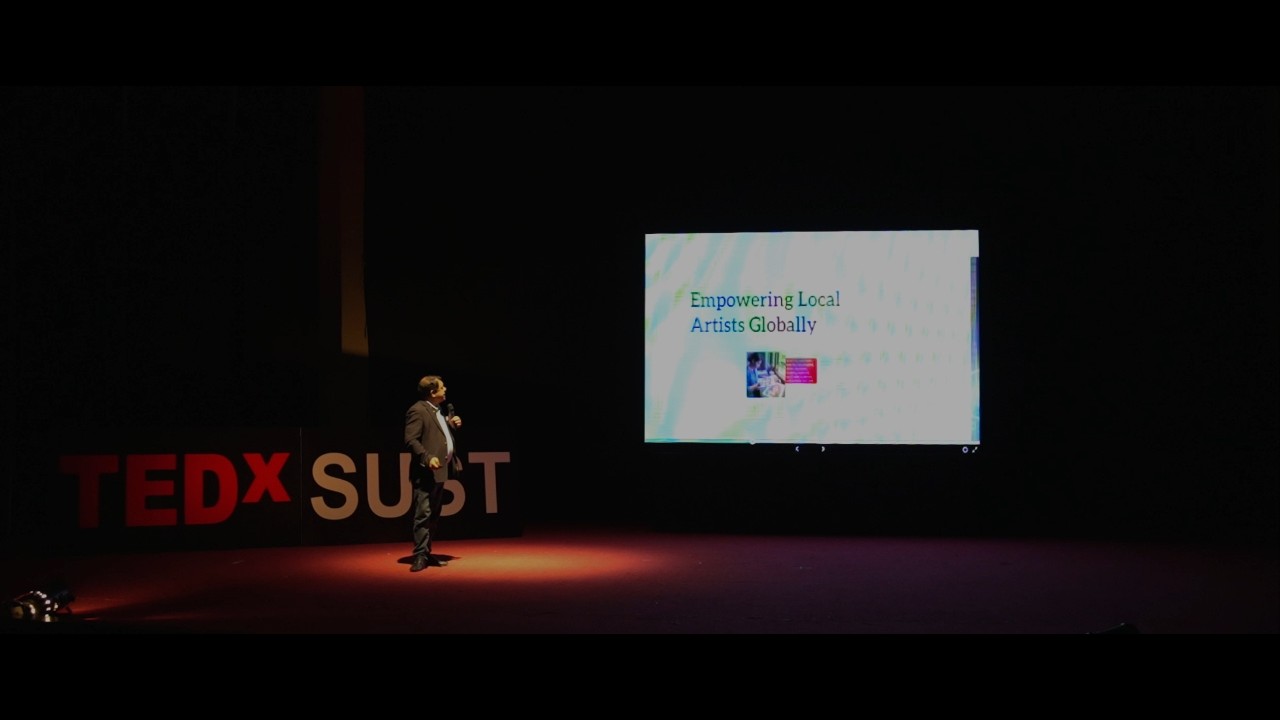
Beyond automation: AI as a catalyst for human potential | Syed Almas Kabir Kabir | TEDxSUST
Keywords
Summary
151 words
Critical Evaluation
Value of the Information & Strength of the Argument
The talk offers valuable perspectives by shifting the narrative from automation anxiety to human amplification. The historical analogies (fire, wheel, printing press) provide a compelling framework for understanding technological disruption. The speaker strengthens his argument with concrete, relatable examples in art, medicine, education, and music, making the message accessible. However, the argumentation relies heavily on anecdotal evidence and inspirational assertions rather than empirical data. The World Economic Forum reference is used broadly without specific report details, and the benefits of AI are presented in an idealized manner without discussing challenges or limitations. The rhetorical style is convincing for a general audience but lacks the critical depth expected in scientific or technical discourse.
Scientific Rigor, Source Quality, Title Accuracy
The speaker’s scientific rigor is moderate. He cites only one external source (World Economic Forum) without naming the exact report, and most claims are supported by anecdotal examples rather than citations. The content is consistent with the title, which clearly promises a beyond-automation viewpoint. There is no misalignment between the title and the talk’s actual focus. The talk is presented in a TEDx format, which typically blends personal experience with broad ideas, and this episode stays within that convention. The overall reliability is acceptable for an opinion talk, but it would benefit from more precise referencing and acknowledgement of potential downsides of AI adoption.
231 words
Title / Content Match
The title accurately reflects the core message: encouraging a shift from viewing AI as a threat to embracing it as an amplifier of human creativity and capability.
Quality & Reliability
7/10
The speaker provides a coherent narrative supported by a reference to the World Economic Forum and examples from healthcare, education, and creative fields. However, the talk relies heavily on personal anecdotes and lacks detailed scientific citations, making it more inspirational than rigorously evidence-based.
Key Moments
Markers derived by PSI from the transcript: the creator did not define chapters.
- Opening statement: AI should be about natural stupidity, not just artificial intelligence.
- Analogy with historical inventions: fire, wheel, and printing press as transformative tools.
- Addressing fears of job loss and citing World Economic Forum predictions; proposing a shift in perspective.
- AI as a mirror/human aid: examples of artists using AI to enhance creativity, writers, and musicians.
- AI in medicine: AI-enabled ultrasound innovation in Bangladesh and improved diagnostics.
- Personalized education with AI to address individual student needs in classrooms.
Cited Sources
- TEDx Talks - Official page — The talk was given at a TEDx event organized independently using the TED format, as referenced in the video description.
- World Economic Forum — Mentioned in the talk as an organization predicting job displacement by AI, though no specific publication is cited.
Contribution & Novelties
The talk adds a constructive perspective to the common narrative of AI-driven job loss by framing AI as an augmentation tool for human creativity and productivity. It emphasizes the role of AI in empowering individuals in diverse fields (art, medicine, education) and highlights a concrete local example (AI-enabled ultrasound) to illustrate potential societal benefits. The historical parallels provide a reassuring continuity of technological progress. This viewpoint is valuable for non-specialist audiences to reframe their understanding of AI.
Pour aller plus loin :
- Artificial intelligence — Foundation for understanding the technology behind the augmentation capabilities discussed.
- Future of work — Relevant to the impact of AI on employment and the need for new skills.
- Human-centered AI — A design philosophy aligning with the speaker’s vision of AI as a partner for human development.
132 words
Radar Profile
The profile shows a moderate score across all dimensions, with quality and reliability slightly higher than technical depth. This indicates a balanced talk that is informative and trustworthy but not highly technical, fitting a general TEDx audience.