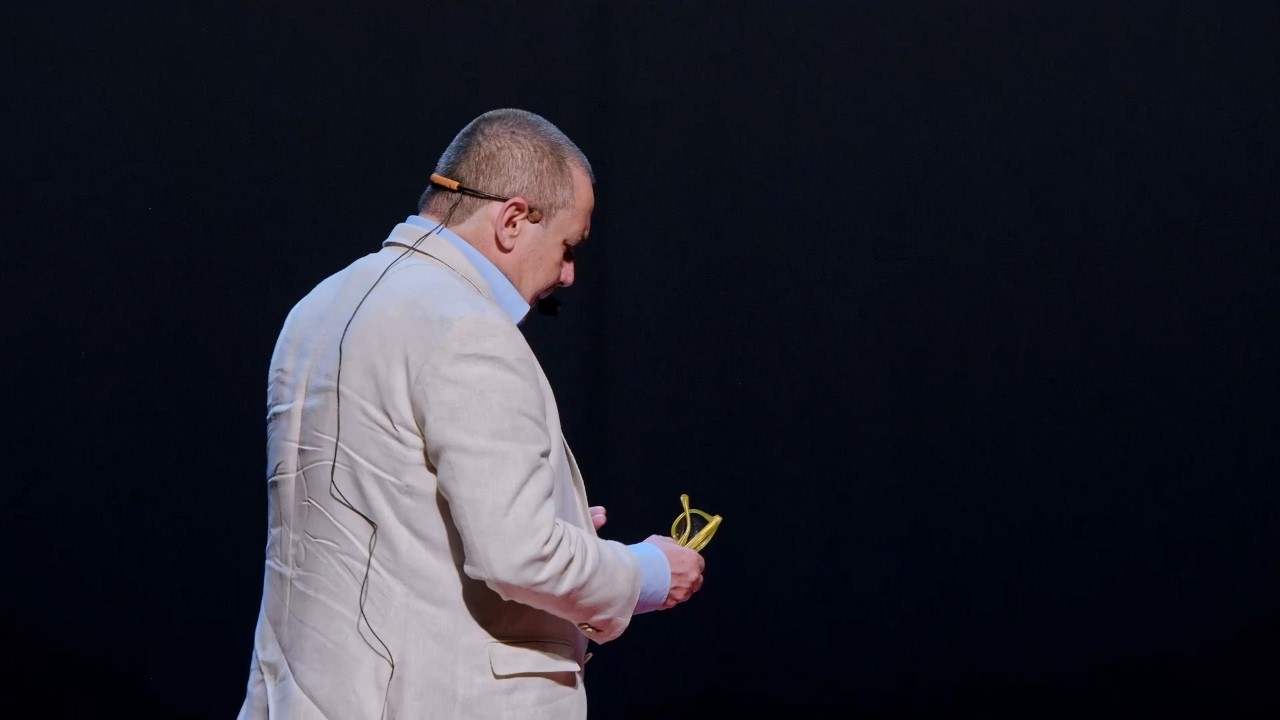
Cultura: O Direito ao Inesperado | Carlos Willian Leite | TEDxGoiânia
Culture: The Right to the Unexpected | Carlos Willian Leite | TEDxGoiânia
Keywords
Summary
196 words
Critical Evaluation
Value of the Information & Strength of the Argument
The talk offers valuable insights into the impact of algorithmic curation on cultural experience. Leite’s argument is well-structured, moving from personal anecdote to broader societal analysis. He effectively highlights the tension between algorithmic efficiency and the essential function of culture to challenge and surprise. The reasoning is clear and persuasive, though it relies more on rhetorical appeal than on empirical evidence. The speaker’s professional background lends credibility to his observations, but the lack of concrete examples or data weakens the argumentative rigor.
Scientific Rigor, Source Quality, Title Accuracy
The talk is an opinion piece based on personal experience rather than a scientific presentation. No specific sources are cited, and the only external reference is the general TEDx platform. The title accurately captures the central message, and the content stays on topic. The speaker’s arguments are internally consistent, but the absence of citations or references limits the scientific rigor. The talk is more reflective than evidence-based, which is appropriate for a TEDx format but reduces its reliability as a source of factual information.
181 words
Title / Content Match
The title accurately reflects the core thesis of the talk: culture as the right to the unexpected. The content consistently develops this idea.
Quality & Reliability
6/10
The talk is a personal and professional reflection rather than a systematic study. It lacks empirical data or citations, but the arguments are coherent and grounded in the speaker's experience in cultural mediation. The reasoning is logical and addresses relevant contemporary issues.
Key Moments
Markers derived by PSI from the transcript: the creator did not define chapters.
- Introduction: Carlos Willian Leite introduces his experience in the late 1990s creating a digital cultural project.
- First paradox: the internet had great potential but few users in Brazil at the time.
- Concession: the need to mix popular and erudite content to sustain the project.
- Shift from scarcity of information to scarcity of attention.
- The role of selection: editors, journalists, and now algorithms decide what we see.
- The problem of algorithmic feedback loops: systems return versions of what we already know.
- Conclusion: culture is the right to the unexpected and the unusual.
Cited Sources
- TEDx Program — Mentioned in the video description as the organizing body for TEDx events.
Concurring Sources
- Filter bubble — Supports the argument that recommendation systems limit exposure to diverse content.
Contribution & Novelties
The talk provides a personal and accessible perspective on the impact of algorithmic curation on cultural consumption. It synthesizes known concepts such as filter bubbles and the attention economy into a coherent argument about the role of culture. The speaker’s experience in cultural mediation adds a practical dimension to the discussion.
Pour aller plus loin :
- Filter bubble — Relevant to the idea that algorithms reinforce existing preferences.
- Attention economy — Directly related to the shift from information scarcity to attention scarcity.
- Cultural mediation — The speaker’s professional field, relevant to the discussion of curation and selection.
97 words
Radar Profile
The radar profile shows moderate scores across all dimensions, with slightly higher quality of information and lower technical level. This reflects a talk that is intellectually engaging but not deeply technical or data-driven.