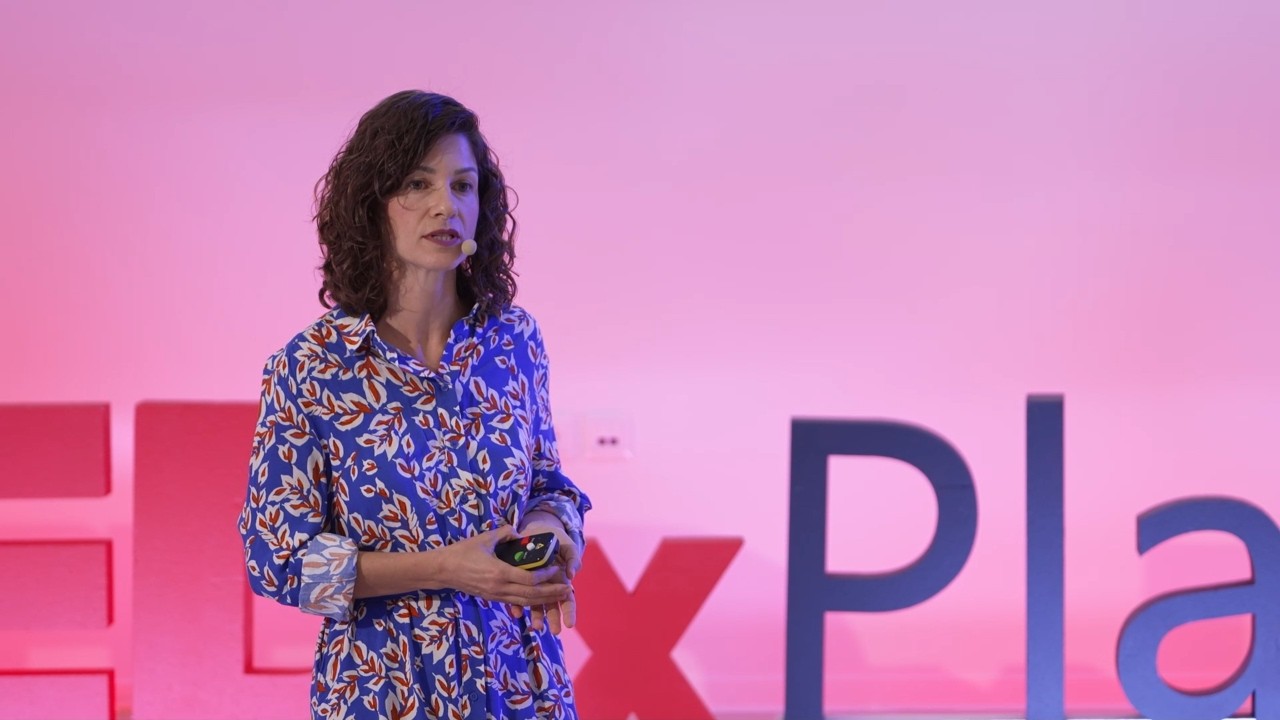
Στο ίδιο καζάνι βράζουμε; | Στέλλα Κάσδαγλη | TEDxPlaka
Are we boiling in the same pot? | Stella Kasdagli | TEDxPlaka
Keywords
Summary
135 words
Critical Evaluation
Value of the Information & Strength of the Argument
The talk offers substantial value by translating complex scholarly ideas into accessible metaphors and clear policy recommendations. The argumentation is coherent and emotionally compelling, using a relatable narrative of ‘Katerina’ to ground abstract issues. However, the speaker occasionally overgeneralizes, such as claiming women are ‘better collaborators’ based on ‘many programs,’ without presenting concrete evidence or counterexamples. The logical progression from vulnerability to agency is effective, but the middle sections rely heavily on anecdotal or aggregated statistics that are not fully sourced. Still, the overall reasoning is sound and consistent with mainstream feminist climate literature, making it a useful call to action.
Scientific Rigor, Source Quality, Title Accuracy
The talk demonstrates moderate scholarly rigor: it references a ‘recent systematic review’ on heat mortality, UN statistics on women’s representation, and global climate finance figures, but does not provide specific citations, making verification difficult. The reliance on secondary sources and personal observations slightly weakens the epistemological foundation. The title is appropriately metaphorical and does not mislead. Given the format of a TEDx talk, the oral presentation style prioritizes persuasion over exhaustive referencing, which is acceptable but limits its use as a primary academic source.
200 words
Title / Content Match
The title is a rhetorical question that effectively frames the central theme of differential climate impacts, matching the content well.
Quality & Reliability
7/10
The talk is well-structured, emotionally engaging, and broadly aligned with established scholarship on gender and climate change. However, it relies on general references and lacks precise citations, and some claims (e.g., specific statistics) are not fully substantiated within the presentation.
Key Moments
Markers derived by PSI from the transcript: the creator did not define chapters.
- Introduction with a narrative about a woman named Katerina during a heatwave, illustrating the everyday impacts on women.
- Discussion on why society struggles to recognize the gendered dimensions of climate crises, introducing the idea of positive discrimination.
- Presentation of the first acronym CRAP (Caretaking, Reproductive health, Abuse, Poverty) to explain women's heightened vulnerability to heat.
- Introduces the second acronym PARK (Purpose, Activities, Role, Cooperation) highlighting women's potential as agents of change.
- Example of the Solar Mamas program in India as a successful model of female-led climate adaptation.
- Presentation of the third acronym DRESS (Data, Representation, Education, Stereotypes, Synergies) outlining necessary structural changes.
- Call to action: emphasizing the need to include women in climate decisions and to redesign adaptation policies with a gender lens.
Cited Sources
- TEDx Talks — General platform reference for the talk format; the talk itself was independently organized under the TEDx license.
Contribution & Novelties
This talk contributes to the public discourse on climate justice by offering memorable, non-academic heuristics (CRAP, PARK, DRESS) that make the gendered dimensions of climate adaptation understandable to broad audiences. It reframes women not merely as victims but as crucial knowledge holders and solution catalysts, a perspective that resonates with participatory climate governance debates. The emphasis on gender-disaggregated data and the call to reallocate climate finance (only 3% gender-sensitive) strengthens its policy relevance.
Pour aller plus loin :
- Gender and climate change — Overview of how climate impacts are mediated by gender, providing empirical context.
- Intersectionality — Theoretical framework useful for understanding compounded vulnerabilities beyond binary gender.
- Care work — Foundational to the CRAP acronym; highlights the structural role of unpaid caregiving.
122 words
Radar Profile
The radar profile shows a talk strong on information quantity and moderately good on quality, but lower on technical depth and reliability. This reflects the audience-oriented nature of TEDx, where accessibility and persuasion outweigh rigorous referencing.