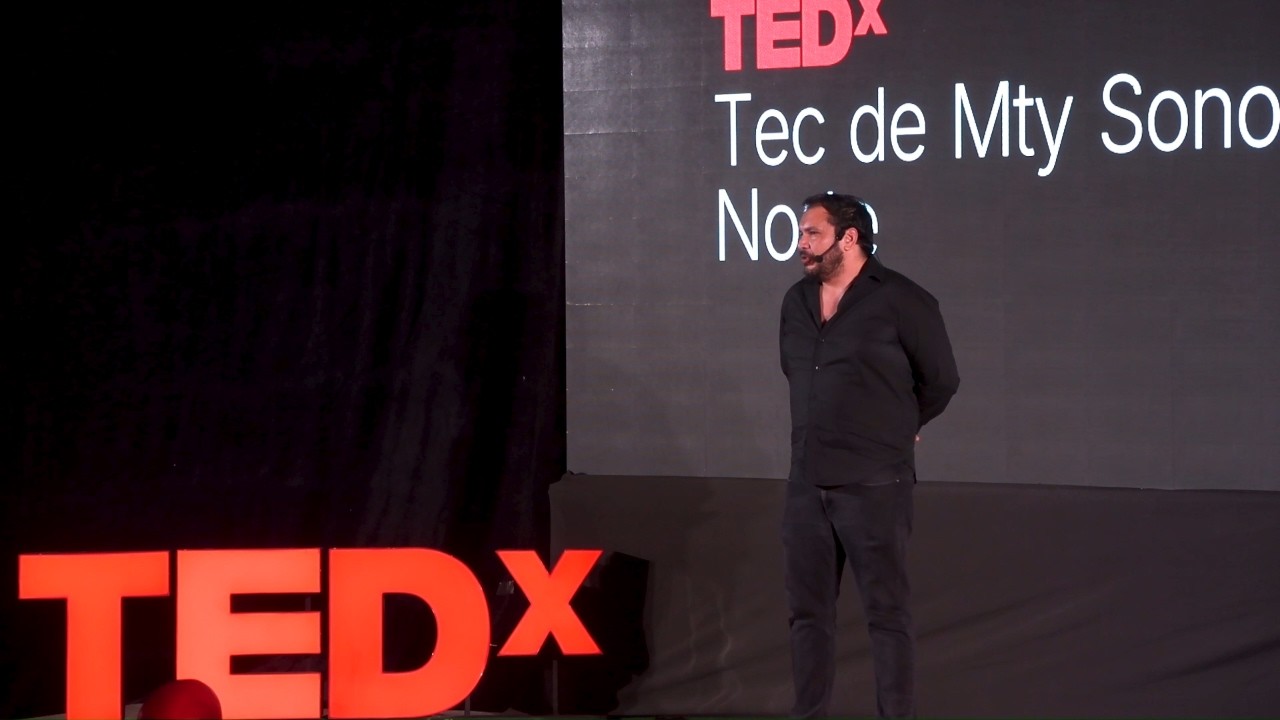
Creer en ti mismo hace la diferencia | Jesús Gómez | TEDxTec de Mty Sonora Norte
Believing in yourself makes the difference | Jesús Gómez | TEDxTec de Mty Sonora Norte
Keywords
Summary
227 words
Critical Evaluation
Value of the Information & Strength of the Argument
The informational value lies in a first-hand account of early-stage entrepreneurship rather than in transferable knowledge. The speaker gives a few concrete, useful elements: the loneliness of founding a company, the repeated proximity to bankruptcy, the accelerator format with very short mentor rotations, and the operating rule he uses in his own company (’the objective is non-negotiable, everything else is negotiable’). These are practical heuristics with real operational value for someone starting a business. The downside is density: the talk is short, anecdote-heavy and mostly restates a small number of ideas in varied form, so a listener looking for methods, metrics or decision frameworks will find little. The argumentation is essentially by testimony and rhetorical contrast. Its backbone is a binary opposition between a Latin American culture that stigmatises failure and a US culture that treats it as a step forward, supported by the speaker’s own experience in an accelerator. That contrast is intuitively persuasive but asserted rather than demonstrated: no data, no comparative study, no counter-example of Latin American ecosystems with different norms. The claim that ‘reality does not exist, only perception does’ is stated as an axiom and never examined, which is a significant conceptual shortcut for a talk whose conclusion depends on it. The logical move from ‘belief matters’ to ‘belief creates realities’ is a leap that the narrative reinforces through repetition. The strongest part of the argument is the invitation to introspection (what are you willing to sacrifice?), which shifts the audience from inspiration to self-assessment; the weakest is the implicit selection bias, since the speaker reasons from a single successful trajectory and does not discuss ventures that failed for reasons unrelated to self-belief.
Scientific Rigor, Source Quality, Title Accuracy
No source is cited anywhere in the talk: no academic work on self-efficacy, on the fear of failure or on entrepreneurial cognition, no institutional report on entrepreneurship in Mexico or Latin America, no data on business survival rates. The only external reference in the description is the generic TEDx link explaining the format of independently organised events. The argument therefore rests entirely on personal experience and on generalisations about national cultures, which places it at the level of testimonial rather than evidence-based discourse. Not a single figure or study is mobilised to support the central claim about differing attitudes to failure on either side of the border. On the other hand, the speaker is transparent about his own limitations, admits to having been ‘full of fears’ and does not claim any scientific authority, which limits the risk of misleading the audience. The fit between title and content is strong: the announced theme of self-belief runs through the whole talk and is restated in the conclusion.
458 words
Title / Content Match
The title announces a talk about self-belief as a driver of change, and that is precisely the thread running through the ten minutes; the fit is good, although the promise remains at the level of motivational testimony rather than demonstrated argument.
Quality & Reliability
3/10
The talk is an honest first-person testimony from a fintech founder, not a research presentation. It makes no quantitative claims, cites no study, dataset or external reference, and its central assertions ('belief creates realities', 'failure is viewed differently in the US than in Latin America') rest on personal experience and anecdote. The content is internally coherent and the speaker is transparent about his own difficulties, which supports sincerity but not evidential reliability. Claims about cultural differences in the perception of failure are stated as generalisations without any supporting survey or comparative data.
Key Moments
Markers derived by PSI from the transcript: the creator did not define chapters.
- Opening thesis: reality as we know it does not exist, only each person's perception of it, and 'believing creates realities'.
- Account of the company's early days, when nobody believed in the project and the risks were judged too high.
- Reality check on the entrepreneurial narrative: founding a company is a solitary path, not a guarantee of freedom or success.
- Core argument that ideas are worth nothing and that execution, belief and follow-through are what matter.
- Confession that entrepreneurial beginnings come from ignorance — you don't know how to sell, build or keep accounts.
- The US accelerator experience, with eight or nine mentors a day, and the realisation of his own fears and false beliefs.
- Contrast between the Latin American stigma attached to failure and a mindset in which failure is a step towards success.
- Claim that scarcity makes Latin Americans highly creative, and that the region underestimates itself.
- Operating rule: the final objective is non-negotiable, everything else — how, when, with whom — is negotiable; and the importance of asking for help.
- Closing call to take the first step, be honest about what you are willing to sacrifice, and 'create realities'.
Cited Sources
- TEDx — independently organised TED events (format and programme) — Only external link provided in the video description; it documents the TEDx format in which the talk was delivered, not a scientific reference.
Concurring Sources
- Mindset — fixed and growth mindset (overview) — General overview of the mindset literature, which echoes the talk's claim that beliefs about one's own abilities shape what people attempt and achieve.
Dissenting Sources
- Survivorship bias — The talk generalises from one successful trajectory and from the founders who made it; ventures that failed for reasons unrelated to self-belief are invisible in the account, which weakens the inference that belief and execution are the decisive factors.
- Planning fallacy — The prescription to set a non-negotiable objective and adapt the method sits in tension with a well documented tendency to underestimate difficulties and overestimate the probability of success — a risk the talk does not address.
- Overconfidence effect — The message that self-belief should be strengthened is not qualified by any discussion of the point at which confidence becomes miscalibration; the entrepreneurial literature treats that boundary as central.
Contribution & Novelties
The talk brings no new knowledge in the scientific sense: it produces no data, proposes no framework and tests no hypothesis. Its contribution is testimonial and rhetorical. The most distinctive element is the speaker’s willingness to dismantle the standard entrepreneurial success story — he explicitly says that founding a company is solitary, that it is born of ignorance rather than brilliance, and that he discovered himself to be far more fearful than he believed. The accelerator episode, with its rapid rotation of mentors, gives a concrete picture of how such programmes work on the founder’s self-perception rather than only on the business model. The distinction between a non-negotiable objective and a fully negotiable path is a compact operational heuristic that travels reasonably well outside entrepreneurship. The remaining content — belief, first step, ask for help, honest self-assessment — is well established in motivational discourse and is not argued in a way that adds to it. It is best treated as a practitioner’s account to be confronted with the empirical literature on self-efficacy, entrepreneurial cognition and business survival.
Further reading:
- Self-efficacy — Bandura’s construct is the closest scientific counterpart to the talk’s central claim about believing in one’s own capacity; it clarifies what belief can and cannot explain.
- Mindset — Overview of fixed versus growth mindset, the framework most often invoked when the talk contrasts Latin American and North American attitudes to failure.
- Survivorship bias — Essential counterpart for reading any founder’s success testimony, including this one.
- Effectuation theory (Sarasvathy) — Describes how entrepreneurs reason from available means rather than from a fixed goal, which nuances the talk’s ’non-negotiable objective’ rule.
- Fear of failure and entrepreneurship — A substantial empirical literature exists on how the cultural perception of failure affects new venture creation; it directly tests the contrast the speaker asserts without evidence.
302 words
Radar Profile
The profile is dominated by low technical difficulty and moderate reliability, with information quantity and quality both limited by the anecdotal format. Technical level is the lowest dimension, which is consistent with a motivational talk aimed at a general audience rather than at specialists. The overall shape describes a sincere, well-structured personal account that scores on engagement and honesty but very little on evidential density.