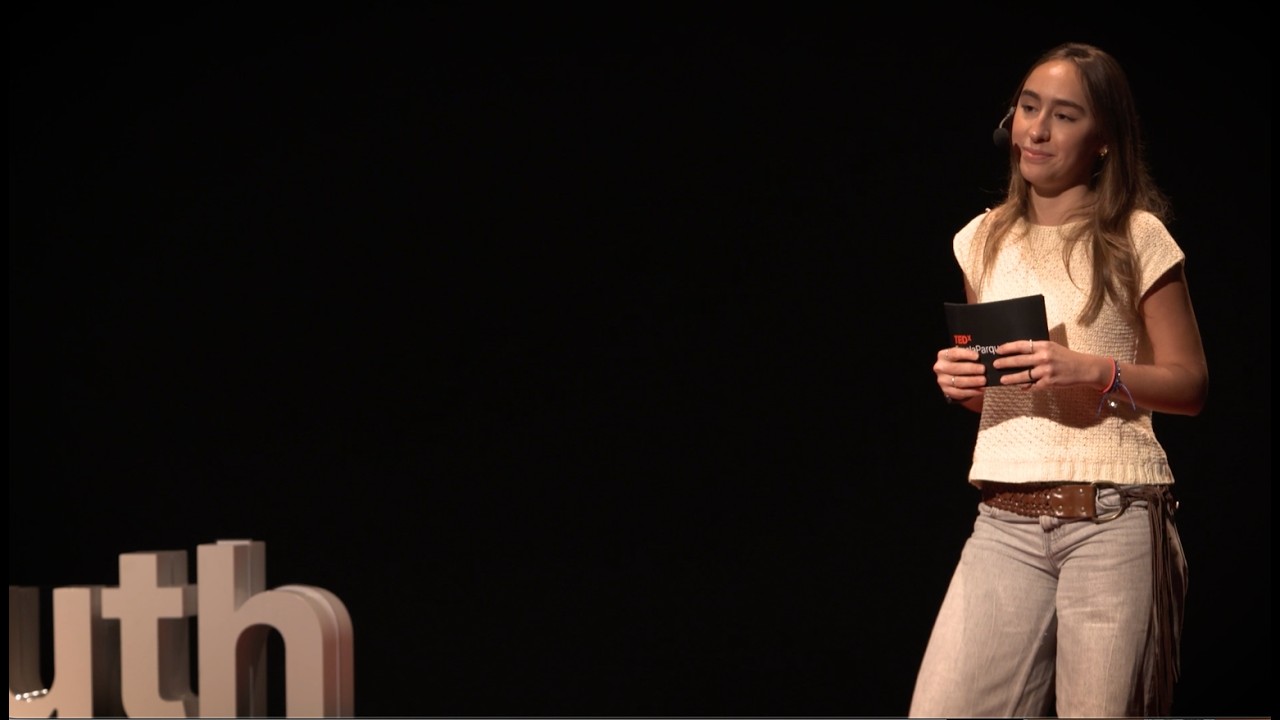
O que está por trás da sua roupa? | Bruna Couto | TEDxEscola Parque Youth
What’s Behind Your Clothes? | Bruna Couto | TEDxEscola Parque Youth
Keywords
Summary
187 words
Critical Evaluation
Value of the Information & Strength of the Argument
The talk’s value lies in its synthesis of well-known problems in the fashion industry, presented in an accessible and engaging manner. Bruna Couto effectively combines personal anecdotes (e.g., her grandmother’s handmade blouse) with factual examples to make the argument relatable. Her argumentation is logically structured: she opens with a personal connection, explains the issue, provides concrete evidence of harm, and closes with a call to action that balances individual responsibility with systemic critique. She also introduces the concept of ’environmental racism’ to highlight the disproportionate burden on vulnerable populations. However, the reliance on a few key sources (The True Cost, Josephine Philips) rather than a broad set of citations weakens the argumentative depth. Still, the emotional and ethical appeal is strong, and the proposed solution—cultivating affectionate bonds with clothing—offers a constructive perspective.
Scientific Rigor, Source Quality, Title Accuracy
The talk maintains a reasonable scientific rigor for a general audience. Couto references respected works like The True Cost documentary and a TED talk by Josephine Philips, and she mentions statistics (e.g., 92 million tons of textile waste) that align with known data. However, she does not provide primary sources or detailed endnotes, and some numbers (e.g., ‘60,000 tons’ for Atacama) are presented without precise sourcing. The title accurately reflects the content, and the talk stays on-topic throughout. While the speaker is not a professional researcher, her educational background and clear presentation contribute to overall trustworthiness, though a specialist would likely demand more rigorous citation.
252 words
Title / Content Match
The title directly matches the content: the talk investigates what is hidden behind clothing, focusing on environmental damage, labor exploitation, and consumption habits.
Quality & Reliability
6/10
The talk presents a coherent overview of fast fashion's environmental and social impacts, citing specific statistics and examples (e.g., Atacama waste, lead in clothing) and referencing notable sources like The True Cost documentary and a TED talk by Josephine Philips. However, several figures lack direct citations in the transcript, and the speaker is a student rather than a specialized expert, limiting the depth of verification.
Key Moments
Markers derived by PSI from the transcript: the creator did not define chapters.
- Introduction: asking the audience to inspect their clothes and question their origin.
- Definition of fast fashion: rapid production, low quality, and overconsumption.
- Environmental impact: polyester, CO2 emissions, and toxic dyes.
- Case of lead in children's clothing and its health effects.
- Labor exploitation: forced labor in São Paulo and Rana Plaza collapse.
- Textile waste in Atacama desert and statistics on discarded clothing.
Cited Sources
- TEDx Talks (official website) — Reference to the TEDx program and event format, providing context for the talk.
- The True Cost (documentary) — Mentioned as an influential documentary that revealed fast fashion's impacts, including the Rana Plaza disaster.
- The Simple Solution to Fast Fashion (TED talk by Josephine Philips) — Referenced for the idea that valuing the clothes we own is not part of mainstream culture.
Contribution & Novelties
The talk’s original contribution lies in its personal framing, connecting family heritage (e.g., a blouse made by her grandmother) to broader sustainability issues. It introduces the Andean ‘bem viver’ concept as a counterpoint to consumerism, offering an ethical lens not commonly found in mainstream media. The emphasis on emotional bonds with clothing as a form of resistance is a fresh perspective on the fast fashion debate.
Pour aller plus loin :
- Fast fashion — Overview of the industry, its history, and environmental/social consequences.
- Rana Plaza disaster — Details of the 2013 building collapse, a key example of unsafe labor conditions.
- Sustainable fashion — Explores alternative practices and design principles that reduce environmental impact.
113 words
Radar Profile
The radar profile shows moderate scores across information quantity and quality, with a lower technical level, reflecting an accessible talk. Reliability is moderately high given the cited references, though the overall score is limited by the lack of deep scientific detail.