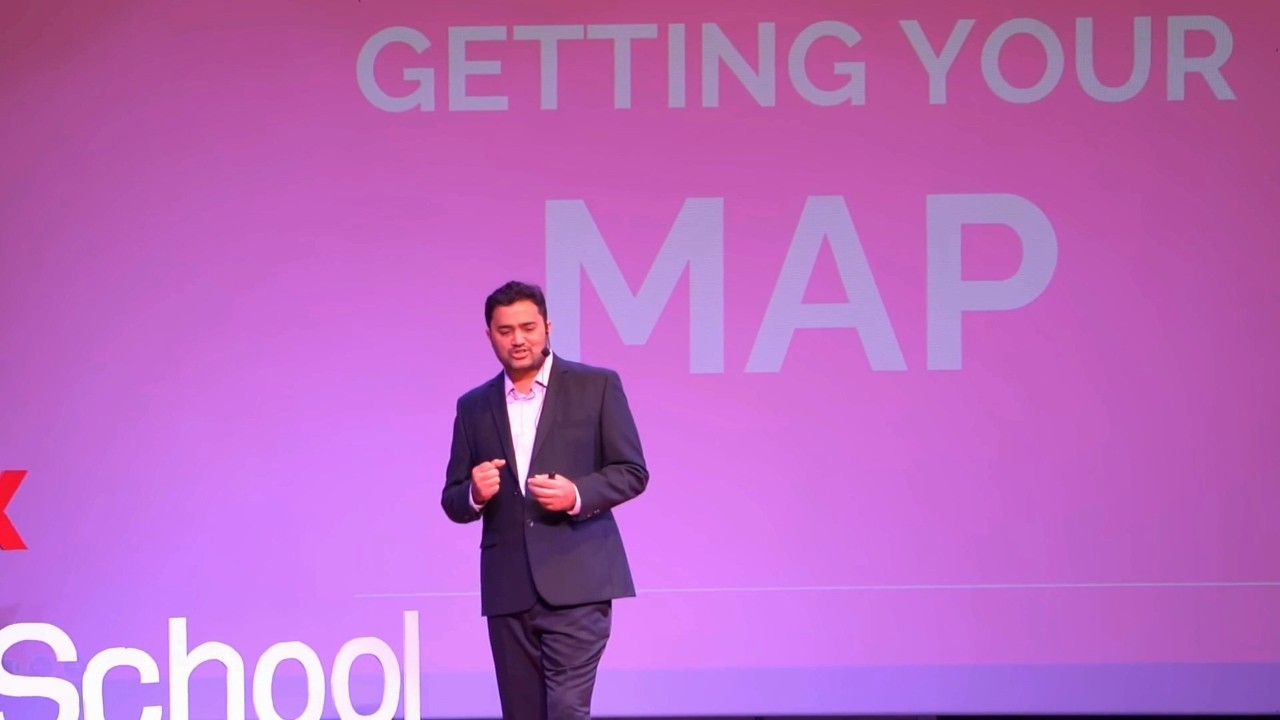
When your map and compass disagree | Priyadarshi Siddharth | TEDxGWH School Bannerghatta
Keywords
Summary
154 words
Critical Evaluation
Value of the Information & Strength of the Argument
The talk’s value lies in its relatable personal anecdotes and clear metaphor of map versus compass, which effectively communicate the importance of introspection and authenticity. The argumentation is coherent and emotionally engaging, structured around key life episodes that demonstrate the consequences of ignoring or following one’s inner signals. However, the evidence is purely anecdotal and lacks empirical support, making the claims subjective. The speaker’s success story at BYJU’S adds credibility, but the advice remains generic and not universally applicable. The emphasis on continuous rerouting and self-trust is a valuable reminder, though the talk could benefit from more concrete strategies for identifying one’s north star.
Scientific Rigor, Source Quality, Title Accuracy
The talk does not cite external sources, which is expected for a personal narrative; it relies on the speaker’s own career achievements. The title accurately mirrors the content, and the metaphor is consistently developed throughout. There is no scientific rigor in the traditional sense, but as a TEDx talk focused on personal growth, it meets the expectations of the format. The speaker’s professional background at BYJU’S and his work in educational media lend some authority, though the talk remains opinion-based. The description links to the official TEDx page, but no specific studies or references are mentioned.
215 words
Title / Content Match
The title accurately reflects the central metaphor of using an internal compass against external life maps.
Quality & Reliability
5/10
Personal narrative without external citations; reliability limited to anecdotal evidence and subjective experience.
Key Moments
Markers derived by PSI from the transcript: the creator did not define chapters.
- Introduction about getting lost and rerouting
- Discussion about life maps provided by parents, society, and astrologers
- Sharing academic failures and engineering studies
- Turning point: conversation with father about documentary and taking a break
- Joining BYJU's and building educational content
- Explaining the concept of North Star and personal purpose
Cited Sources
- TEDx Talks — Official TEDx page where the talk is associated
Contribution & Novelties
The talk offers a personal perspective on aligning one’s actions with inner values, using the map/compass metaphor. Its novelty lies in the practical examples from the speaker’s career transitions, but it doesn’t introduce new theoretical concepts. It reinforces existing ideas about purpose and self-discovery.
Pour aller plus loin :
- Ikigai — A Japanese concept for finding one’s purpose, complementary to the speaker’s north star.
- Logotherapy — Viktor Frankl’s psychological theory on meaning, supporting the importance of purpose in resilience.
- Meaning of life — A philosophical exploration of existential questions, related to the speaker’s search for lasting peace.
97 words
Radar Profile
The radar profile shows low technical depth and moderate information quantity, but higher qualitative scores reflect the engaging narrative. The reliability is moderate due to subjective nature. Overall, the talk excels in personal inspiration rather than factual content, aligning with its intended motivational purpose.