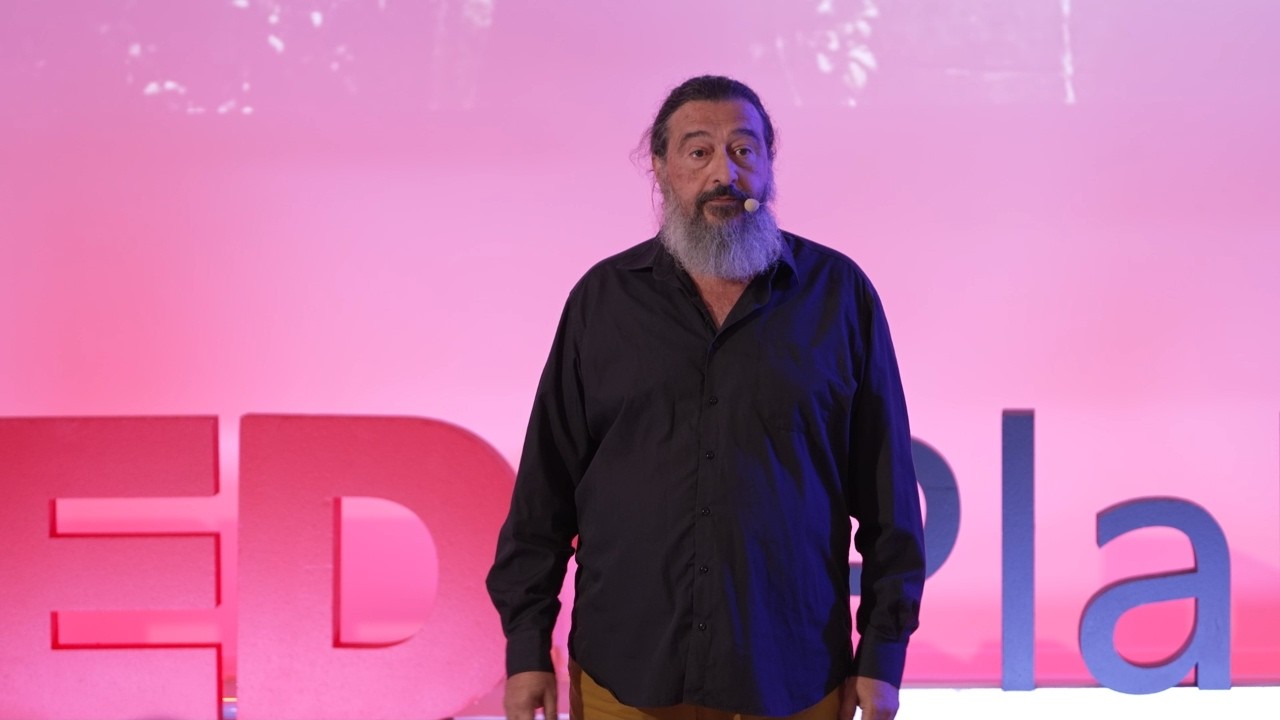
Ζήσε όπως ο Τσέχωφ | Στρατής Πανούριος | TEDxPlaka
Live like Chekhov | Stratis Panourios | TEDxPlaka
Keywords
Summary
152 words
Critical Evaluation
Value of the Information & Strength of the Argument
The talk offers valuable insights into Chekhov’s relevance today, particularly his ecological awareness and his commitment to social justice. Panourios argues persuasively that art, especially theater, serves as a powerful medium for personal and collective transformation. His personal experience with theater in prison lends credibility to the argument, though some claims (e.g., ’none of the participants returned to prison’) are presented without statistical evidence. The argumentation is emotive and inspirational rather than rigorously analytical, relying on anecdote and selective interpretation.
Scientific Rigor, Source Quality, Title Accuracy
The talk is well-structured and stays faithful to Chekhov’s known biography and works. However, the speaker does not cite external sources beyond his own experience and mentions no scholarly references. The description provides a single link to TEDx, which does not substantially support the content. The title accurately reflects the theme, and the talk delivers on that promise, making it consistent. No comments were available for analysis.
162 words
Title / Content Match
The title accurately reflects the content, which presents Chekhov's life principles and their application to contemporary life.
Quality & Reliability
6/10
The talk is based on well-known facts about Chekhov's life and works, delivered by a credible theater professional, though it lacks direct citations or verifiable sources beyond personal interpretation.
Key Moments
Markers derived by PSI from the transcript: the creator did not define chapters.
- Opening quote from 'Uncle Vanya' about deforestation
- Introduction of Chekhov and his first life rule: unity with nature
- Chekhov's journey to Sakhalin Island and his second rule: look where others avert their eyes
- Speaker's theater workshop in Korydallos Prison and the impact of Chekhov's 'Ward No. 6'
- Chekhov's active citizenship and love for animals, third rule: no time to waste
- Theater as a sensory organ for inner exploration, concluding reflections on Chekhov's legacy
Cited Sources
- TEDx Talks — Official TEDx platform where this talk was published
Contribution & Novelties
The talk’s originality lies in connecting Chekhov’s literary themes with contemporary issues of environmental degradation, social responsibility, and rehabilitation through art. Panourios’s personal experience in prison theater provides a unique perspective on practical applications of Chekhov’s ideas. While not scientifically novel, it offers a compelling narrative that bridges classical literature and modern social action.
Pour aller plus loin :
- Anton Chekhov — Comprehensive biography and literary works.
- Uncle Vanya — Play cited in the opening about the defense of forests.
- Ward No. 6 — Novella that inspired the prison theater workshop.
- Sakhalin Island — Chekhov’s non-fiction account of the penal colony.
101 words
Radar Profile
The score profile shows a moderate level across all dimensions, with slightly higher scores for quantity and quality of information, and lower for technical depth. This reflects an accessible, informative talk that prioritizes inspirational messaging over rigorous scientific analysis.