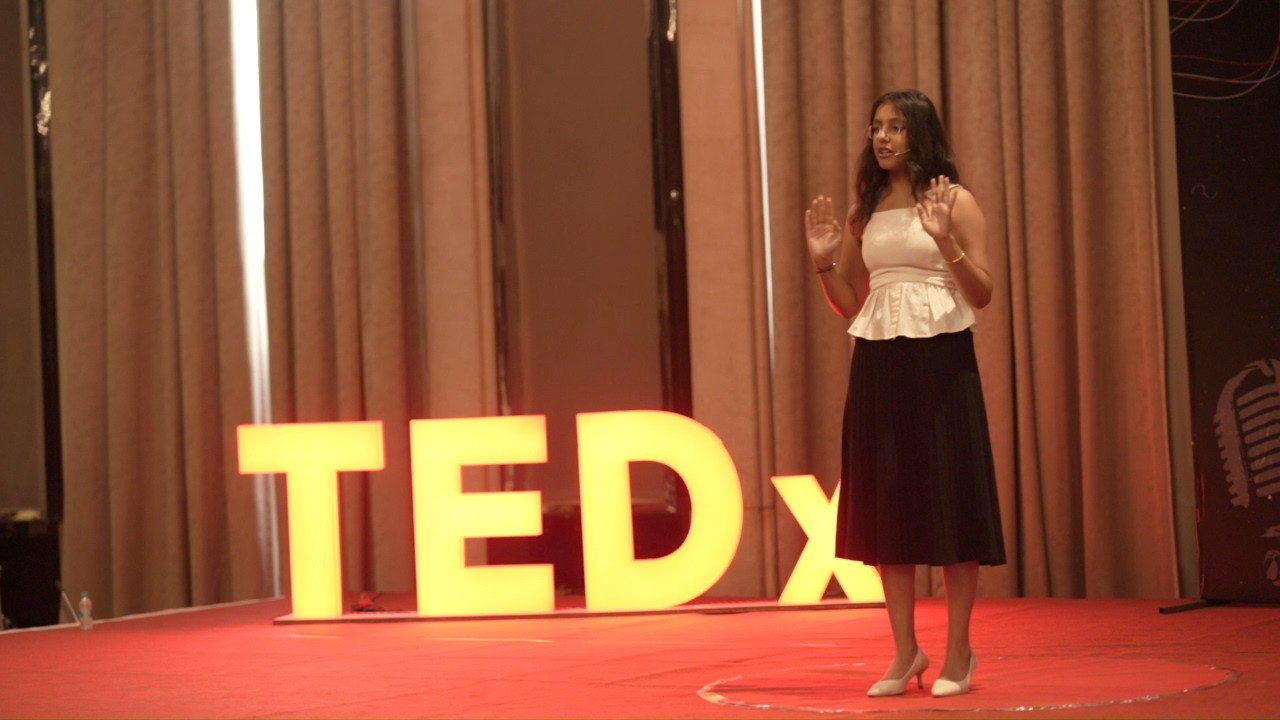
When Did We Stop Being Interesting? | Sampada Tewari | TEDxSAJS Vasundhara Youth
Keywords
Summary
140 words
Critical Evaluation
Value of the Information & Strength of the Argument
The talk’s value lies in its honest, introspective account of how societal incentives subtly suppress intrinsic curiosity. Tewari’s arguments are built on relatable personal anecdotes rather than empirical data, but she articulates a recognizable psychological pattern: the shift from ‘why not try’ to ‘does this fit my image’. Her argumentation is coherent, moving from specific experiences to broader societal critique, and she avoids overgeneralization by acknowledging systemic pressures. The emphasis on internal permission-seeking is a meaningful contribution to personal development discourse, even if it remains primarily anecdotal.
Scientific Rigor, Source Quality, Title Accuracy
Scientifically, the talk does not engage with academic literature or formal evidence, relying instead on personal observation and reflection. The only source mentioned is the TEDx platform itself, included in the description. The speaker’s background as a UNICEF fellow lends some credibility, but no external research is cited. The title is well-aligned with the content, accurately capturing the core question of changing curiosity into impressiveness. The description provides context about the speaker’s achievements, which strengthens her authority on youth and education issues, though the talk itself is more philosophical than empirical.
193 words
Title / Content Match
The title directly matches the central theme: how societal pressure to appear impressive gradually erodes curiosity and makes individuals less interesting.
Quality & Reliability
6/10
The talk offers personal reflections and observations without citing external research, but the ideas are coherent, relatable, and grounded in the speaker's own experiences as a youth researcher and activist.
Key Moments
Markers derived by PSI from the transcript: the creator did not define chapters.
- Introduction: how 'being impressive' starts to replace curiosity.
- Personal conversation that shifted her perspective.
- First emphasis: being impressive as a social shortcut.
- Second emphasis: structured success narrows curiosity.
- Story of gaining admission but feeling hesitation and redundancy.
- Call to action: stop seeking permission and stay curious.
Cited Sources
- TEDx Program — Mentioned in the video description as the organizing body for this TEDx event.
Contribution & Novelties
The talk offers a fresh lens on the familiar theme of losing curiosity by connecting it to the pressure to appear impressive. It provides a personal case study of how even successful achievements can feel redundant when they align too closely with societal expectations. The insights about internal permission-seeking add nuance to discussions about personal growth.
Pour aller plus loin :
- Curiosity (Wikipedia) — Relevant to the central concept and its intrinsic value.
- Intrinsic motivation (Wikipedia) — Explains how external rewards can undermine inner drive, echoing the speaker’s points.
- Growth mindset (Wikipedia) — Connects to embracing challenges and learning from failure, as encouraged in the talk.
106 words
Radar Profile
The radar profile shows moderate scores across most dimensions: quantity and quality of information are balanced, technical level is low (accessible to general audience), and reliability is modest due to lack of external sources. The talk leans on personal narrative rather than technical depth.