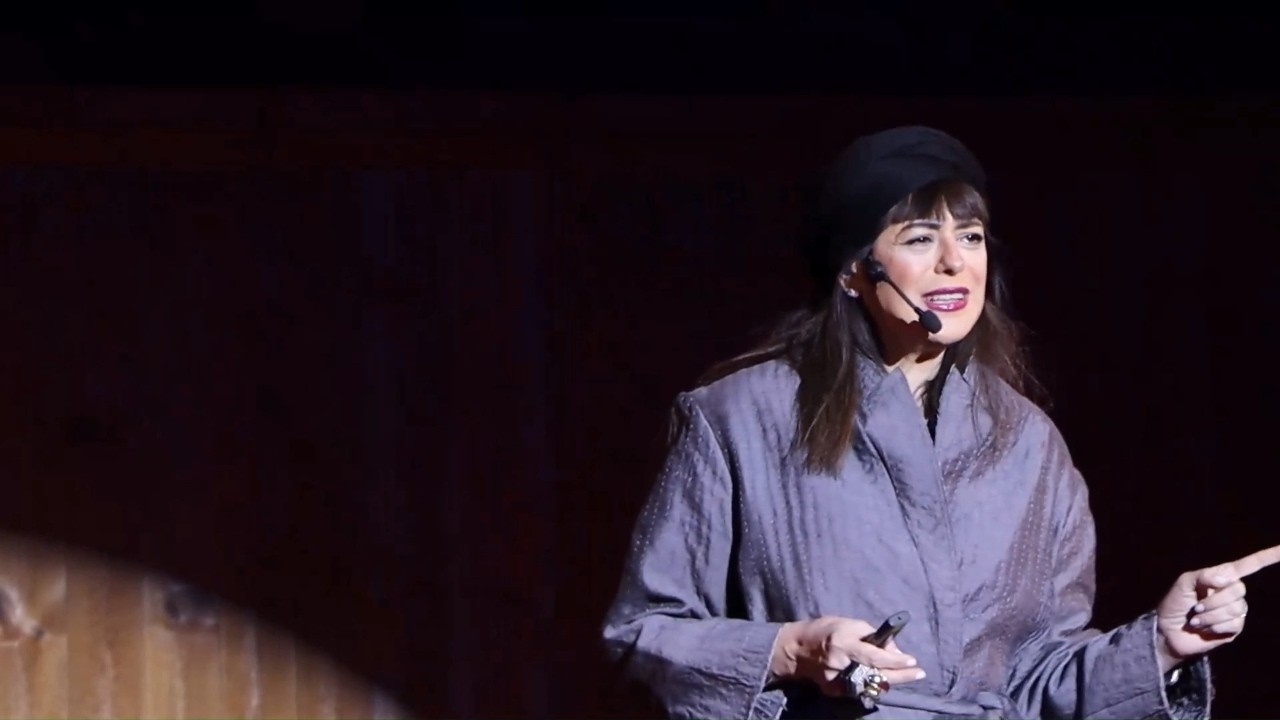
Design Beyond Form: Where Culture, Identity, and Time Converge | Marjan Ahrabifard | TEDxAlef Salon
Keywords
Summary
164 words
Critical Evaluation
Value of the Information & Strength of the Argument
The talk offers a valuable perspective on design as cultural expression, emphasizing meaning over aesthetics. The speaker’s personal projects illustrate how design can engage with collective memory and identity. Her argumentation is primarily narrative and experiential, relying on anecdotal evidence rather than systematic analysis. However, the philosophical grounding in Heidegger provides a theoretical framework, though it is briefly touched upon. The strength lies in the emotional and cultural resonance of the examples, which convincingly demonstrate design’s potential to connect with people. The speaker’s authority as a curator and designer adds weight to her assertions, even if the reasoning is not deeply analytical.
Scientific Rigor, Source Quality, Title Accuracy
The talk references only a few sources, most notably Heidegger’s ‘Being and Time’ and a Persian folk tale collection by Anjavi Shirazi. While these are relevant, they are not cited with specific editions or pages, and no URLs are provided. The absence of rigorous sourcing it typical of inspirational TEDx talks, which prioritize narrative over scholarly detail. The title accurately mirrors the content, and the talk consistently adheres to its central thesis. No public comments were provided, so audience reception cannot be assessed.
200 words
Title / Content Match
The title accurately captures the talk's central theme: design as a means to express culture, identity, and the passage of time. The content consistently aligns with this message.
Quality & Reliability
7/10
The talk is a personal and professional reflection rather than a scientific study. It references philosophical works and cultural heritage but does not provide systematic evidence. The speaker is an expert in design with practical experience, which lends credibility. However, the information is subjective and lacks external validation.
Key Moments
Markers derived by PSI from the transcript: the creator did not define chapters.
- Introduction with Flintstones cartoon as an example of design problem-solving.
- Discussion of Heidegger's 'Being and Time' and the role of language in design.
- First Neshani project based on the Persian fairy tale 'Dokhtar-e Narenj o Toranj'.
- Neshani Kashan - engaging with collective memories and regional identity.
- Neshani Kerman - designing objects with cultural identity, inspired by the Shahzadeh Mahan Garden.
- Organizing the first Tehran Design Week at the Etehadiyeh House, overcoming urban challenges.
- Expansion to the Cinema Museum (Bagh-e Ferdows) and recognition from the neighborhood.
- Incorporating fashion as a theme, citing Gholamhossein Dinani on clothing and identity.
- Representing Iranian women designers at Paris Design Week and concluding on design as continuity.
Cited Sources
- TEDx Program — The talk was given at a TEDx event and is part of the TEDx series.
- Heidegger, M. 'Being and Time' — Referenced as a philosophical foundation for understanding human existence in context.
- Anjavi Shirazi, 'Narratives from Fars Province' — Source of the folk tale 'Dokhtar-e Narenj o Toranj' used in the first Neshani project.
Concurring Sources
- Design — Supports the broader definition of design discussed in the talk.
- Cultural heritage — Relates to the talk's focus on preserving and expressing cultural identity.
Contribution & Novelties
The talk contributes a personal and culturally specific narrative to the discourse on design, arguing that design should be rooted in local heritage and collective memory. It demonstrates how a designer can translate intangible heritage into tangible objects and experiences, as seen in the Neshani series and Tehran Design Week. This approach challenges the globalized design paradigm and emphasizes the role of design in preserving identity.
Pour aller plus loin :
- Design — Provides a foundational overview of the design discipline.
- Cultural identity — Relevant to the talk’s emphasis on identity and heritage.
- Being and Time — The philosophical work quoted in the talk, exploring human existence and temporality.
- Martial Heidegger — Background on the philosopher whose ideas influence the speaker’s perspective.
122 words
Radar Profile
The radar profile shows high scores for information quantity and quality, reflecting the talk's rich cultural content, but a low technical level, indicating that the content is accessible to a general audience. The fiabilité is moderate due to the personal and anecdotal nature of the evidence.