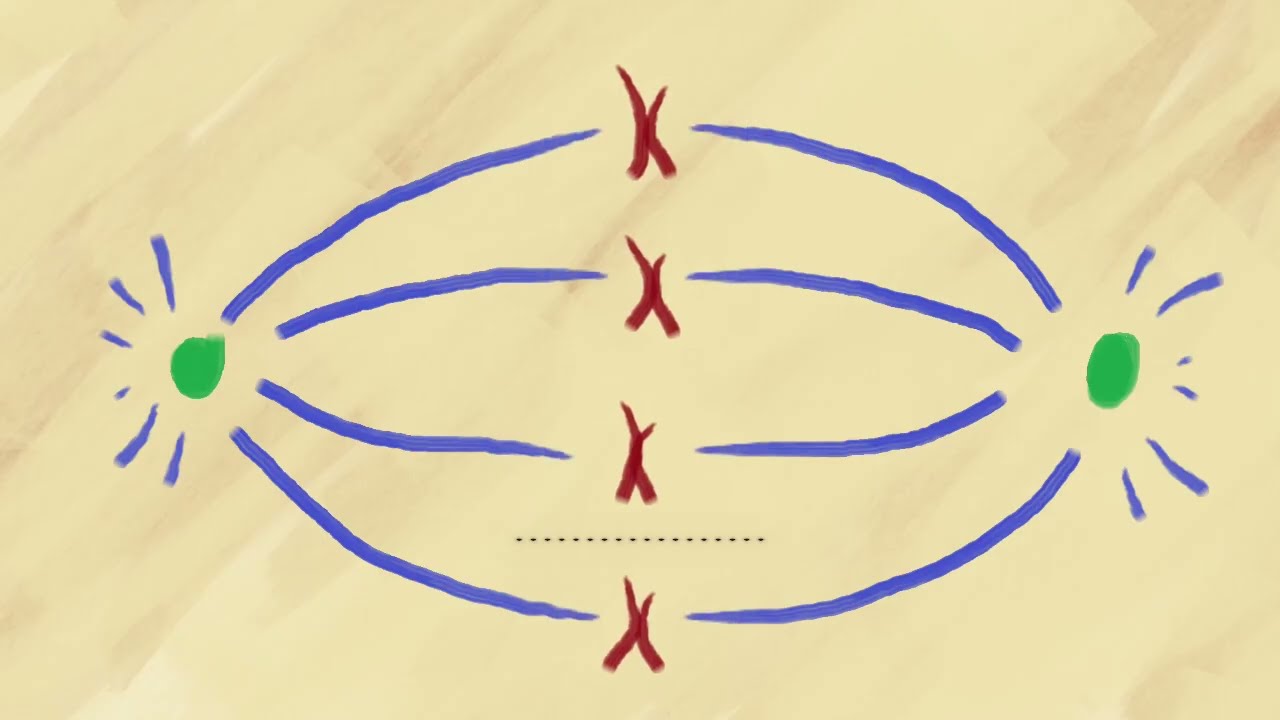
The tug of war inside a dividing cell | CCMB Conversations with Sachin Kotak #celldivision #cancer
Keywords
Summary
157 words
Critical Evaluation
Value of the Information & Strength of the Argument
The interview provides a valuable overview of mitotic spindle biology, making complex cellular processes accessible to a general audience. The guest expert effectively argues for the importance of fundamental research, using logical progression from basic mechanisms to clinical implications. He clearly explains how defects in chromosome segregation lead to aneuploidy and potential cancer, and how understanding spindle assembly guides the design of targeted therapies. The argumentation is coherent, with examples such as taxol’s mechanism and the theoretical use of optogenetics, illustrating the pathway from bench to bedside. While not presenting new experimental data, the discussion synthesizes established knowledge and offers reasoned perspectives on future research directions.
Scientific Rigor, Source Quality, Title Accuracy
The scientific rigor is high, as the speaker is a practicing researcher with direct expertise. He accurately describes molecular mechanisms, citing known proteins like gamma-tubulin, kinesin, and dynein, and correctly explains cell cycle phases. The title ‘The tug of war inside a dividing cell’ is a fitting metaphor, and the content comprehensively addresses the topic without significant deviation. However, no primary sources or references are mentioned during the conversation, limiting the ability to verify specific claims. The presentation is educational rather than research-oriented, but the information is reliable and consistent with established cell biology. The persona of the expert lends credibility, and the lack of commercial bias supports the trustworthiness of the content.
234 words
Title / Content Match
The title's metaphorical 'tug of war' aptly captures the dynamic interaction between mitotic spindles and chromosomes, and the content directly addresses these mechanisms and their implications for cancer.
Quality & Reliability
8/10
The discussion features a leading researcher in cell division, providing accurate and up-to-date concepts. The content is reliable, though presented at a high level without primary literature citations.
Key Moments
Markers derived by PSI from the transcript: the creator did not define chapters.
- Introduction and welcome of Sachin Kotak.
- Explanation of mitotic spindle structure and centrosomes.
- Discussion on why spindles are less studied in India.
- Centrosome duplication and coordination with DNA replication.
- Composition of spindles: tubulin and motor proteins.
- Nuclear envelope breakdown and chromosome capture.
- Research focus on choreography of spindle assembly.
- Link between aneuploidy and cancer.
- Taxol and non-specificity of cancer drugs.
- Potential of optogenetics for targeted therapy.
Contribution & Novelties
The video offers an accessible yet expert perspective on mitotic spindle biology, emphasizing its importance in cell division and cancer. It highlights the current gaps in fundamental understanding and the potential for targeted therapies based on molecular insights. The interview underscores the need for more research in India and illustrates how knowledge of spindle dynamics can inform drug design.
Pour aller plus loin :
- Mitotic spindle — Overview of structure and function.
- AlphaFold — Protein structure prediction relevant for understanding spindle proteins.
- Paclitaxel (taxol) — Mechanism of action and use in cancer therapy.
- Optogenetics — Technique for light-controlled drug activation.
100 words
Radar Profile
The profile shows strong reliability (8/10) and good information quality and quantity (7/10 each), with technical level slightly lower (6/10), indicating an accessible but scientifically sound discussion. The overall balance suggests a credible educational resource.