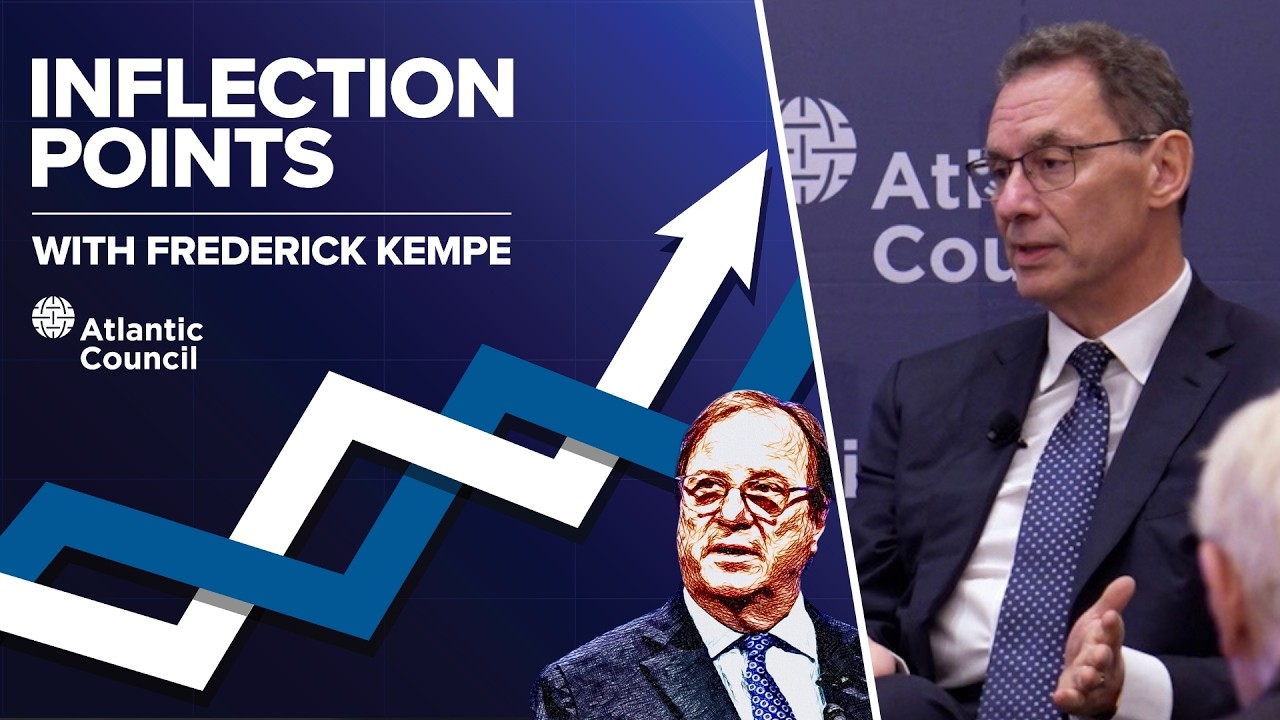
Pfizer CEO Albert Bourla on AI and the future of medicine
Keywords
Summary
126 words
Critical Evaluation
Value of the Information & Strength of the Argument
The value lies in offering a high-level industry perspective on AI adoption in pharma, particularly the emphasis on organizational transformation and concrete time savings in drug discovery. Bourla’s argumentation is coherent, using the COVID vaccine timeline as an example of ’time is life.’ However, the discussion is largely subjective, often relying on personal conviction (e.g., ’nothing is impossible’) rather than empirical evidence. The comparison to nuclear power is used to justify a favorable risk-benefit ratio, but the reasoning is simplified and not systematically quantified.
Scientific Rigor, Source Quality, Title Accuracy
The conversation is an interview with no cited external sources in the description; the only references are historical and anecdotal. Bourla mentions Demis Hassabis and Dario Amodei but does not provide specific studies or data. The title accurately reflects the content, which is a high-level overview rather than a detailed technical analysis. There is no attempt to verify claims with scientific literature, reducing the overall scientific rigor.
166 words
Title / Content Match
The title accurately reflects the content, which centers on the CEO's views on AI's role in medicine and Pfizer's strategy.
Quality & Reliability
7/10
The speaker is a leading industry CEO with direct experience in AI adoption, but the discussion is largely anecdotal and opinion-based, lacking systematic data or peer-reviewed references. The conversational format provides insights but not rigorous scientific evidence.
Key Moments
Markers derived by PSI from the transcript: the creator did not define chapters.
- Introduction to the podcast and guest, Albert Bourla.
- Comparison of COVID crisis and AI era; Bourla calls AI a 'new era' comparable to fire and the wheel.
- Importance of becoming an 'AI-native' organization; transformation over adaptation.
- AI can compress preclinical phase from 4-5 years to one year; time is life.
- Pfizer's investment in oncology and using AI to program cancer cells to kill themselves.
- Discussion of risks including bioweapons and the need for defense.
- Geopolitical competition with China; Bourla advocates collaboration over restriction.
- Philosophical view on human progress; AI as a human invention leading to improvement.
Contribution & Novelties
The original contribution is the insider perspective of a major pharma CEO on AI adoption, highlighting the organizational bottleneck and concrete time savings in drug development. The concept of ‘AI-native’ transformation is a notable framing for industry adaptation.
Pour aller plus loin :
- Drug discovery — Overview of the drug development process, relevant to the preclinical phase discussion.
- In silico clinical trials — Computational approaches to testing drugs, directly related to Bourla’s vision of reducing animal testing.
- AI in healthcare — Broad context for applications mentioned in the interview.
- AI alignment — Relevant to the safety and risk discussion, particularly the concerns about autonomous agents.
105 words
Radar Profile
The profile shows moderate scores across all dimensions, with slightly higher qualitative information and lower quantitative detail. The interview offers expert opinion but lacks systematic evidence, resulting in a balanced but not outstanding radar.